
The Amazon FBA Wholesale model is a reliable way to build a scalable business. By selling established and popular brands, you lower the risk compared to creating your own products. This makes selling wholesale on Amazon highly worth it.
Focusing on the high-demand Beauty and Personal Care market, which includes cosmetics, skincare, haircare, and perfume, taps into strong customer loyalty.
In this guide, we will provide practical, simple steps to define your model, find profitable products, master sourcing, and handle the unique compliance rules for the beauty niche.
What is Amazon FBA Wholesale?
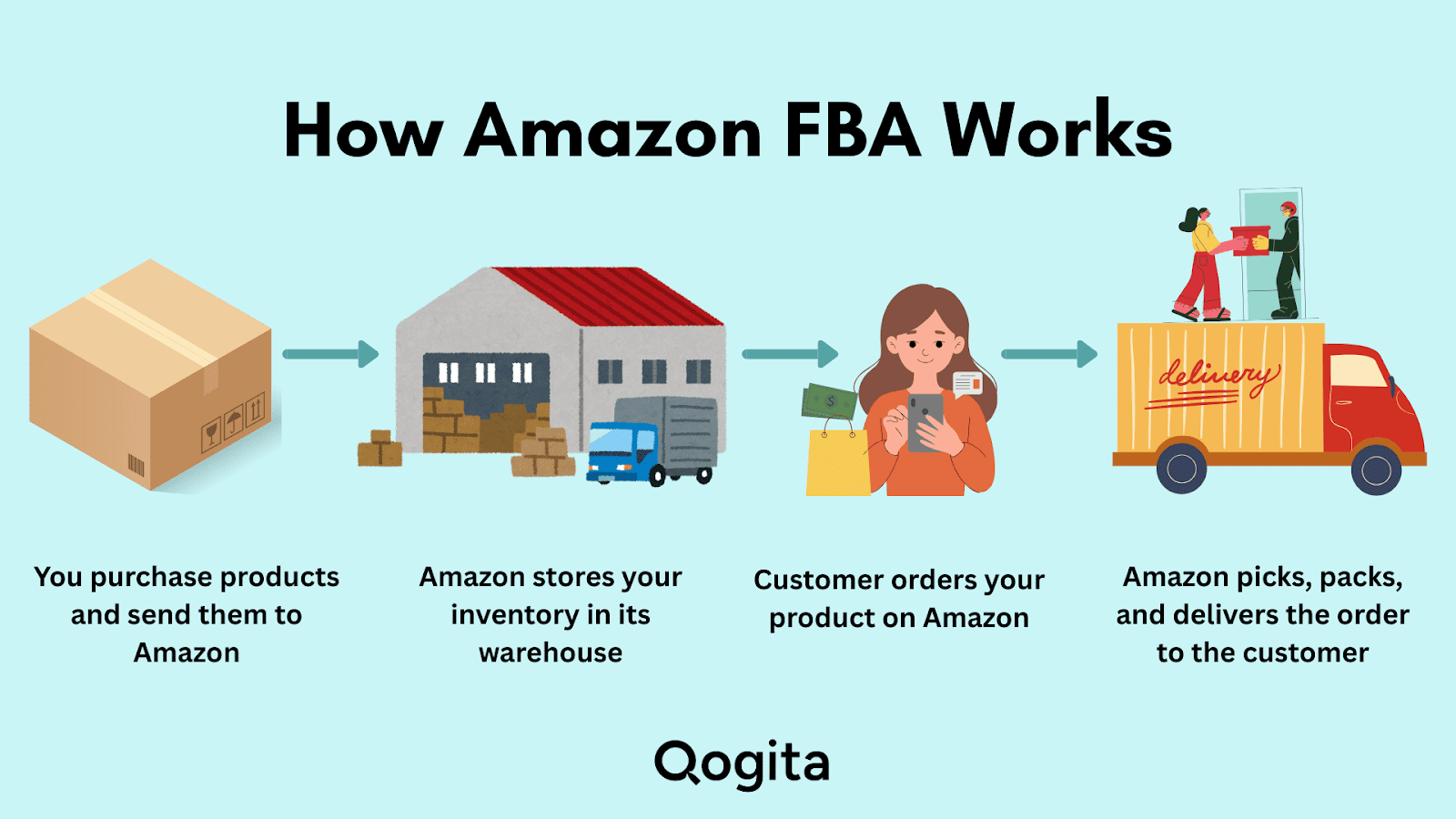
The simplest way to understand Amazon FBA Wholesale is: buying low and selling high, using Amazon's system to do the hard work.
You open an account with a brand or an official distributor to buy their products in bulk at a reduced wholesale price. You then send this bulk inventory to an Amazon warehouse.
The "FBA" (Fulfilment by Amazon) part means Amazon handles all the storage, packing, shipping, and customer service for you. This allows you to scale up very quickly by tapping into the existing demand for established brands.
Tip 1: Finding & Vetting Profitable Products
A. Pinpoint the "Sweet Spot": Analyse Competition (5-15 Sellers)
Your success in Amazon FBA Wholesale depends on finding listings you can join without destroying your profits.
- Filter for the Right Number of Sellers: When researching, look for products with a consistent sales history that have 5 to 15 FBA sellers. This range suggests the brand is open to resellers, but the market is not oversaturated. Avoid listings with only 1–3 sellers, as they are often highly restricted or "gated."
- Focus on High-Demand, Low-Risk Categories: Stick to stable, repeatable purchases in the Beauty niche like daily Skincare and Haircare. Be cautious with perfumes and aerosols due to specific Hazmat shipping rules.
- Avoid Competing with Amazon: Never choose a listing where Amazon or the brand consistently wins the Buy Box. They have pricing power you cannot beat. This strategy is the core of your Amazon FBA wholesale guide.
B. Master the Math: Calculate Your Required 20% Net Margin
Profitability relies on knowing exactly where your money goes. Before placing any bulk order, you must calculate your net profit.
- The 20% Minimum Rule: Always aim for a minimum Net Profit Margin of 20% after all costs are paid. If the margin is lower, a small change in price will turn your profit into a loss.
- Dissecting the Fees: You must understand how much Amazon FBA takes and what percentage Amazon FBA take. Use the Amazon FBA Revenue Calculator to factor in:
- Your Wholesale Cost
- Shipping to FBA
- Amazon's Referral Fee (often 15% for Beauty)
- FBA Fulfilment Fees
- Capital Requirement: Understand that Amazon FBA wholesale requires a larger upfront budget than other models to meet supplier MOVs (Minimum Order Values).
C. Set Realistic Financial Goals (Earning $1,000+ per Month)
Many of you ask, “Can I make $1000 a month selling on Amazon?”
The answer is yes, making $1,000 or more per month in net profit is a common and realistic goal with the wholesale model. If you successfully maintain a 20% net margin, you would need to achieve approximately $5,000 in monthly sales revenue to hit that goal.
This requires consistent product sourcing and having enough capital for inventory to support that sales volume.
Tip 2: Supplier Acquisition and Account Setup
A. Target and Validate Authorised UK Distributors
The fastest way into wholesale is often through distributors, not the brand owner. Brands often have high MOVs (Minimum Order Values), while their authorised distributors are focused on moving volume and are more accessible to new sellers.
Go Behind the Brand
Instead of contacting the brand directly (which usually results in rejection), visit the brand's official UK website and look for sections like "Where to Buy," "Trade Accounts," or "Distributor List." This often leads you directly to the authorised middlemen.
Leverage B2B Marketplaces
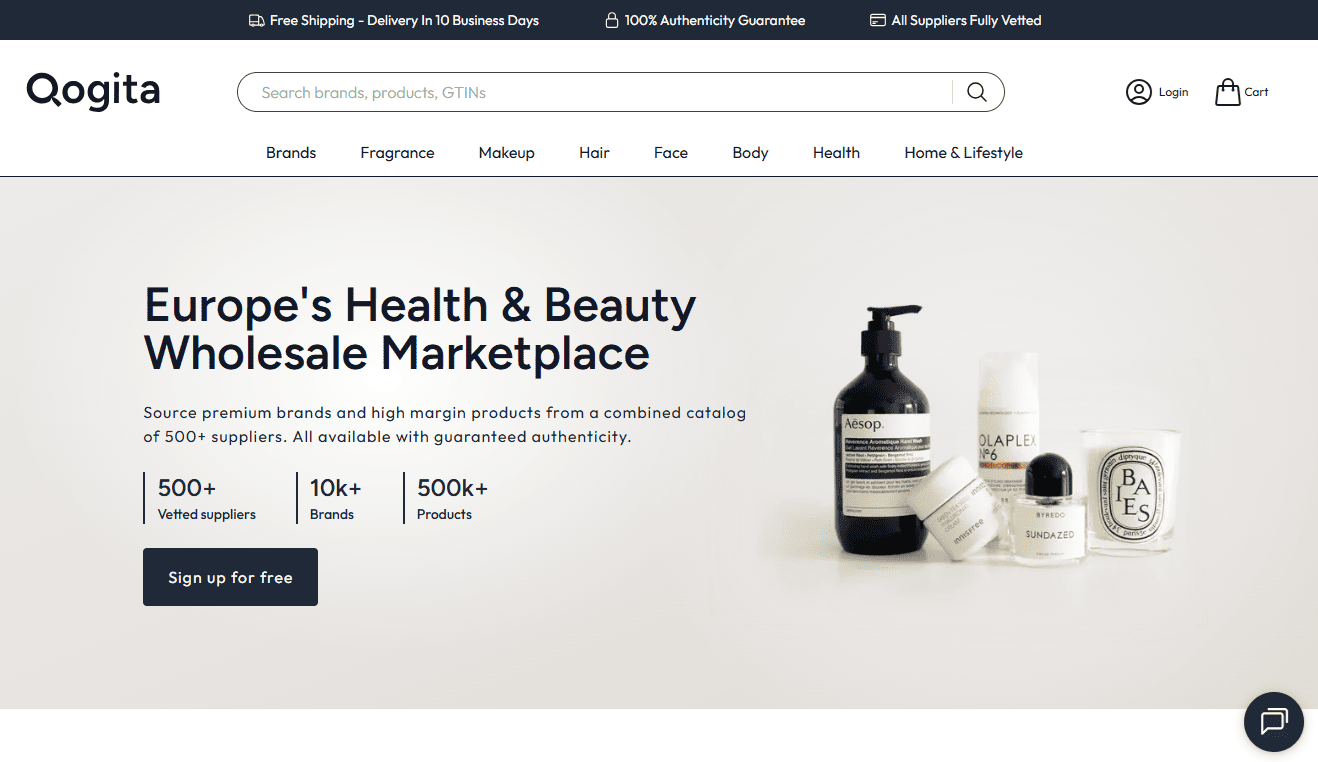
Utilise UK/European B2B platforms like Qogita or Faire. Qogita connects retailers with 500+ verified suppliers across Europe, offering 500k+ branded products and transparent pricing that helps simplify bulk sourcing.
Qogita also provides commercial invoices that can support ungating in restricted Amazon categories, making them a smart step in your Amazon FBA wholesale journey.
Use Supplier Directories
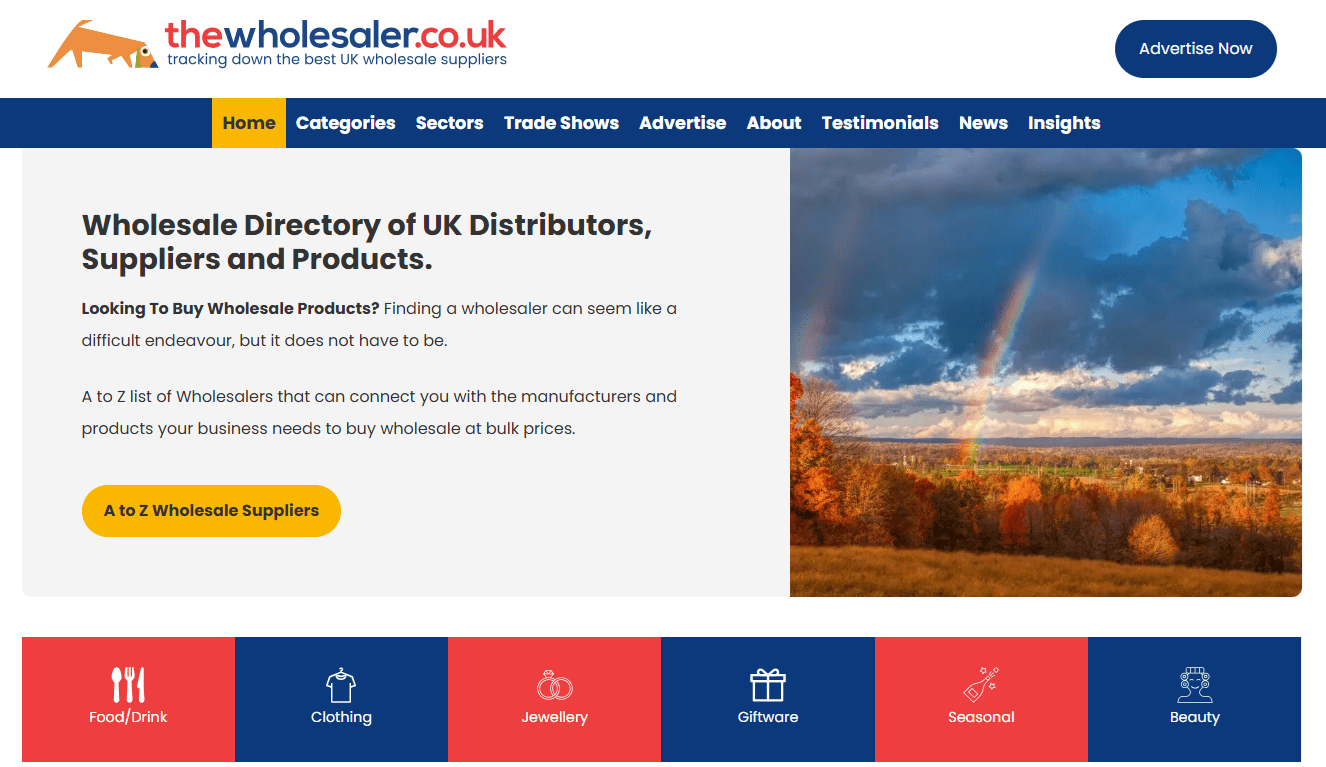
Check UK-specific wholesale directories (e.g., The Wholesaler UK) to find vetted distributors in the beauty/health category. Always verify their legitimacy by cross-checking their VAT number and address.
B. Establish Professional Credentials
Fair UK suppliers will never open a wholesale account without verifying your business status. You must present yourself as a professional retailer, not just an Amazon hobbyist.
C. Master the Outreach Script: Convert Prospects to Accounts
Your first contact with a supplier is a sales pitch. Your goal is to convince them that you are a solution to their problems (unauthorised sellers, price erosion), not another problem (like a price-cutting Amazon seller).
- The Contact Method: Begin with a professional email from your business address. After a few days, follow up with a polite phone call to show serious intent.
- The Pitch Framework:
- Introduce Your Company: State your company name, registration number, and professional website URL.
- Emphasise Multi-Channel: State clearly that you sell across platforms, including your own e-commerce store and Amazon (do not hide this, but lead with your own site).
- Offer Value (The Pain Point): Mention that you can help them maintain MAP (Minimum Advertised Price) policies and combat unauthorised sellers, which is a major concern for brands.
- The Ask: Request their current Price List and Minimum Order Value (MOV) requirements to begin the qualification process.
Overcoming the "No Amazon Sellers" Objection
This is the most common rejection. Respond by pivoting the conversation to brand control: "I understand. Many brands have issues with unauthorised sellers ruining their pricing. My goal is to become an authorised partner who follows all MAP policy and can help police your brand's Buy Box integrity."
If they remain highly restrictive, focus your efforts on their authorised distributors instead.
Tip 3: Navigating Mandatory Compliance
A. Pass the "Gating" Test: How to Get Brand Approval
Before you can list a popular cosmetic or skincare brand, Amazon often requires you to be "ungated" or approved. This is to protect customers from fake products.
- Legitimate Invoices: Amazon requires a professional, legitimate, and dated invoice from the authorised distributor you are working with. Retail receipts or pro-forma invoices will not be accepted.
- Invoice Checklist: Ensure the invoice is less than 180 days old and clearly shows:
- Your business name and address (matching your Amazon Seller Central details).
- The supplier's name and address.
- A minimum quantity of 10 units for the product you want to sell.
- Application Process: You must upload this invoice in Seller Central under the "Add a Product" section when attempting to list the restricted item. Patience and persistence are key, as it may take a few attempts.
B. Follow the 900-Day Rule: Expiration Date Management
All beauty products (lotions, haircare, makeup) have a shelf life, and Amazon is strict about how long products can sit in their warehouses.
- The Critical Deadline: Your beauty products must arrive at the Amazon FBA centre with a remaining shelf life of at least 900 days (about 2.5 years). If the product has a shorter shelf life, Amazon will refuse the shipment.
- Labelling is Mandatory: Every unit, multipack, or bundle you send to FBA must have the expiration date clearly visible.
- Format: The date must be in the correct format (MM-DD-YYYY or MM-YYYY).
- Placement: The date must be placed on the outer packaging so Amazon can scan it easily.
- FIFO (First-In, First-Out): Always ask your supplier for the freshest stock available and sell the oldest inventory first to avoid having units expire in the warehouse, which leads to costly removal fees.
C. Check Hazmat Status: Ship Perfumes and Aerosols Safely
Some high-profit items, like perfume and aerosol hairsprays, are classified as dangerous goods ("Hazmat") because they contain flammable liquids or pressurised containers.
- Identify the Risk: Any item containing alcohol (like most perfumes) or pressurised gas (aerosols) must be checked for Hazmat classification before being shipped.
- Required Documentation (The SDS): You must obtain the Safety Data Sheet (SDS) (document detailing the product's chemical composition and risks) from your supplier or the manufacturer.
- The Compliance Step: Upload the SDS to Amazon Seller Central. Amazon will review it and classify the product. Once approved, you can send it to FBA, but it will only go to Amazon's specialised Hazmat-approved warehouses. Never attempt to ship Hazmat items without this approval.
Tip 4: Scaling, Automation, and Customer Service
A. Automate Pricing for Consistent Buy Box Wins
Manual pricing is the biggest bottleneck in a wholesale business. Automation is the only way to scale effectively.
- Implement a Repricer: Use a professional, algorithm-based repricer (Rule-based systems are too slow). This tool automatically adjusts your selling price within the parameters you set (e.g., above your minimum profit margin and below the maximum market price).
- The Goal: The tool's primary job is to keep you competitive enough to frequently capture the Buy Box while never selling at a loss. It ensures you are optimised 24/7, even while you sleep.
- Sales Velocity Monitoring: Integrate your inventory tracking with a tool that monitors how quickly your product sells (Sales Velocity). This tells you the exact reorder point you need to maintain to avoid costly out-of-stock periods, which hurt your listing rank.
B. Outsource Logistics: Use FBA Prep Centres
To free up your time for the higher-value task of sourcing, you must outsource the physical labour.
- Direct Shipment: Arrange for your distributor to ship the bulk pallet directly to a third-party FBA Prep Centre in the UK, bypassing your own home or office entirely.
- Prep Centre Services: The centre will handle the entire logistics checklist:
- Receiving and checking the goods against the packing slip.
- Applying FNSKU/UPC barcode labels.
- Applying expiration date stickers (mandatory for Beauty).
- Packaging units to meet Amazon’s strict box and weight requirements.
- Scheduling the LTL (Less Than Truckload) pickup to Amazon FBA centres.
C. Leverage FBA for Hands-Off Customer Service
One of the biggest advantages of Amazon FBA Wholesale is that Amazon handles the majority of customer issues.
- FBA Handles Support: Amazon manages all shipping issues, returns processing, and customer support queries related to fulfilment (e.g., "Where is my order?"). This dramatically reduces your operational load.
- Your Account Health Focus: Your only necessary customer service focus is monitoring Account Health in Seller Central. If you receive a "Product Not as Advertised" or "Used Sold as New" complaint, immediately provide your authentic commercial invoice from the authorised distributor. This is your proof of legitimacy and is usually enough to clear the violation.
D. Strategic Reinvestment for Scale
The goal is to move from small batches to full pallets, which unlocks better unit economics.
- Tiered Pricing Access: Use your initial profits to buy larger MOVs from the same supplier. Ask for their Tier 2 or Tier 3 price lists. Each step up in volume should reduce your unit cost, increasing your net margin from 20% to 25% or more.
- Continuous Sourcing: Commit time daily to researching and contacting new brands. A healthy wholesale business requires a stable roster of at least 5-10 profitable SKUs from multiple suppliers so that the failure of one product doesn't stop your cash flow.
Tip 5: Advanced Strategies for Profit Maximisation
These final Amazon wholesale FBA tips move beyond the basic setup and help you understand how to gain a competitive advantage and protect your growing business.
Implement Strategic Bundling for Exclusivity
The most effective advanced tip is pairing two or three complementary products from the same brand (e.g., a skincare set or a haircare duo) and listing them as a single, unique item.
This creates a brand-new ASIN (product listing) that you control entirely. You eliminate direct Buy Box competition and can charge a premium price for the convenience of the bundle. You can learn how to bundle cosmetics in our complete guide.
Master Reverse Sourcing
Use specialised Amazon seller tools to identify who is selling a successful product. Once you find their company name, search for their website to see what other suppliers or distributors they list. This method allows you to discover high-quality, proven suppliers that others might be keeping secret.
Optimise Shipping Costs with LTL Freight
As your order sizes grow (to over 150-200 units), stop using small parcel carriers (like UPS or DPD). Switch to LTL (Less Than Truckload) Freight, which ships goods on a pallet. The cost per unit to ship an entire pallet to an Amazon warehouse is significantly lower than shipping individual boxes, giving your profit margin a major immediate boost.
Prepare Your IP Complaint Defence
As you grow and sell established brands, you will occasionally receive an Intellectual Property (IP) or "Used Sold as New" complaint. This is normal. The advanced strategy is to have the authentic commercial invoice from your authorised distributor instantly accessible to challenge the complaint. This single piece of paper is your best defence against an Amazon account suspension.
Unlock Gated Categories Permanently
Don't limit your ungating efforts to just the Beauty category. You can often use a strong, verifiable invoice from a known distributor in any niche (like Toys or Grocery) to successfully unlock that entire category. Once a major category is unlocked, you gain access to thousands of new products for life.
Conclusion
The Amazon FBA wholesale model can be a steady and profitable business, especially when dealing in high-demand beauty products.
Long-term success depends on two key practices: staying fully compliant by carefully tracking expiration dates and Hazmat rules, and keeping your financials tight by protecting at least a 20% net margin.
To source inventory efficiently, utilise B2B wholesale platforms like Qogita, a powerful resource for finding vetted UK suppliers. For more help, read our complete beginner's guide on how to sell on Amazon.