
Every great business starts with a product customers actually want. Maybe you've noticed an innovative trend, or you know how to make a classic item better. But what if the perfect product idea hasn't hit you yet?
It can feel tough to find a new item to sell when online shops seem full of everything. This is where smart product research comes in.
For those buying wholesale, research is key. It helps you check that the demand is real and the profit margin is high, protecting your investment. By tracking current data and finding gaps in the market, you can quickly discover opportunities that are ready to scale.
5 Practical Ways To Find a Product to Sell
Here are five practical ways to find a product to sell in 2026.
1. Mine Data from Marketplace "Movers & Shakers."
The most direct way to find a product to sell in bulk is not to look at what has been popular for months, but to monitor what is spiking in demand right now. This instantly shows you where consumer interest has suddenly outpaced the current supply.
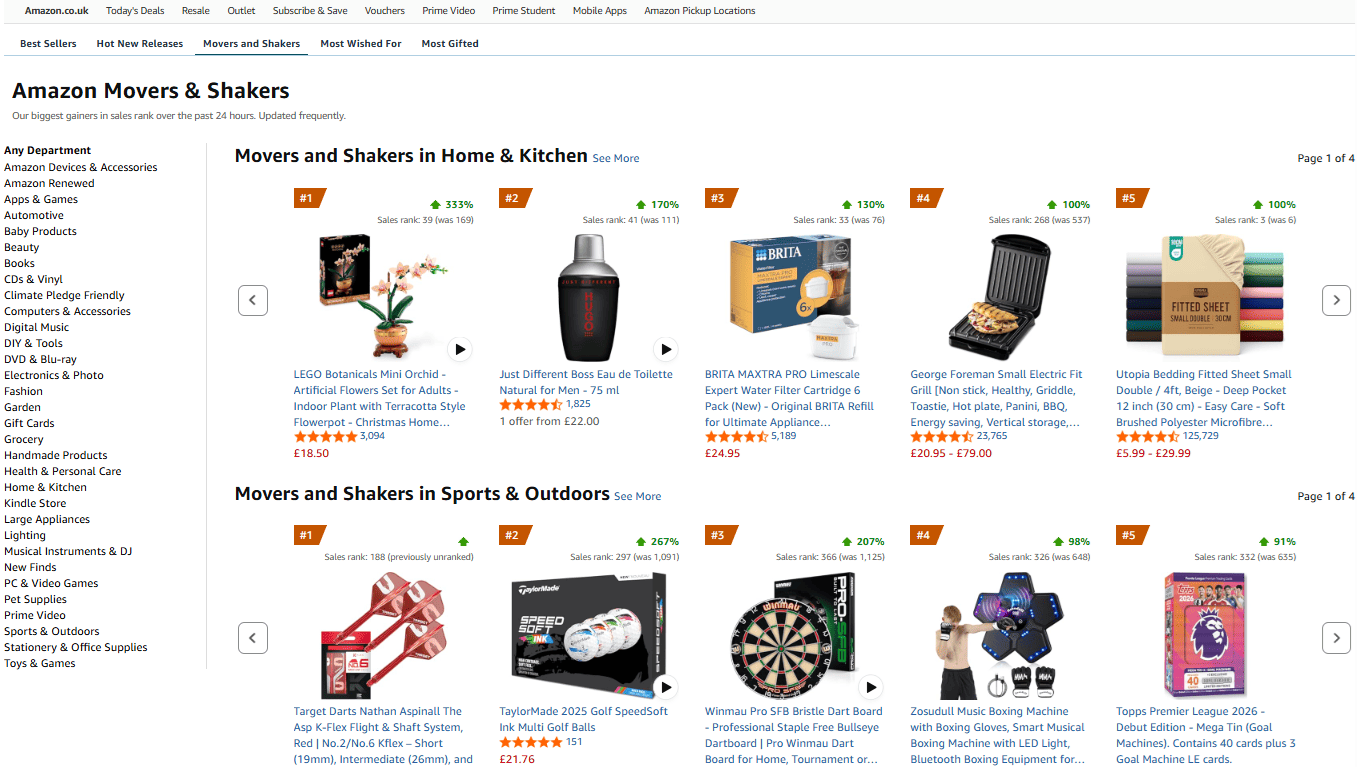
The "Movers & Shakers" or similar trending lists on major marketplaces (like Amazon) track products with the largest increase in sales rank over the last 24 to 48 hours. A product jumping dramatically from a low rank to a high rank is a real-time signal of an emerging trend.
The Strategy: Velocity Over Volume
Instead of targeting the overall top sellers (which are usually saturated with competitors), you focus on items showing high velocity.
Look for Sudden Momentum: A product does not have to be a multi-million-dollar item to be on this list; it just needs massive upward momentum. This is your chance to source an item before it becomes a crowded market.
Target Key Growth Categories: Global data points toward sustained growth in electronics, wellness, and home goods. Focus your monitoring efforts here for the best chance of finding a winner:
- Consumer Electronics Accessories: According to StartUs Insights, the Consumer Electronics Market is projected to reach 1467.94 billion by 2032. Look for spikes in accessories that solve new problems, such as magnetic charging cables or highly durable, portable electronics cases.
- Health & Beauty: Focus on quick-fix products like acne patches or niche wellness supplements that see sudden viral popularity. We’re talking about overnight-trend items like collagen gummies, derma rollers, and scalp serums that explode on TikTok and drive intense buyer demand.
- Home & Kitchen: Track practical, space-saving essentials that simplify everyday routines. Compact countertop ice makers, multifunctional organisers, and other small-footprint solutions tend to resonate strongly with consumers living in smaller spaces.
Validation is Essential
Advanced wholesalers do not commit to inventory based on a single 24-hour spike. You must confirm that the demand is a sustained trend, not just a one-off sale.
Immediately take the product name or core search term and plug it into external tools like Google Trends. If the marketplace sales spike aligns with a sustained upward trend in search volume over a period of weeks or months, the product is validated.
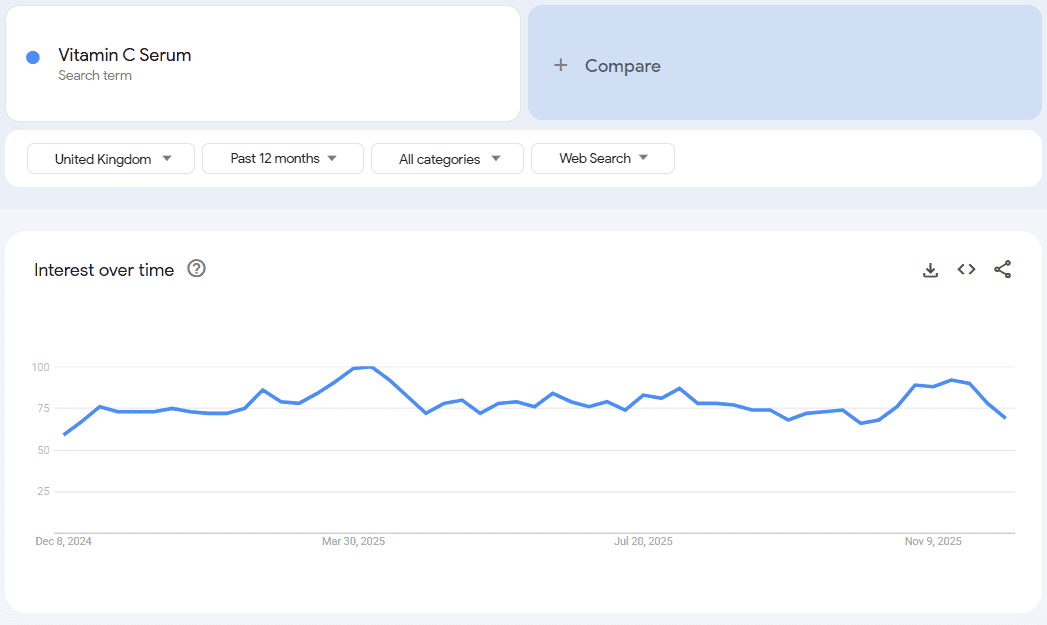
Experts agree that combining real-time sales data with long-term search data is critical. Daniel Waisberg, a Google Search Advocate, regularly advises on using Google Trends for this exact purpose: to "understand overall vertical trends" and to validate that the interest is long-term, not just a fleeting spike.
2. Improve an Existing Product by Solving Customer Pain Points
The easiest path to launching a successful wholesale product is not through invention, but through improvement.
Every top-selling product already has flaws, and fixing those flaws creates a built-in market of ready-to-switch customers who are looking for a better solution.
The Strategy: Mining Review Data for Flaws
You must first identify the product flaw. Go directly to the highest-ranking products in a potential category on any major marketplace. Filter the customer feedback to focus only on the 1-star and 2-star reviews.
Your goal is to find a complaint that is mentioned repeatedly across many reviews. This common issue is the market gap you can fill.
For example, if a popular reusable water bottle consistently receives complaints that the straw is impossible to clean, your product should be a redesigned version with a two-piece, easily disassembled straw mechanism.
It is crucial to embrace this negative feedback. As digital marketing expert Neil Patel advises, "treat every kind of feedback you receive as a gift. It’s a free piece of information that you can use to improve and grow your business."
Instead of viewing negative comments as an insult, see them as a free, constant source of insight. Many businesses pay top dollar for this type of guidance.
Data reinforces the value of feedback loops. Bazaarvoice notes that 66% of clients use user-generated content (UGC) such as reviews to refine their products and operational processes. At the same time, 38% of consumers expect companies to act on negative reviews to improve product quality.
Case Study: How Thousand Overcame Emotional Barriers
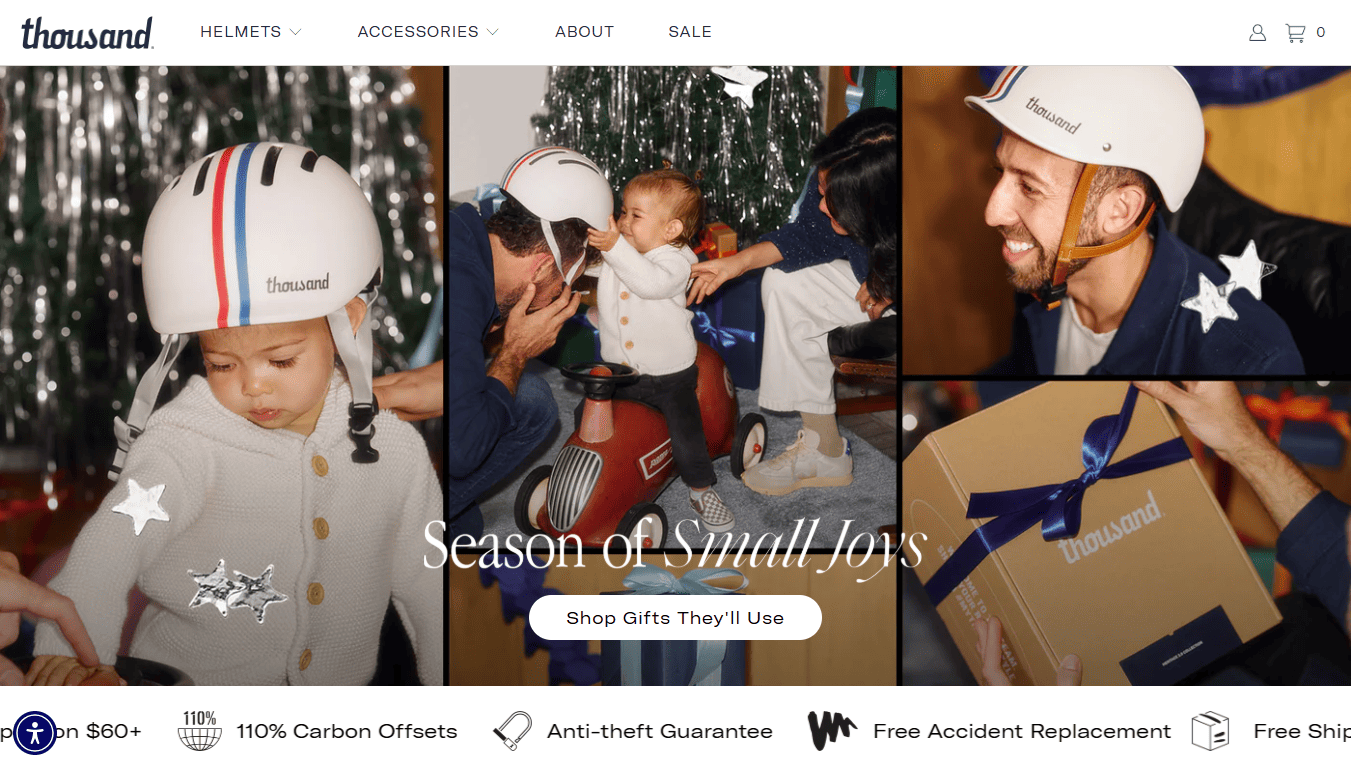
Sometimes, the product flaw isn't about broken parts, but about the user experience or a key emotional barrier. Gloria Hwang, founder of Thousand Helmets, demonstrated this principle perfectly.
Before starting her company, Hwang was a longtime cyclist who never wore a helmet because she found them too bulky and "futuristic-looking." However, after losing a friend in a fatal bike accident, she recognized the need to change the product itself. She chose not to settle for the existing, unappealing options.
As Hwang explains, "We named our company 'Thousand' as a goal of helping to save 1000 lives by making helmets people actually want to wear.”
By focusing on aesthetics and thoughtful design, she created a desirable product that broke down the emotional barrier, proving that style and safety can go hand in hand.
3. Use Low-Competition Keywords (SEO Gaps)
While marketplaces show you what is selling today, keyword research shows you what customers are actively searching for but cannot easily find. This method uses data to find a product to sell before competitors notice it.
The Strategy: Finding High Demand, Low Supply
Your goal is to identify terms with high monthly search volume but low competition. High volume means many people are looking for the product.
Low competition means that major companies or established brands are not yet dominating the search results for that exact phrase.
When you find this gap, you can source the matching product and quickly capture market share.
How to Search
Use tools like Google Keyword Planner or Semrush. Instead of searching for broad terms like "coffee mugs," look for specific, long-tail phrases such as "ceramic espresso cups for office" or "leak-proof travel mug with tea infuser."
When you find a niche, high-volume term that returns mostly irrelevant or weak results, you have found your perfect product opportunity.
As Peter Drucker famously noted, "The aim of marketing is to know and understand the customer so well the product or service fits him and sells itself." Keyword research is the most direct way to understand the customer's unmet need, spelled out in their own words.
Case Study: The Zero Waste Store Strategy

The success of the Zero Waste Store is a perfect example of how a single SEO-driven decision can accelerate wholesale growth. The company began its life under a different name: Earthy Shop. Co-founder JJ Follano, who brought ten years of marketing experience, noticed a big opportunity through his SEO research.
He discovered that “zero waste store” and related terms were generating roughly 10,000 to 15,000 searches per month, yet no company held the exact domain or clearly dominated the search results. People were actively looking for the sustainable products he and his partner were selling, just using different terms.
Follano quickly made the decision to rebrand as Zero Waste Store. This single decision saw immediate, dramatic results: "We went from initially doing a few hundred orders a month at most to doing over a million dollars in sales within the first year," Follano states.
This move dramatically helped the company grow from $6,000 in sales in year one to $2 million in year two.
4. Focus on High-Margin, Repeat-Purchase Consumables
Wholesale profitability is maximized when two factors align: low Cost of Goods Sold (COGS) and high customer retention.
Products that are consistently consumed (known as Fast-Moving Consumer Goods (FMCG)) provide predictable and recurring revenue because retailers will reorder them reliably.
The Strategy: Consumables are your Safest Bet
The scale of the FMCG market offers immense stability. The global FMCG market size is valued at $13.63 trillion in 2025, with the Food & Beverages segment dominating and the Personal Care segment expanding rapidly.
Choosing a product in this category ensures you are operating within a massive, non-optional consumer spending cycle.
- Low Cost, High Turnover: Consumables are generally small and light, which keeps shipping and warehousing costs low. This is crucial for protecting your profit margin.
- Built-in Reordering: Unlike a one-time purchase item like a laptop, consumables are designed to be used up. Your customer (the retailer) must reorder every few weeks or months to build a stable, long-term relationship.
- Profit Margins: Look for products where your landed wholesale cost is low enough to give the retailer a strong margin, ideally 40% to 60% on their retail price. This ensures they stock your item over a competitor's.
Top Categories to Explore
Focus your product search on niche, high-value versions of everyday necessities that fit into modern consumer trends:
- Natural and Organic Wellness: The Health & Wellness sector is projected to have the fastest growth within FMCG. Look for organic superfood powders, herbal supplements, or functional snack bars that appeal to the health-conscious shopper.
- Specialty Beverages: Products like artisanal coffee blends, high-end organic teas, or functional drink mixes are premium consumables that command higher price points and better margins.
- Premium Home Fragrance: Items like natural wax candles, reed diffusers, or cleaning concentrates offer high margins and are used frequently, ensuring repeat business.
As Colin Stewart, EVP of Business Intelligence at Acosta Group, notes, “Technology and evolving consumer lifestyles continue to reshape the shopping experience, as do the expectations, priorities, and values driving purchases.” Brands that understand these shifts and deliver authenticity, value, and quality are best positioned for growth in 2026.
To put it simply, choose the right consumables and use the steady demand in FMCG, and you’ll have a strong, profitable wholesale plan for 2026 and beyond.
5. Track Viral Content and Micro-Trends on Social Media
If you’re still thinking, “How to find a product to sell?” The answer is social media.
Platforms like TikTok, Instagram Reels, and Pinterest are no longer just for entertainment, they have become real-time product discovery engines.
Millions of users act as unpaid market researchers, creating "viral moments" that confirm a product's visual appeal and immediate customer desire.
The Strategy: Look for Engagement, Not Sales
On social media, you are looking for high engagement (saves, shares, and comments) on specific, niche products, often before they even have a formal brand attached. This indicates raw, unfulfilled demand.
Products that go viral on platforms like TikTok solve a small and easily demonstrated problem in a visually satisfying way.
- Monitor Hashtags: Look for items that are repeatedly featured in trending videos under specific community hashtags such as #cleantok (cleaning and home hacks), #organizationhacks, or #homedecor. A simple $10 gadget that gets a million views is a much stronger signal than an expensive item that gets a thousand.
- Pinterest Trends: Pinterest's trend tool is invaluable because it forecasts visual trends based on user saving habits, often predicting long-term home and fashion product demand six to twelve months in advance. You can use this to validate the longevity of a trend spotted elsewhere.
Case Study: Mush Studios and the Tufting Trend
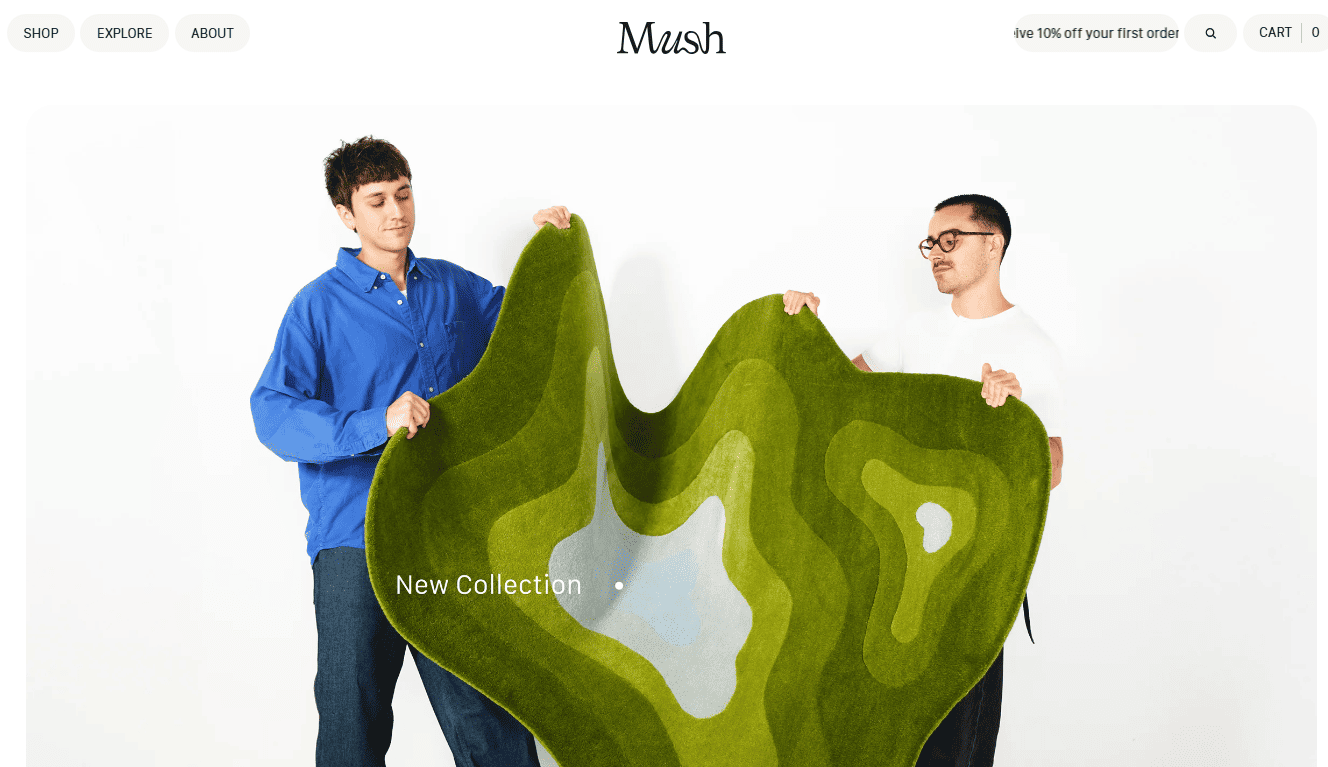
The growth of Mush Studios perfectly demonstrates how social media can discover and validate a product before the market even knows it exists.
The founders, Jacob Winter and Franki Peroff, began tufting custom rugs as a creative hobby during the pandemic. Jacob started documenting the whole rug-making process in short TikTok videos.
These "tufting transformation videos" quickly went viral, racking up millions of views. The high engagement and massive audience interest proved a demand for these unique, unconventional, abstract rugs.
The virality was their market validation. They transformed the hobby into Mush Studios, a design-focused rug brand, and saw rapid growth. As founder Jacob Winter states, they realized they were filling a gap: "People wanted something they had never seen before in terms of shape and texture."
They successfully used TikTok to establish their product, leading to collaborations with major retailers and proving the scalable nature of the product idea.
Best Product Research Tools for 2026
Once you know how to find a product to sell, use these data-driven tools to quickly validate demand and profitability before committing to bulk sourcing.
- Exploding Topics: An AI tool that spots emerging niches and search terms before they peak, giving you critical sourcing lead time.
- Google Trends: Free tool for cross-checking if a sales spike is a short-term trend or a sustained, long-term opportunity.
- Jungle Scout / Helium 10: Marketplace-specific research (Amazon focus) to filter products by sales velocity and competition score, verifying if the market size justifies bulk buying.
- Semrush Market Explorer: Platform for competitor analysis, helping you find underserved niches and assess the market size.
- TikTok Creative Center: Provides real-time social commerce data to validate the visual appeal and viral potential of a product.
Conclusion
Finding your next winning product in 2026 comes down to smart data, not luck. You move away from guessing by systematically tracking sales spikes, fixing customer flaws, monitoring social trends, and chasing high-demand keywords.
The final step is turning that product idea into profit, which requires efficient sourcing. Qogita removes the usual wholesale barriers by securing competitive pricing and consolidating orders from multiple suppliers into a single, streamlined shipment.
This reduces costs and keeps your landed price low, making it easier to launch and scale the profitable products you’ve identified.
How to Find a Product to Sell FAQs
How do I know if a spike is a "trend" or just a "fad"?
A fad is short-lived, like a temporary viral challenge. A trend shows consistent, steady growth in search volume over several months. Always cross-check marketplace sales spikes with long-term data on tools like Google Trends to confirm real demand.
How to find items to resell?
Finding items to resell always starts with research. Focus on all trending categories, such as vintage clothing, electronics accessories, or niche home goods. Source items from thrift stores, liquidation pallets, or directly from manufacturers, always verifying high demand and potential profit margins first.
How to use Google to identify a product?
Use Google to validate a product's demand and competition. Type niche keywords into Google Trends to see if interest is rising. Use Google Search and Shopping results to check for existing brands and competition, ensuring your product's specific solution is not already saturated.
What is a healthy profit margin when buying wholesale?
A healthy profit margin for a wholesaler is typically 20% or higher after all expenses (COGS, shipping, platform fees). Aim for products where your cost allows the retailer to make at least 40% to 60% on their final selling price.
Should I sell a low-priced item or a high-priced item?
Beginners should often target the "sweet spot" of products priced between €30 and €75 at retail. Low-priced items need massive sales volume, while very high-priced items often have slower sales cycles and more demanding customers.
What is the most important factor in product research?
The most important factor is demand. You must confirm that customers are actively searching for and purchasing the product. Use data to verify consistent monthly sales and high search volume before you commit to ordering inventory in bulk.