
For modern beauty retailers, stockists, and resellers, the ethical beauty movement is no longer a niche trend. It is a commercial mandate.
By 2025, the global vegan cosmetics market is projected to exceed $20 billion, driven by a consumer base that prioritises ethics as much as efficacy. However, as demand surges, the wholesale landscape has become increasingly crowded.
For a professional reseller, the challenge is not just to source vegan makeup wholesale products. The real task is navigating a sea of vague claims, complex supply chains, and varying international standards.
In this guide, we will provide a clear roadmap for retailers to find vegan makeup suppliers and buy cruelty-free makeup wholesale solutions that protect both your brand reputation and profitability.
Difference Between Vegan and Cruelty-Free
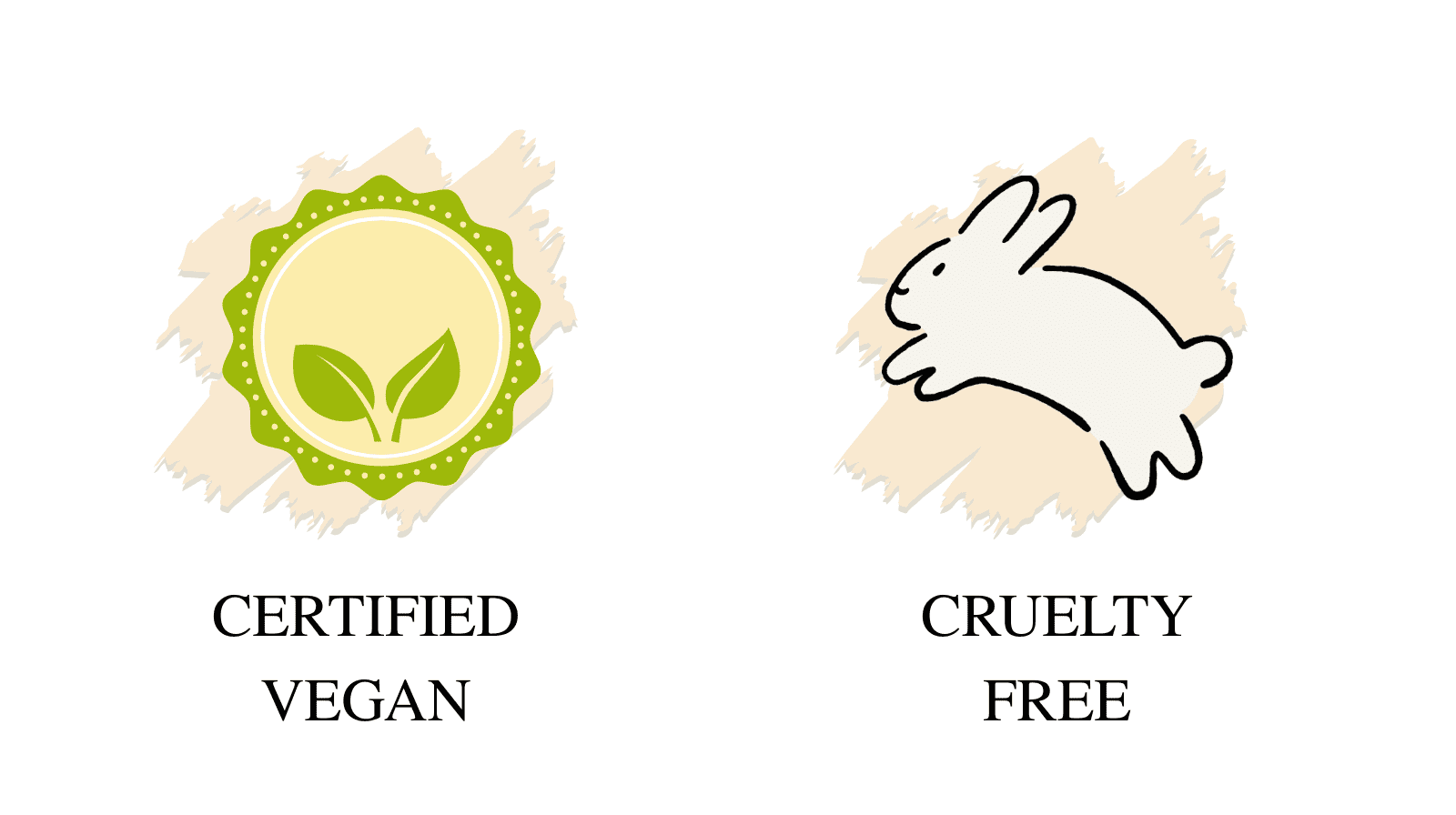
Understanding the core differences between vegan and cruelty-free products is essential for any retailer. These terms are often lumped together, but they refer to entirely different standards in the manufacturing process.
- Cruelty-Free: This term refers strictly to the testing process. A cruelty-free product, and the individual ingredients within it, have not been tested on animals at any stage. It is important to note that a cruelty-free lipstick can still contain animal-derived ingredients like beeswax or carmine.
- Vegan: This term refers strictly to the ingredients. A vegan product contains zero animal-derived components or by-products. However, a product labeled "vegan" could technically still be tested on animals unless it specifically carries a cruelty-free certification as well.
Retailers must clarify that cruelty-free does not automatically equal vegan. Many cruelty-free makeup brands offer entire lines that are free from animal testing, yet certain specific products or shades within those lines may still contain non-vegan ingredients.
Navigating "Clean" and "Natural" Labels
You may also encounter terms like "clean" or "natural" in your search. Clean beauty generally refers to products free from specific harmful chemicals, while natural products focus on plant-based ingredients. Neither of these terms automatically confirms a vegan or cruelty-free status.
For retailers, this distinction is vital when choosing what to stock and how to describe products to customers. Misrepresenting a product can lead to consumer distrust.
When you find vegan makeup suppliers, verify whether their entire range meets both standards or only specific shades or collections are compliant.
Why Ethical Sourcing Matters for Retailers
For beauty resellers, ethical sourcing is a strategic risk-management tool. In a market where ethical beauty increasingly influences purchasing decisions, sourcing practices play a direct role in protecting brand reputation and supporting long-term profitability.
Building Trust through Transparency
Today’s consumers are more informed and more skeptical than ever. Recent research shows that only 20% of consumers believe brands accurately communicate their sustainability efforts, while 26% outright distrust sustainability claims. A further 17% feel the need to verify claims by doing their own independent research.
Stocking genuinely ethical products builds trust, which drives customer loyalty and repeat purchases. On the other hand, misleading labels can quickly damage your brand's credibility through viral backlash and call-out culture.
Higher Margins and AOV
Ethical positioning directly boosts your profitability. According to research, 70% of consumers are willing to pay a premium for cruelty-free and responsibly sourced products.
By offering a curated range of cruelty-free makeup brands, retailers can unlock higher Average Order Values (AOV), appealing to shoppers who prioritise quality, ethics, and brand values over the lowest possible price.
Avoiding Marketplace and Advertising Risks
Inaccurate ethical claims can cause severe operational issues. Major e-commerce marketplaces have strict policies regarding product descriptions. If your listings for vegan makeup are flagged as inaccurate, you may face:
- Product delistings or account warnings.
- Suspensions of paid advertising accounts (e.g., Google Ads or Meta) due to "misleading content" violations.
- Costly returns and refund requests from disappointed customers.
Gaining a Competitive Advantage
Retailers that offer a clearly vetted and transparently sourced selection of cruelty-free makeup brands stand out in a saturated market. By providing proof of ethical standards, you provide a "reason to buy" that goes beyond price.
This transparency is a powerful differentiator that can help you secure premium shelf space and attract a more affluent, conscious demographic.
Where to Find Vegan & Cruelty-Free Makeup Suppliers
Sourcing ethical beauty at scale requires a balance between variety, price, and logistical reliability. As a retailer, you have four main options to find vegan makeup suppliers.
Understanding the operational differences between these suppliers is important to choosing a partner that aligns with your business model.
1. Wholesale Marketplaces (e.g., Qogita)
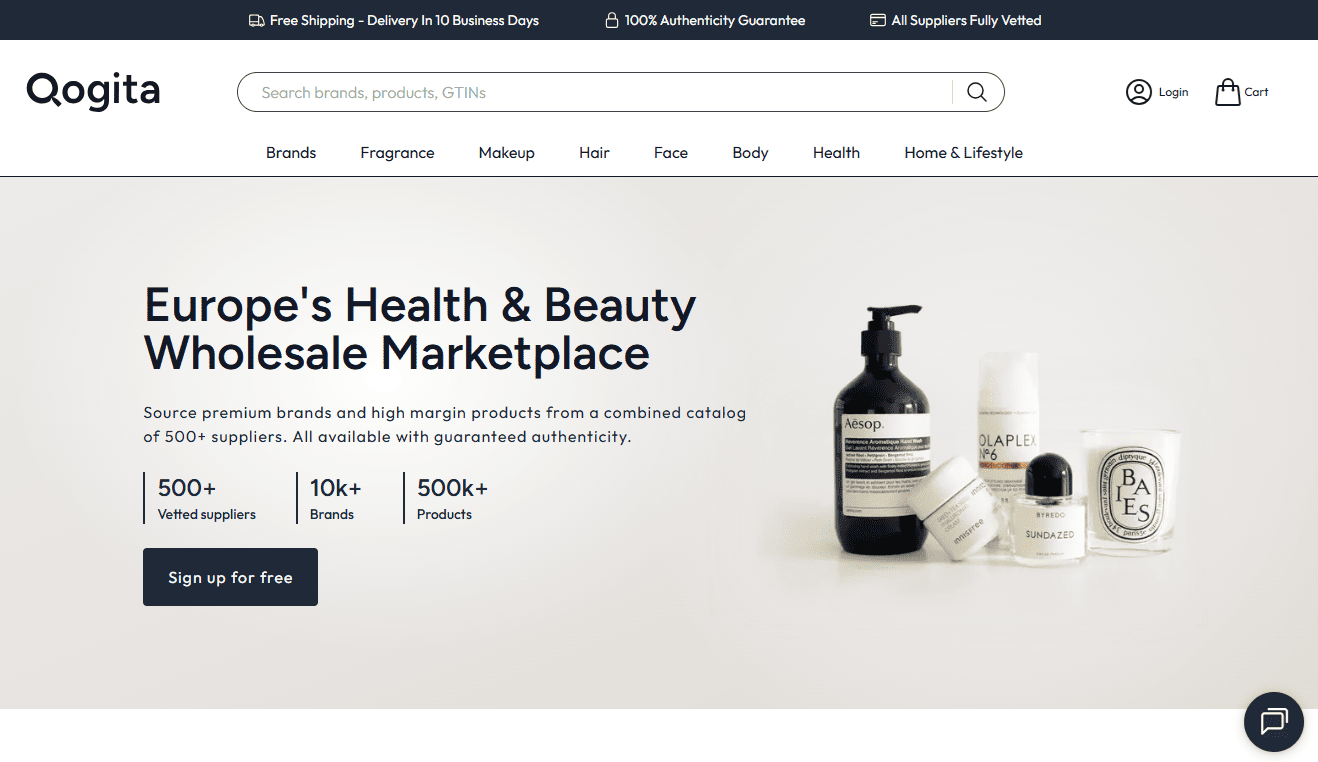
Wholesale marketplaces such as Qogita act as a digital bridge between thousands of retailers and a wide network of verified distributors. Instead of managing twenty different relationships, a retailer can source vegan makeup wholesale through a single platform.
These platforms use technology to aggregate stock from multiple sources, providing you with a centralised "super-catalog."
- Pros: Access to dozens of vegan makeup brands in one basket; low Minimum Order Values (MOVs) often starting at €300; simplified multi-brand ordering.
- Cons: Less direct negotiation with the original brand manufacturer.
2. Brand-Direct Wholesale Accounts
This route involves working directly with the manufacturer or the brand owner, such as applying for a B2B account with established cruelty-free makeup brands. It is a direct "one-to-one" relationship in which you buy stock directly from the brand's own warehouse.
- Pros: Direct access to brand marketing assets, testers, and the new product launches.
- Cons: Often comes with high Minimum Order Values (MOVs) and strict application requirements. It can be a big barrier for smaller stockists and retailers.
3. Distributors
Distributors are specialised intermediaries that hold exclusive rights to supply certain brands within a specific region or country. They handle the heavy lifting of logistics, customs, and local warehousing. When looking for cruelty-free makeup wholesale UK options, a local distributor can be a vital link for your supply chain.
- Pros: Local shipping with typically faster lead times; reduced shipping risks and easier customs compliance.
- Cons: Higher per-unit costs compared to buying direct, as distributors add their own markups to cover overhead. Understanding the wholesale vs distributor dynamic is very important for maintaining healthy profit margins after these middleman fees.
4. Private and White Label Manufacturers
For retailers looking to build their own brand identity, these manufacturers offer a path to ownership without a factory. While the terms are often used together, they serve different strategic goals for an ethical beauty business.
White Labeling involves buying a "ready-made" formula that the manufacturer already produces for multiple brands. You simply apply your own branding and packaging to their proven recipe.
Private Labeling is a more bespoke process where the manufacturer creates an exclusive formula based on your specific requirements, such as a unique scent or a particular botanical ingredient.
- Pros: Complete control over branding, packaging, and retail pricing.
- Cons: High upfront investment for custom packaging and initial production runs.
How to Vet a Vegan and Cruelty-Free Makeup Supplier

When you source cruelty-free makeup wholesale, you are essentially inheriting the supplier's ethical reputation. A single oversight could lead to stock that you cannot legally sell as "vegan," or worse, a PR backlash.
Use the following three-step verification process to make sure your inventory meets professional standards.
1. Check Ethical Claims, Certifications and Proof
Reliable suppliers should always provide clear, consistent statements about their ethical status. Avoid partners that use vague buzzwords like "clean" or "kind" without providing a specific policy.
- Look for Recognised Logos: The most reliable way to verify a supplier is through third-party certifications like the Leaping Bunny (Cruelty Free International), PETA’s Global Beauty Without Bunnies, or The Vegan Society.
- Request an Animal Testing Policy: A professional supplier should be willing to share their full animal testing policy. This document should explicitly state that neither the finished products nor the individual ingredients were tested on animals at any point in the supply chain.
- Cross-Reference Databases: Use PETA’s online searchable database to confirm if a brand is listed. This provides an extra layer of reassurance beyond the supplier's own marketing materials.
Learn how Qogita carefully vets its suppliers to ensure ethical, reliable partnerships in our full supplier vetting guide.
2. Verify Ingredients and Product Information
Labels can be misleading, so you must verify the actual chemical makeup of the stock.
- Request INCI Lists: The International Nomenclature of Cosmetic Ingredients (INCI) is a standardised global system for naming ingredients. Ask your supplier for full INCI lists to confirm the absence of animal-derived components.
- Identify Hidden Non-Vegan Ingredients: Use the INCI list to scan for common animal by-products that are often "hidden" under technical names:
Carmine (CI 75470): A red pigment derived from crushed beetles.
Guanine (CI 75170): A pearlescent shimmer made from fish scales.
Lanolin: A wax secreted by wool-bearing animals.
Squalene: Often sourced from shark liver (ensure it is the plant-based Squalane instead).
- Range Consistency: Confirm whether the entire brand is vegan/cruelty-free or if only specific product lines are. For example, a brand may have 10 shades of lipstick where 9 are vegan, but the red shade uses carmine.
3. Compare Pricing, MOQs and Margins
Ethical products often carry a premium, but your wholesale price must still allow for a healthy retail margin.
- Calculate Your True Cost: Factor in the wholesale price, shipping fees, and any potential import duties. In the UK, vegan makeup typically offers margins between 30% and 55%. If the margin is significantly lower, you may be overpaying for the wholesale stock.
- Check Minimum Order Values (MOVs): Many direct brands require high MOVs that can tie up your cash flow. If you are a smaller reseller, look for platforms with lower MOVs that let you test different vegan makeup brands without a massive upfront investment.
- Realistic Retail Pricing: Compare the wholesale price to the current market RRP (Recommended Retail Price). If the gap is too small, the product may not be viable for your business model.
What to Avoid When Choosing a Vegan and Cruelty-Free Makeup Supplier
In the high-stakes world of ethical beauty, the wrong supplier partnership can be more than a financial loss; it can be a brand-ending event. When you source cruelty-free makeup wholesale, you must remain hyper-vigilant against "greenwashing" and substandard stock.
Protect your business by looking out for these critical red flags:
- Vague Ethical Claims: Be wary of suppliers using marketing fluff like "animal-friendly" or "natural" without providing a concrete animal testing policy or recognised certifications. If they cannot name a specific auditing body like Leaping Bunny or PETA, the claim likely lacks substance.
- Refusal to Share Ingredient Lists: Legitimate wholesalers provide INCI lists as a standard part of their product data. A supplier who hides ingredients is likely hiding animal by-products or non-compliant chemicals that could lead to customs seizures or customer reactions.
- Unrealistically Low Prices: If a premium vegan makeup brand is being offered at 70-80% below the standard wholesale price, it is almost certainly a counterfeit. These fakes often contain hazardous levels of lead, arsenic, or bacteria, which can lead to legal liability for your retail business.
- Close Expiry and Poor Storage: Vegan and "clean" cosmetics often use fewer synthetic preservatives, giving them a shorter shelf life. Avoid suppliers who do not clearly state manufacturing dates or who ship products with damaged seals, which indicates poor climate control in their warehouses.
- Inconsistent Branding: Look very closely at fonts, logo alignment, and packaging quality. Substandard printing or spelling errors are big signs of illegitimate stock.
- Negative Retailer Feedback: Always check for reviews from other business owners. Consistent complaints about authenticity, shipping delays, or "bait-and-switch" inventory are non-negotiable reasons to walk away.
The Cost of a Bad Choice
Choosing the wrong supplier can do more than just waste your budget. Selling fake or misrepresented products can lead to your account being banned from major marketplaces, legal action from brand owners, and permanent damage to your customer trust.
It is always better to pay a fair price for a vetted, authentic product than to risk your business's future on a suspicious bargain.
Conclusion
Sourcing vegan and cruelty-free makeup wholesale is more than just finding products. It requires careful supplier vetting, transparency, and a strong understanding of the ethical standards your customers expect.
By following the steps in this guide, you can build an inventory that truly resonates with today’s conscious consumers.
At Qogita, this process is simple. As a centralised platform, we connect you to a pre-vetted network of over 500 suppliers, eliminating the need to manage multiple individual relationships.
With low Minimum Order Values and free shipping on all orders, Qogita helps retailers grow their ethical beauty ranges with confidence and ease.
Whether you are expanding your selection of vegan makeup brands or seeking more reliable cruelty-free options, we offer the tools and security you need to protect your brand and grow your business.