
In the competitive world of retail, every single penny counts. However, many UK and EU retailers are losing significant sums without even knowing it.
According to the ACFE 2024 Report to the Nations, the average organization loses 5% of its annual revenue to fraud. For a retailer operating on thin margins, this is a staggering figure. In the UK, data from the 2024 Economic Crime Survey reveals that businesses faced more than 6 million incidents of fraud in a single year.
In this guide, we will explore how supplier fraud acts as a quiet profit killer and provide the data-driven steps you need to stop the leak.
What is Supplier Fraud?
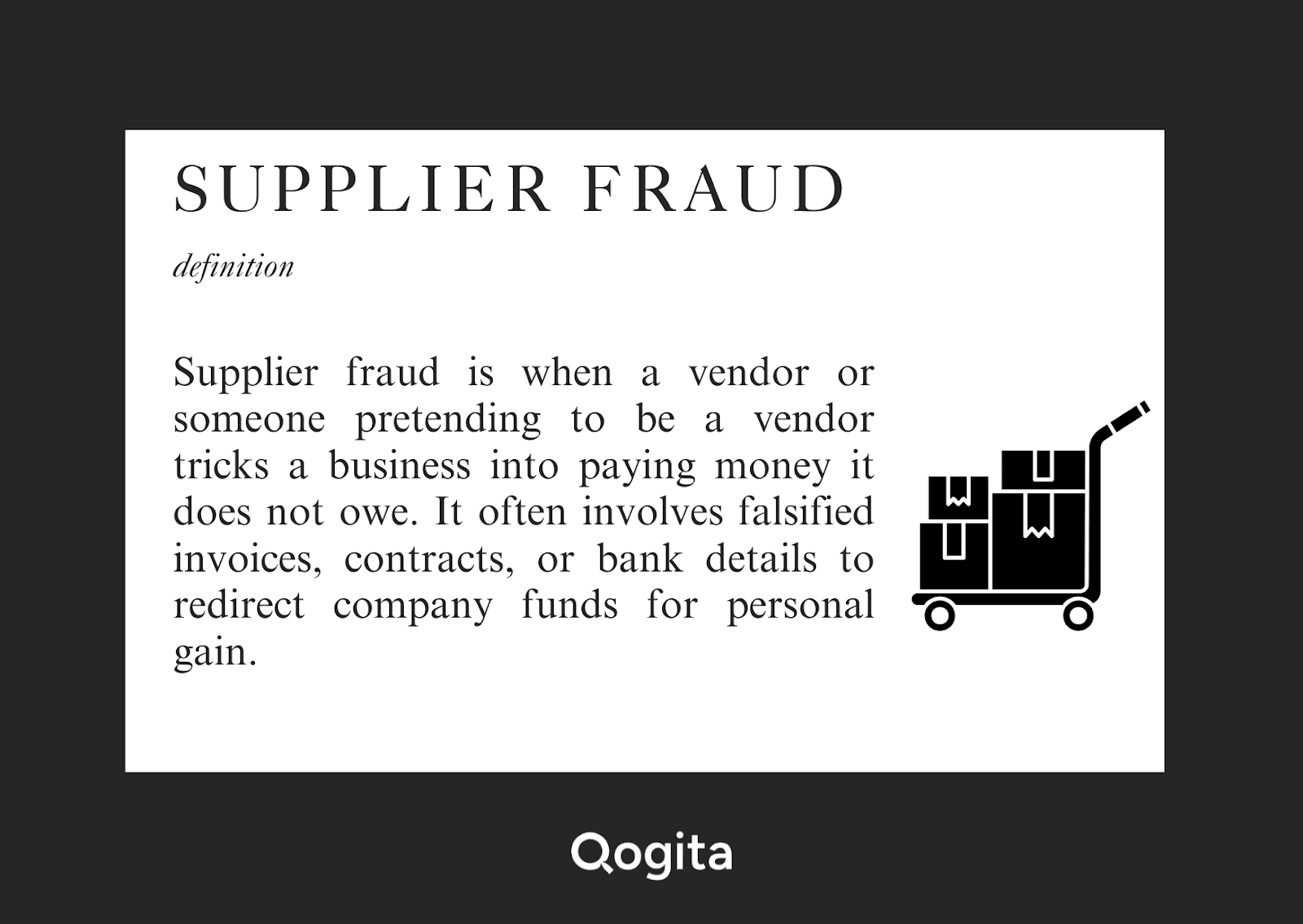
In simple words, supplier fraud is a type of deception where a vendor or someone posing as a vendor tricks a business into making payments it does not owe.
It is a deliberate manipulation of the procurement process for personal gain. This usually involves falsifying information on invoices, contracts, or bank details to divert company funds.
According to the ACFE 2024 Report to the Nations, this type of occupational fraud is often a long game. The study found that billing fraud schemes, a core part of supplier fraud, typically last 12 months before detection.
It is not always a one-time heist but a slow, methodical drain on a retailer's resources that stays hidden behind legitimate-looking paperwork.
Who is at Risk of Supplier Fraud?
While any business can be targeted, certain retailers are more vulnerable than others.
PwC’s Global Economic Crime and Fraud Survey found that 51% of organizations globally have experienced fraud in the last two years, but the risks are higher for some specific groups:
- Small and Medium Enterprises (SMEs): Retailers with less than 100 employees often lack a dedicated fraud department. Because one person might handle both ordering and payments, there is no second pair of eyes to spot errors.
- High-Volume Retailers: Businesses in sectors such as grocery or fast fashion process thousands of invoices each month. Fraudsters rely on the needle-in-a-haystack method, hiding small, fraudulent charges in a sea of legitimate transactions.
- Businesses with Complex Supply Chains: Retailers sourcing goods across EU borders face higher risks. The European Anti-Fraud Office (OLAF) reported that in 2023 alone, they protected over €1 billion in EU funds from various fraudulent activities, many involving cross-border procurement trickery.
Common Types of Supplier Fraud in Retail
Supplier fraud is rarely a single act of theft. Instead, it typically falls into several categories, ranging from high-tech digital scams to old-fashioned collusion.
Understanding these types of fraud is important for any retailer looking to protect their bottom line.
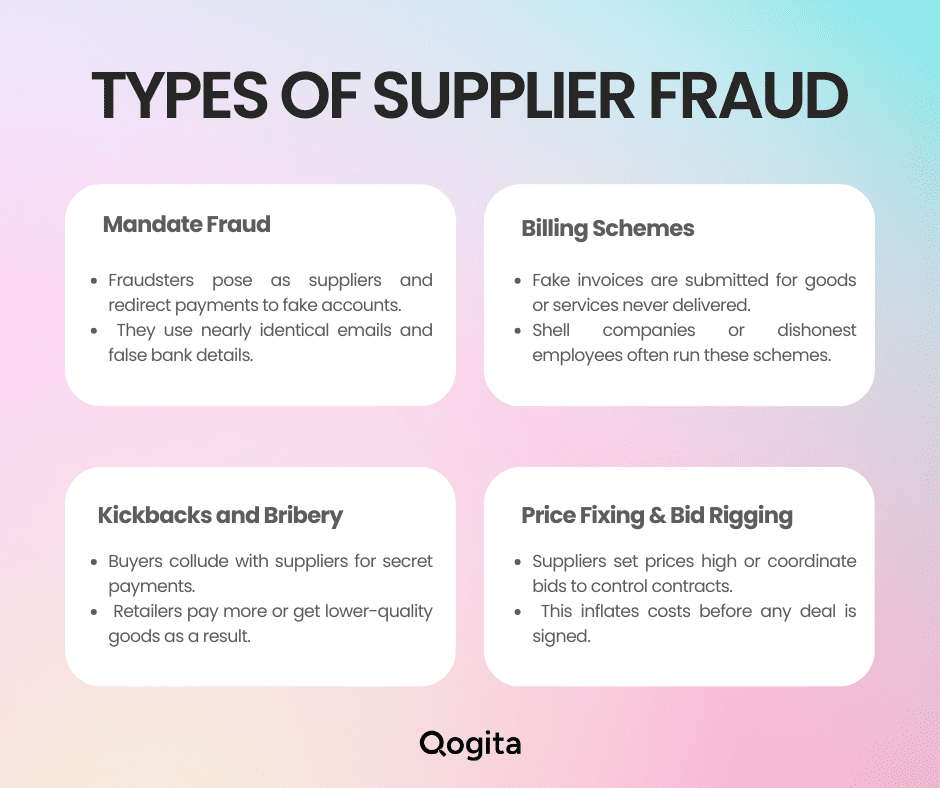
1. Mandate Fraud (Payment Diversion)
This is currently one of the most significant threats to UK businesses. In the first half of 2024 alone, invoice and mandate scams caused around £25.7 million in losses, with the majority (78 %) occurring on business accounts.
In this scheme, a fraudster impersonates a legitimate supplier and contacts your accounts payable department. They often use an email address that looks almost identical to the real one.
For example, if your supplier uses @retail-supplier.com, the scammer might use @retail-suppiler.com. They claim the supplier has changed their bank details and provided a new account number for future payments.
If the update is made without a phone call to a known contact to verify the change, your next legitimate payment is sent directly to the criminal’s account.
2. Billing Schemes and Shell Companies
A billing scheme involves submitting invoices for goods or services that were never delivered. This often involves a shell company, which is basically a fake business set up by a fraudster specifically to bill the retailer.
In many cases, this is an internal job where a dishonest employee creates a fake vendor in the system that they personally control.
For example, a fraudster might submit a monthly invoice for consulting services or maintenance for a small amount like £450. Because the amount is low and the description is vague, most retailers pay it without a second thought, draining thousands of pounds over the course of a year.
3. Kickbacks and Bribery
This occurs when a retail buyer colludes with a supplier. The supplier inflates their prices or provides lower-quality goods, and in return, the retail buyer receives a kickback or secret commission.
This type of corruption is particularly damaging because it is hard to spot on paper. The goods are actually delivered, so there is no missing inventory, but the retailer is paying a trust tax that inflates their costs.
An example would be a clothing buyer choosing a fabric supplier who charges 20% more than competitors because that supplier is secretly paying for the buyer’s family holiday.
4. Price Fixing and Bid Rigging
This type of fraud happens before a contract is even signed. In price fixing, multiple suppliers secretly agree to set their prices at a high level so that no matter which one the retailer chooses, the price is artificially inflated.
Bid rigging is similar; competitors coordinate their bids so that a specific vendor wins the contract. This is often done in cycles so each competitor eventually gets a turn.
PwC’s 2024 Global Economic Crime Survey found that procurement fraud, which includes these bidding scams, is now among the top three most disruptive economic crimes globally.
How to Spot the Red Flags
Identifying fraud before it drains your bank account requires a sharp eye for detail. Most fraudulent schemes leave a trail of data or behavioural patterns that do not quite fit the norm.
Here are some important warning signs retailers can spot:
1. The Round Number and Threshold Rule
Fraudsters create invoices for round sums, such as exactly £2,000 or €5,000, because they are guessing at what sounds like a reasonable fee. Legitimate invoices usually include specific tax calculations or per-unit costs that result in uneven numbers.
Furthermore, many retailers have internal approval limits. For example, any invoice over £1,000 requires a manager’s signature. A classic red flag is a series of invoices for £990 or £995. These are designed to stay just below the radar to avoid extra scrutiny.
2. Employee Behaviour and Presenteeism
Not all red flags are digital. The ACFE 2024 report notes that a refusal to take a holiday is one of the most common behavioural red flags, present in 6% of fraud cases.
In many procurement scams, the dishonest employee must be physically present to intercept "Return to Sender" mail, answer phone calls from suspicious vendors, or manipulate the daily payment run.
If a member of your accounts team has not used their 20+ days of statutory annual leave in over a year, it could be a sign they are protecting a secret.
3. Data Overlaps and Ghost Addresses
Using basic data analytics can reveal shocking connections. A common technique is to compare your supplier database against your employee payroll records. If a supplier’s bank account number or home address matches an employee’s details, you likely have a shell company issue.
Another red flag is a supplier address that is a P.O. Box or a residential flat. Legitimate wholesalers and manufacturers typically operate out of commercial or industrial spaces.
4. Spikes in Inventory Shrinkage
If your records show you are paying for 1,000 units of a product, but your warehouse only receives 800, you have a problem.
While shoplifting is often blamed for missing stock, inventory shrinkage is frequently a result of supplier fraud. This happens when a vendor bills for a full shipment but knowingly sends a partial one, often with the help of a warehouse staff member who signs the delivery note without counting.
How to Prevent Supplier Fraud
You know what they say: "Prevention is better than cure." Spotting fraud after it happens is important, but stopping it before money leaves the business is way more effective.
A few controls can go a long way in protecting your margins and discouraging bad behaviour altogether.
1. Implement a Three-Way Match
One of the simplest and most effective ways to prevent billing fraud is the three-way match. Before any payment is approved, your finance team checks that three documents line up:
- The Purchase Order (PO): The official request sent by your buyer to the supplier.
- The Goods Received Note (GRN): The record from the warehouse confirming what was actually delivered.
- The Invoice: The bill sent by the supplier.
If the numbers don’t line up across all three, the payment is put on hold. This kind of check catches things like fake deliveries, duplicate invoices, or quietly padded charges before any money leaves the business.
2. Separate Responsibilities Wherever Possible
Fraud is much more likely when one person has their hands on every step of the payment process. In retail, it helps to follow a simple rule of two from the start. The person who brings a supplier on board shouldn’t be the same person signing off on invoices or approving bank transfers.
Once those roles are split, fraud gets a lot harder to pull off. It usually means someone else would have to be involved, and that’s where things tend to unravel. Extra eyes make errors easier to spot and bad behaviour much harder to hide.
3. Always Verify Bank Detail Changes Offline
An email should never be enough when bank details change. If a supplier emails to say they’ve updated their payment information, your team should pause and verify it outside of that email thread.
That means calling a known, trusted contact at the supplier using a phone number from your original contract or internal records, not the number included in the message.
This step stops the vast majority of payment diversion fraud before any money leaves your bank account.
4. Leverage the Power of Tips and Hotlines
The ACFE 2024 report is clear: 43% of all fraud is detected via tips, which is more than triple the rate of internal audits (14%). Furthermore, organisations that provide an anonymous whistleblower hotline see 50% smaller losses than those without one.
Providing a safe, GDPR-compliant way for employees or honest suppliers to report suspicious behaviour is your most powerful defensive tool.
5. Conduct Surprise Audits
Standard annual audits are often predictable, allowing fraudsters to hide their tracks. However, the ACFE found that surprise audits can reduce the duration of a fraud scheme by approximately 42%.
By randomly selecting five vendors each quarter and verifying every single delivery note against the payments made, you create a culture of accountability that acts as a massive deterrent to both internal and external fraudsters.
Conclusion
Supplier fraud is a serious threat that can drain a retailer's budget for months before it is noticed. With the average fraud scheme lasting an entire year, waiting for a problem to appear is a risky strategy. The data shows that simple steps, such as setting up a tip line or conducting surprise audits, can cut your losses by half.
By checking every invoice against what actually arrived in your warehouse and double-checking bank changes over the phone, you can stop these leaks.
In the retail industry, where profit margins are often small, preventing fraud is one of the most effective ways to keep your business healthy and secure.
Supplier Fraud FAQs
How can I identify supplier fraud?
You can spot fraud by looking for round-number invoices or multiple bills that sit just below your manager's approval limits. Use data analytics to check if a supplier’s address or bank details match any of your employees' records. Regularly comparing your warehouse delivery notes against your actual payments will also highlight if you are being billed for goods you never received.
What is vendor theft fraud?
This occurs when a supplier or a dishonest employee uses their position to steal money or stock from a business. Common examples include short shipping, where a vendor sends fewer items than you paid for, or submitting fake invoices for services that were never provided.
What is a vendor in scamming?
In a scamming context, a vendor is either a completely fake entity created to steal money or a real supplier that uses deceptive practices to overcharge. Some scammers also impersonate your existing, trusted vendors by sending fake emails to change payment details. These ghost vendors rely on poor record-keeping to slip fraudulent invoices into your weekly payment run.
Is supplier fraud internal or external?
Supplier fraud is typically considered an external form of fraud because it involves a party outside the business attempting to extract funds.