

The Amazon Wholesale model is the most reliable way to build a stable income online. Instead of creating a brand from scratch (Private Label) or chasing fleeting deals (Arbitrage), wholesale focuses entirely on buying products from famous brands in bulk at a discount.
Over 60% of Amazon's total product sales now come from third-party sellers, many of whom utilize wholesale. By adopting a multi-category sourcing approach, you drastically reduce your business risk.
In this guide, we will provide the practical blueprint for setting up, sourcing, and scaling a profitable Amazon business focused entirely on multi-category wholesale products.
Understanding the Wholesale Amazon Model
Building a successful wholesale operation requires shifting your perspective from being a retail buyer to a channel partner. Wholesale is a sophisticated B2B model, and understanding its operational differences is critical before you place your first bulk order.
What Type of Business is Amazon?
From the perspective of a third-party seller, Amazon is a complex ecosystem best understood as a marketplace + fulfillment infrastructure.
- Marketplace: It provides the storefront and the customer traffic (crucial for wholesale, as you don't need to generate demand).
- Fulfillment Ecosystem (FBA): It handles the core logistics, allowing you to scale without needing your own warehouse. This infrastructure accepts products in bulk (case packs) and ships them out individually, aligning perfectly with the wholesale volume model.
What is an Amazon Business Account (and When Sellers Should Use It)?
While all sellers operate on Amazon, the term "Amazon Business Account" refers to the specific features designed to facilitate sales to B2B (Business-to-Business) buyers, which is often ideal for wholesale products.
Wholesale sellers should always enable B2B features. Many wholesale products (like bulk office supplies, commercial cleaning products, or specialized hardware) are purchased by other businesses.
Enabling this account allows you to offer Business Pricing and Quantity Discounts, making your listing more competitive to bulk buyers and providing an additional, higher-margin revenue stream.
How Wholesale Differs Operationally From Retail
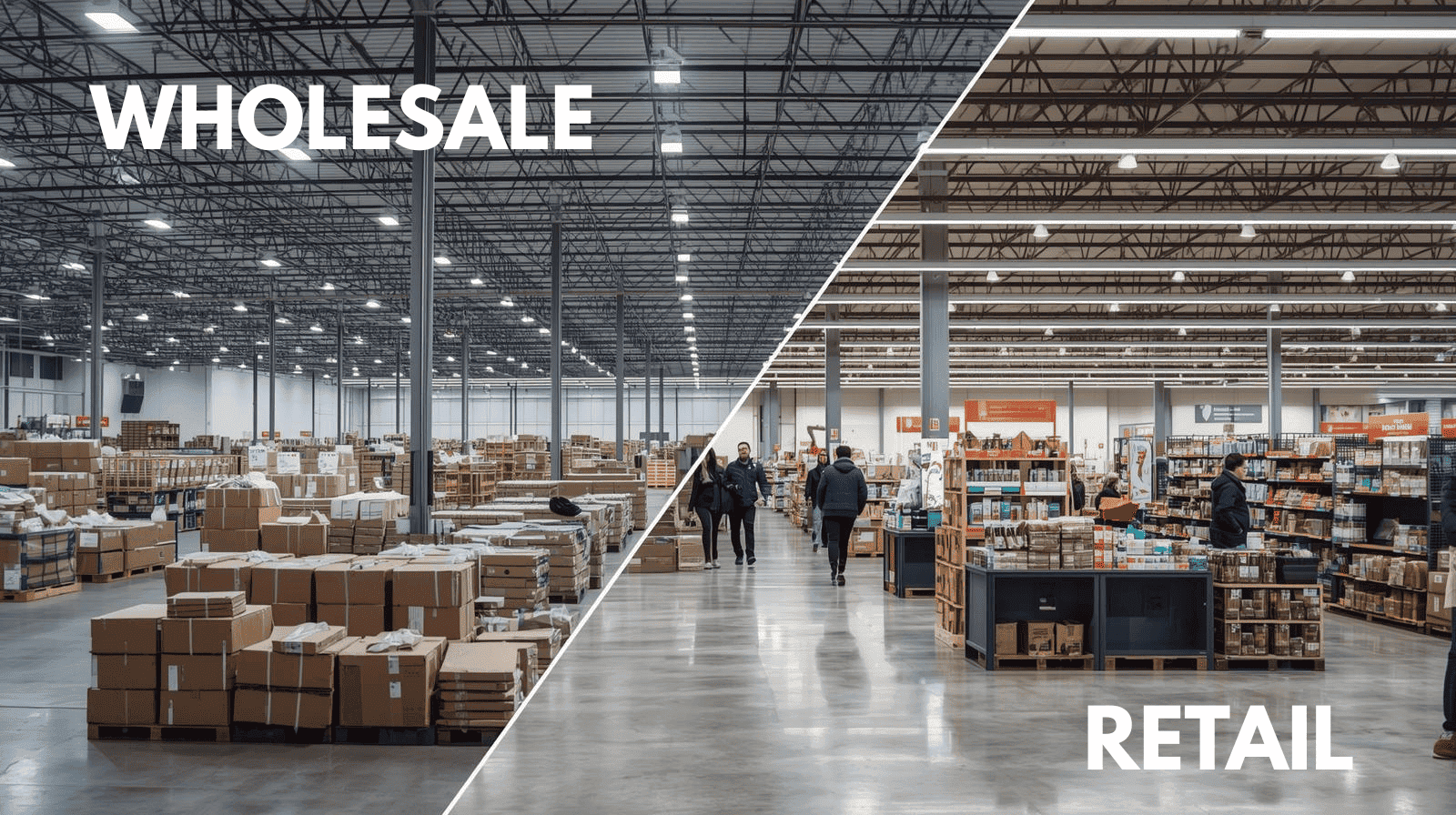
The shift from retail to wholesale is defined by three key operational practices:
- Case Packs and MOV (Minimum Order Value): You don't buy single items; you buy factory-sealed case packs (e.g., a case of 24 units). Suppliers enforce an MOV (e.g., $500 or 10 case packs), which is why wholesale requires more initial capital than retail arbitrage.
- Brand Relationships: Unlike Private Label, you do not own the brand. Your success depends on your ability to secure and maintain an account with the brand or its official distributor. The relationship is long-term and built on professionalism (e.g., using a Prep Center and honoring MAP pricing).
- Compliance: You must provide Amazon with invoices (not receipts) from authorized suppliers to prove authenticity. This level of documentation drastically reduces the risk of inauthentic product suspensions.
Why Wholesale is More Research-Driven Than Negotiation-Driven?
Many beginners focus too much on negotiating a 5% better discount. Successful wholesale is about researching your way to profit.
It's easier and more impactful to spend an hour finding a profitable product with a 30% margin that sells 100 units a month than it is to negotiate a 2% better deal on a low-velocity item.
Your success is defined by the quality and velocity of the ASINs you choose, not just the initial price you pay the supplier.
Why Multi-Category Wholesale Makes Sellers More Profitable
The biggest difference between a single-category seller and a multi-category seller is the switch from gambling to portfolio management.
Successful long-term sellers treat their Amazon products like a financial portfolio, aiming for stability and balanced risk (a concept rarely applied in standard Amazon guides).
Applying Portfolio Theory to Amazon Assets
In finance, diversification protects assets from sudden sector-specific downturns. On Amazon, this means:
- Buffer Against Algorithm Swings: If Amazon suddenly suppresses listings in the "Pet Supplies" category (due to new regulations or a system glitch), your revenue from "Beauty" and "Home & Kitchen" is unaffected.
- Seasonal Hedging: A seller relying only on "Toys" will see massive Q4 revenue followed by a steep 50-70% drop in Q1. A multi-category seller can balance this by adding low-seasonality products like Health & Household or Beauty, which have consistent demand year-round.
How Sellers Who Add 3–5 Categories Increase Sell-Through Speed
Adding categories reduces your dependence on the success of a single ASIN, speeding up your overall inventory movement (sell-through rate) and cash flow.
- Data-Driven Insight: According to industry reports, the average net profit margin for Amazon sellers is typically between 15% and 20%. However, sellers with strong multi-category portfolios are more likely to achieve margins above 20% because they can offset low-margin, high-velocity goods with high-margin, stable goods.
- Reduced Competition Exposure: When a hot, single-category product attracts dozens of sellers, the price crashes. Multi-category sellers can simply shift capital and inventory resources to their 4th or 5th category, where competition may be lower and margins healthier.
Case Example: The UK Seller's Q1 Stability
Consider a UK wholesale seller, "Elias," who began with $5,000 invested across three categories:
If Elias had only sold Home & Kitchen, his Q1 revenue would have plummeted 40%.
By diversifying, the steady growth in Beauty and Pet Supplies significantly buffered the seasonal drop, resulting in a minor revenue dip of less than 5% overall. This stability is the key to scaling via bank financing and managing reliable cash flow.
Variation in Return Rates and Fees
Category choice directly impacts the hidden costs of your business:
By mixing categories, a wholesale seller can actively keep their overall return rate low.
For instance, high-volume, low-return categories like Health & Household or Pet Supplies protect the seller’s overall performance metrics from the inevitable higher return rates associated with categories like Apparel or Electronics.
Setting Up Your Amazon Business the Right Way
Setting up the Amazon seller account is only the first step. For wholesale success, particularly when dealing with complex markets like the UK and EU, your foundational business structure must be built to appear professional and legally compliant.
For a complete, step-by-step walkthrough on account creation, fees, and general procedures, be sure to read our comprehensive guide on How to sell on Amazon.
1. Establish Your Legal Identity
Suppliers will not deal with an individual; they require a formal business entity.
Form a Company
Set up an LLC (Limited Liability Company) or its local equivalent (like a Limited Company in the UK). This provides legal protection and gives you the official documents (like a Certificate of Incorporation) needed to open wholesale accounts.
Get a Tax ID and Resale Certificate
This is crucial. You need a tax identification number (like an EIN in the US or your Company Registration Number in the UK). More importantly, you must obtain a Resale Certificate.
It proves to suppliers that you are buying products for resale, exempting you from paying sales tax to them. Without this, you cannot buy at true wholesale prices.
2. The Amazon Account: Going Pro and B2B
You need the correct settings in your Seller Central account to handle wholesale volume.
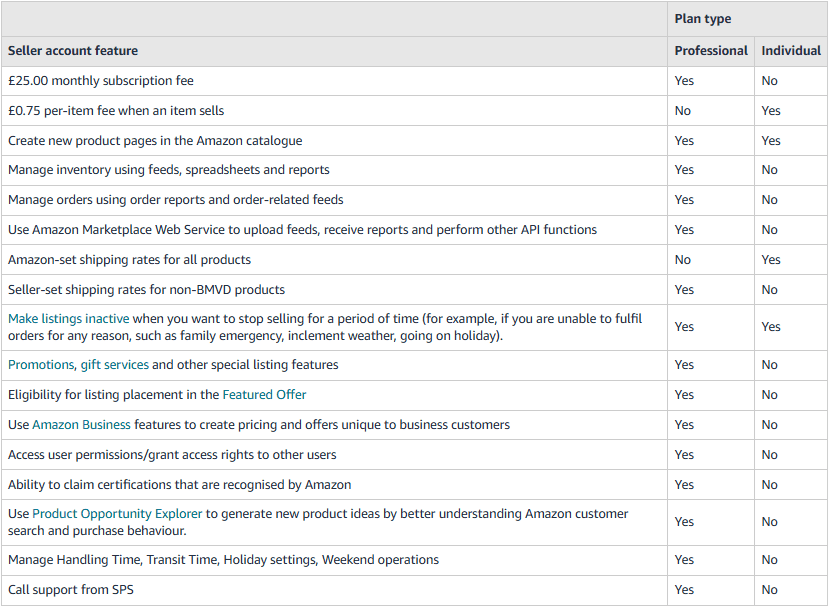
Professional Seller Plan
You must be on the Professional Selling Plan $39.99 or £25 + VAT per month). This gives you essential tools like bulk upload, automated reports, and the ability to win the Buy Box.
Here are the differences between Individual and Professional Selling Plan on Amazon:
Enable Amazon Business Account Features
This is vital for wholesale. When you enable all the B2B features, you can sell to corporate buyers who purchase in bulk (e.g., offices buying cleaning supplies). These buyers often lead to higher-value, more stable orders, as they are less concerned with the absolute lowest price.
3. Critical UK/EU Compliance
If you are operating in or shipping to the UK/EU, these requirements are non-negotiable for wholesale sellers handling volume:
VAT Registration
If you sell in the UK or store inventory in an EU country (using FBA), you must register for VAT. This allows you to claim back VAT on your inventory purchases and correctly invoice B2B customers.
EORI Number
If your wholesale goods cross UK/EU borders (whether you’re importing from China, India, or the US, or shipping from the UK into EU fulfilment centres), you need an EORI number. It’s required for all customs declarations and helps prevent border delays.
Product Safety Marks (CE/UKCA)
Wholesale sellers are fully responsible for ensuring that imported goods carry the correct safety certifications.
- CE Mark applies to products sold in the EU.
- UKCA Mark applies in Great Britain (England, Scotland, Wales).
- Always confirm compliance documents with suppliers before dispatching goods to Amazon FBA to avoid removals, suspensions, or fines.
To understand cosmetic regulations in more detail, make sure you read our full guides on UK compliance and EU compliance.
4. Realistic Starting Cost
The cost to start a legitimate wholesale business is dominated by inventory and compliance, not Amazon fees. Expect to invest $2,500 to $5,000 to cover your first few multi-category orders. It ensures you meet the supplier's Minimum Order Value (MOV) and professional appearance.
How to Start an Amazon Business with Wholesale Products
Once your business is legally structured, the next, most crucial step in wholesale is building a robust supplier pipeline. This is where your multi-category strategy begins to take shape.
Building Your Wholesale Supplier Pipeline
The secret to wholesale is consistently finding suppliers that other Amazon sellers have overlooked. This isn't about Googling wholesale distributor list; it's about strategic searching across traditional and modern digital channels.
Types of Wholesale Suppliers by Profitability Tier
1. Brand-Authorized Wholesalers / Manufacturers (Highest Tier)
Offer the best pricing but often have high MOVs. They are the primary source of guaranteed, authentic, low-risk inventory.
2. Regional Distributors (Mid-Tier)
These are easier to get accounts with and are crucial for multi-category sourcing. They represent dozens of brands under one roof, allowing you to quickly add multiple low-volume product lines from one Purchase Order (PO).
3. B2B Wholesale Marketplaces (Efficiency Tier)
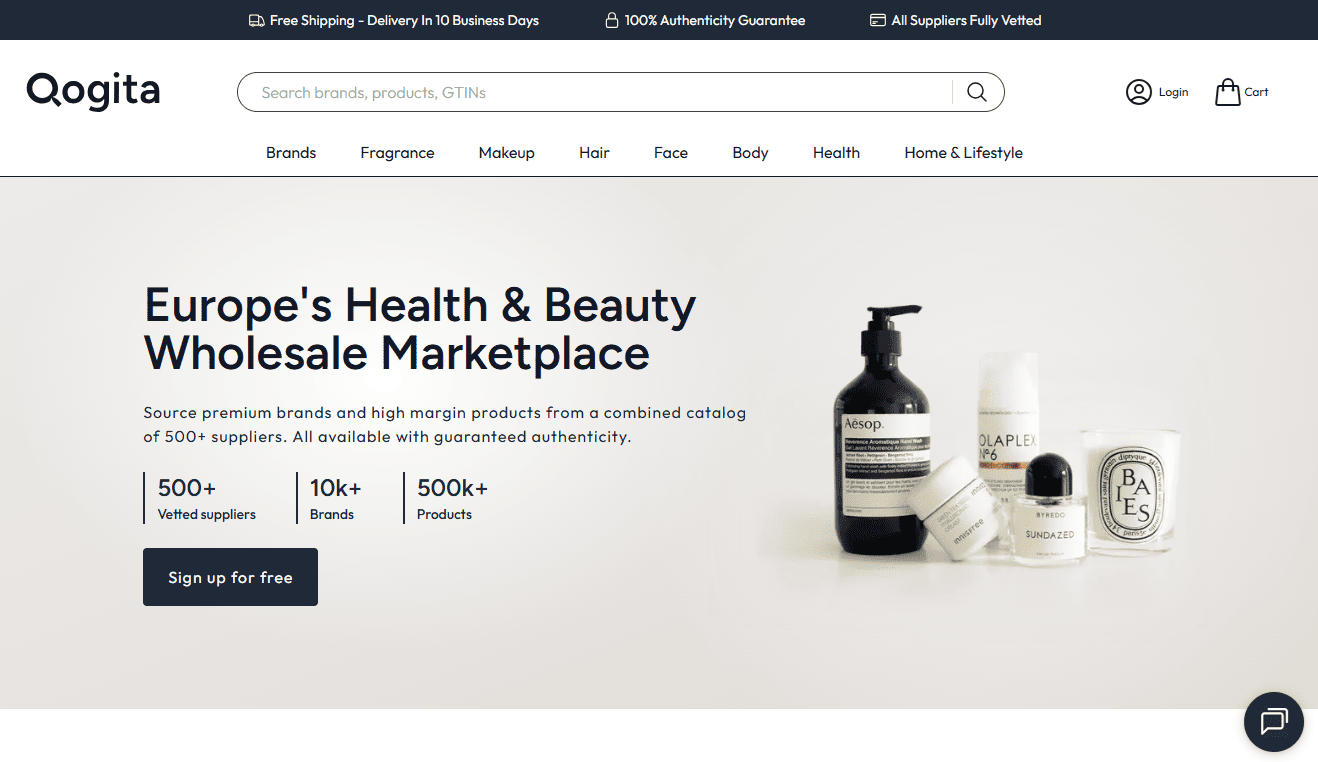
Platforms like Qogita solve the initial supplier friction. By consolidating over 500 vetted European wholesalers and brands (primarily in the high-demand Health & Beauty categories) into a single platform, Qogita offers:
- Multi-Category Access: Instantly browse tens of thousands of products across categories like Perfume, Hair Care, and Skincare, making multi-category diversification immediate.
- Lower Entry Barrier: Access wholesale pricing and often lower Minimum Order Values (MOVs) than dealing with each supplier individually.
- Compliance Support: They provide compliant invoices and documentation, which is crucial for ungating on Amazon and addressing authenticity claims.
Unique Sourcing Strategies Sellers Overlook
To find the hidden gems, look outside the standard channels:
- Trade Counter Relationships: Many specialized distributors (e.g., in industrial supplies, auto parts) operate primarily offline. Approaching them as an e-commerce partner can open up exclusive wholesale accounts.
- Vertical Industry Distributors: Instead of general pet distributors, look for niche players focused on aquatic supplies or equine products. These specialized distributors often carry multi-category products within their specialty but face far less Amazon competition.
- Supplier Catalogs: When you open an account, immediately ask for their full multi-line catalog. Many suppliers have hidden SKUs across multiple categories (e.g., a hardware distributor may also carry cleaning chemicals and safety gear) that they don't list on their primary website.
Vetting Suppliers for Long-Term Profitability
A low price is meaningless if the supplier is unreliable or ruins your Amazon metrics. Vetting goes beyond the cost per unit.
1. MAP Enforcement Consistency
The Minimum Advertised Price (MAP) is the lowest price a brand allows you to publicly advertise. If a supplier sells a brand that rigorously enforces MAP, it means your profit margins will be stable. If they don't, competition will quickly drive the price to zero.
2. Average Lead Time
This is the time from when you place the order to when the goods arrive at your Prep Center or FBA warehouse. If the lead time is too long (e.g., 6 weeks), you risk stocking out and destroying your Inventory Performance Index (IPI) score. Aim for suppliers with a reliable 1-3 week lead time.
3. Fill Rate
This is the percentage of your order that the supplier actually delivers. A supplier with a 70% fill rate means 30% of your ordered products were out of stock, wasting your time and creating inventory gaps. Demand a reliable fill rate, ideally above 95%.
How to Negotiate Better Pricing Without "Asking for Discounts"
Never approach a supplier only asking for a lower price on your first order. This is a commodity mindset. Instead, focus on demonstrating value:
Increase Purchase Frequency, Not Volume
Instead of placing one huge order of £10,000 every three months, offer to place smaller, consistent orders of £3,500 monthly. This is more valuable to the supplier because it helps their cash flow planning and signals you are a reliable, long-term partner.
Negotiate Other Terms
Ask for Net 30 payment terms (30 days to pay the invoice) or free freight (shipping costs covered) instead of a price discount. Saving £200 on shipping can be more profitable than a 1% price cut.
Practical Checklist to Spot Unreliable Suppliers
- They do not ask for your Resale Certificate or Company ID.
- Their website lists prices without requiring you to log in to a wholesale account.
- They only accept payment via non-traceable methods (e.g., wire transfer to an individual name).
- They claim to be a distributor for a major brand, but cannot provide a reference from that brand.
Category-by-Category Analysis of Wholesale Profit Opportunities
The multi-category wholesale strategy relies on balancing risk, margin, and velocity across different product areas. The table shared below highlights the unique challenges and hidden profitability within the most wholesale-friendly categories.
If you're planning to launch a wholesale cosmetics business, make sure to check out our full guide on the most profitable wholesale cosmetics you can sell on Amazon.
Key Risks to Avoid (Across All Categories)
A multi-category approach allows you to deliberately step around these common wholesale hazards:
Meltable Periods
From April 15th to October 15th, FBA will not accept meltable items (chocolates, gummies, some wax-based cosmetics) due to warehouse temperatures. Selling these products via FBA during this period risks disposal.
Compliance and Documentation
Categories like Health & Household and Grocery require the highest level of documentation. Amazon may request Certificates of Analysis (CoA) or Good Manufacturing Practices (GMP) certifications. Always verify your supplier can provide these before buying.
High Return Rates
Avoid categories known for high returns (e.g., clothing, complex electronics). Beauty, Pet Supplies, and Stationery generally maintain much lower return rates (typically 2%–8%), protecting your overall Account Health Rating.
Product Research Framework for Wholesale: The 6-Layer Method
Wholesale product research isn’t about chasing one perfect item. It’s about making sure the product is stable, safe to sell, and capable of delivering steady profit.
Before you invest in any ASIN, you should review all six layers below to confirm the product is truly worth your capital.
Layer 1: Brand Strength Check (Is it Safe to Sell?)
First, confirm the brand is legit and well-managed. Look for products that have been on Amazon for at least 18 months and have hundreds of positive reviews. This proves the product has sustained customer demand.
If the brand actively manages its listing with good photos and A+ content, it's a good sign that they will also enforce their Minimum Advertised Price (MAP), which protects your margins from crashing.
Layer 2: ASIN Seasonality Mapping (When Does it Sell?)
You need to know the product's sales pattern over the full year. Use a tool like Keepa to review the sales rank (BSR) history for the last 12 months. Wholesale thrives on stability. You want to see consistent performance, not massive spikes followed by long droughts.
By mixing products with different seasonal patterns (e.g., balancing high-Q4 toys with steady, year-round pet supplies), you ensure your cash flow never stops.
Layer 3: Buy Box Stability Audit (Can I Get My Turn?)
This is where wholesale due diligence pays off. Since you are not the only seller, you must confirm that the Buy Box is shared fairly. Check the pricing history and seller rotation over the last 30 days.
The ideal listing has the Buy Box rotating evenly among 3 to 7 FBA sellers. If one seller dominates the Buy Box (holding over 80% of the time), they are likely the brand owner and will make it very difficult for you to get sales. Avoid highly volatile listings where prices change hourly.
Layer 4: Seller Saturation Score (How Much Competition is There?)
Count your competitors and assess their strength. The most profitable listings are typically managed by 4 to 7 serious FBA sellers. If you see 15 or more sellers, the listing is likely attracting too many retail arbitragers, which will lead to unpredictable prices.
Also, check the stock depth of your main competitors. If one competitor holds thousands of units, they can suppress the price for months. Focus on listings where rivals hold a more manageable amount of stock.
Layer 5: Inbound Logistics Costing (Where Do Profits Go?)
Hidden fees can destroy your profit margin. Before placing an order, use the FBA Revenue Calculator to get the precise FBA fees. Pay close attention to the FBA Weight Handling Fee. Products that are heavy or oversized (such as large pet bags or cleaning refills) can quickly eat into your margins.
Always calculate the true cost per unit, including the supplier's price, the cost of shipping to the warehouse, and the fee charged by your Prep Center for labeling and packaging. Your target net margin must survive this test.
Layer 6: Reorder Frequency Predictor (Will My Cash Cycle Fast?)
Wholesale success is built on fast cash flow. The best products are those you can buy, sell, and reorder quickly. For your multi-category portfolio, aim for products that will sell out your initial stock within 45 to 60 days.
Prioritize replenishable, consumable items like specialty shampoos, vitamins, or printer ink. These create predictable, repeat purchase cycles, which will generate 70–90% of your reliable revenue.
Scaling Systems: From £1,000/Month to Portfolio Growth
The wholesale model is built for scaling because you are simply increasing the volume of products that are already selling. Scaling from a beginner's revenue of £1,000 per month to £10,000 and beyond requires systems, not just more product searching.
The Portfolio Approach to Inventory
Do not invest all your capital in a single large order. Your multi-category approach should start with 20 to 30 small ASINs (units of 20-30 each) to test the market quickly.
Identifying Winners
Follow the 45–60 day velocity rule. Any product that sells out your initial stock within this window is a winner. Aggressively shift your capital away from slow movers (dead stock) and into these high-velocity replenishable products (like your stable Health & Household items).
The Reorder System:
Successful sellers rely on a tight reorder cycle, often following a "Three-Week Reorder Rule" for their winning ASINs. This means you order stock three weeks before you anticipate running out, which maximizes your capital efficiency and minimizes stock-outs.
Scaling the Supplier Pipeline
To grow revenue, you need to reduce your reliance on any single source.
- Adding Depth: For your winning products, add a 2nd and 3rd authorized supplier in that same category. This mitigates the risk of a single supplier running out of stock or raising prices unexpectedly.
- Automation is Key: Use inventory forecasting tools (e.g., Seller Assistant, Keepa) to automate the tracking of daily sales velocity and predict reorder dates. Manual processes will limit your ability to manage hundreds of ASINs across multiple categories.
7 Common Mistakes That Kill Amazon Wholesale Businesses
The wholesale model is low-risk, but mistakes in finance and sourcing can quickly drain your capital. Avoid these common pitfalls that often lead to new seller failure.
- Buying Based on Margin Instead of Velocity: A 30% margin is meaningless if the product takes six months to sell. Always prioritize high sell-through rate (fast movement of stock) over the highest possible margin. Slow-moving stock ties up cash and incurs long-term storage fees.
- Ignoring the Buy Box Stability Audit: Wholesale requires sharing the Buy Box. Failing to verify that the Buy Box rotates fairly among multiple sellers (3–7 FBA sellers) means you will struggle to get sales, as the brand or a dominant seller is likely monopolizing the listing.
- Poor Cash Flow Forecasting: This is the biggest killer. New sellers fail to account for the time Amazon holds funds (the 14-day disbursement cycle). Placing your second order without planning for this cash crunch halts your momentum and often results in stock-outs.
- Over-reliance on "Big Brand" Wholesalers Everyone Knows: Distributors for globally famous brands are saturated with competition, often leaving little to no profit margin. Focus on mid-sized, regional, or niche brand distributors who are less optimized for Amazon.
- Failing to Verify Supplier Documentation: As we said before, Amazon requires proper invoices (not receipts) from authorized distributors to prove authenticity. Using an unreliable supplier or one who cannot provide compliant paperwork leaves you vulnerable to account suspension.
- Ignoring Case-Pack and Packaging Rules: Shipping broken case packs or incorrectly labeled boxes to FBA is an operational mistake that results in unexpected Prep Center fees, rejection, or costly repackaging, which quickly erodes your profit.
- Not Diversifying Categories: Putting all your investment into a single product category (e.g., only Toys) exposes your entire business to seasonal lulls, single-category restrictions, or algorithm changes. The multi-category approach is the core defense against this failure.
Conclusion
Building a profitable Amazon business through wholesale isn't rocket science; it's smart business. Instead of hoping a new product takes off, you simply buy established products in bulk and use Amazon's massive traffic. This approach minimizes risk and focuses your energy on efficiency.
The best sellers don't rely on luck. They spread their investment across several product types, which keeps their sales steady all year long. When you use B2B wholesale platforms, like Qogita, to find verified inventory easily, you spend less time searching and more time selling.
Ultimately, success comes down to treating your Amazon listings like a balanced portfolio: stable, predictable, and designed for long-term growth.