
The online beauty market in the UK is booming, making 2026 a perfect time to start a wholesale cosmetics business. The country’s personal care sector remains strong, generating around £22.3 billion in annual revenue.
Growth is especially clear in e-commerce, where online beauty retail is expected to expand at a Compound Annual Growth Rate (CAGR) of nearly 7% through 2030.
This means that selling beauty products on platforms like Amazon UK and Shopify offers a massive opportunity for growth.
In this guide, we’ll look at the most profitable wholesale cosmetics for Amazon sellers in the UK. You’ll also find a list of the best wholesale suppliers and practical tips on compliance and business growth.
The Five Most Profitable Wholesale Cosmetic Categories on Amazon
Choosing the right products is the key to building a profitable wholesale cosmetics business on Amazon. Below are the top categories UK sellers should focus on in 2026, supported by market trends and estimated profit ranges.
These categories represent the core of the global beauty industry, accounting for approximately 80% of its total market share and offering clear paths to high ROI.
1. Skincare Products: The 41% Market Share Leader
Skincare is the undisputed king of the cosmetics market. This category is massive as it commands an impressive 41.21% of all cosmetic product revenue in the UK.
For wholesalers, this immense popularity means high profits and recurring sales from repeat customers.
The real money in skincare comes from selling specialised products that offer clear benefits. The high-end, also known as Premium Tier, of UK skincare is growing fast, forecast to climb at a rapid 6.95% CAGR through 2030.
When you source strategically, these products can deliver the highest profit margins in the industry, ranging from 60% to 80%.
Anti-Ageing Serums (75-80% Profit Margin)
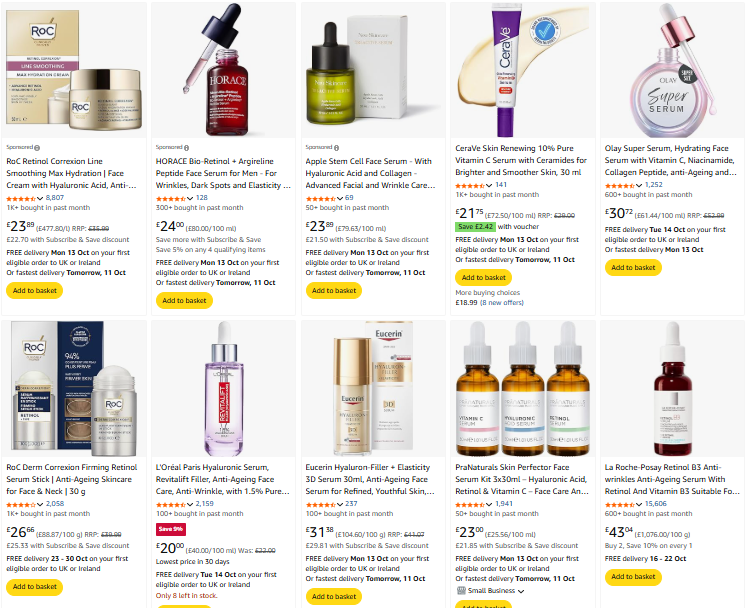
These are the core of high-value online sales. Active ingredients like Retinol and Vitamin C are constantly in demand by customers looking for genuine results. You can often source an anti-ageing serum for a Supplier Cost of £5-£15, and retail it for £20-£50.
This high markup is justified by the product's premium position and high demand, as science-backed serums drive significant consumer spending.
SPF Moisturisers (65-70% Profit Margin)
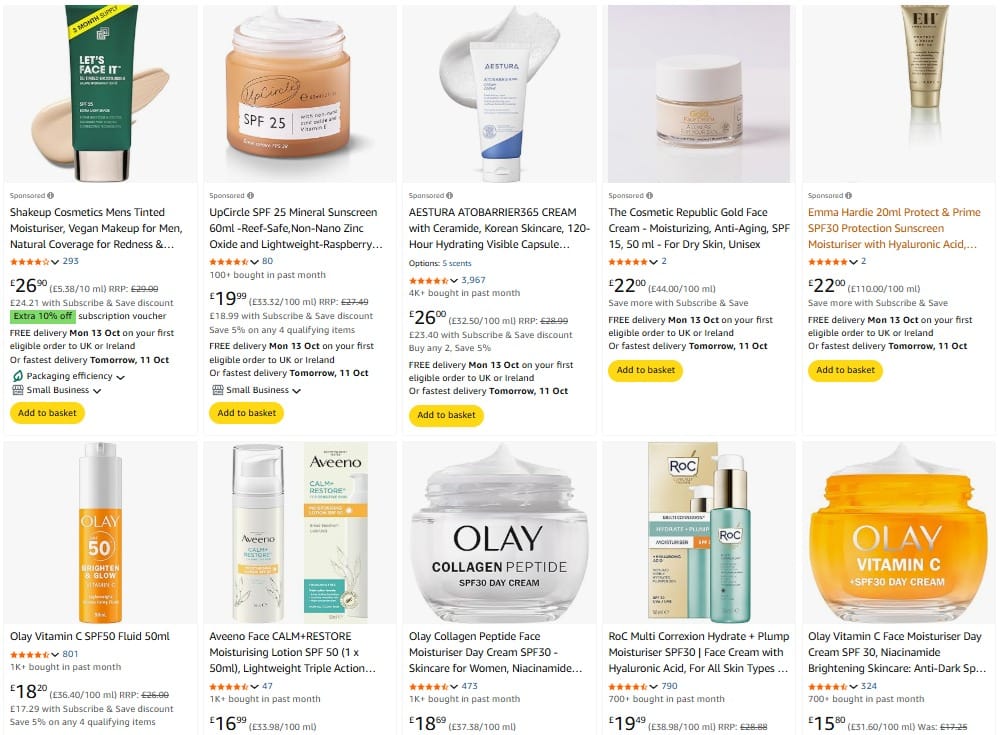
Daily-use Sun Protection Factor (SPF) products are a reliable revenue driver. Consumers are using moisturiser with SPF daily, year-round.
This category shows very strong commercial performance: SPF products often report 23% higher conversion rates compared to standard moisturisers without SPF. You can expect a Supplier Cost of £6-£10, with a stable Retail Price of £15-£30.
Organic Face Cleansers (70-75% Profit Margin)
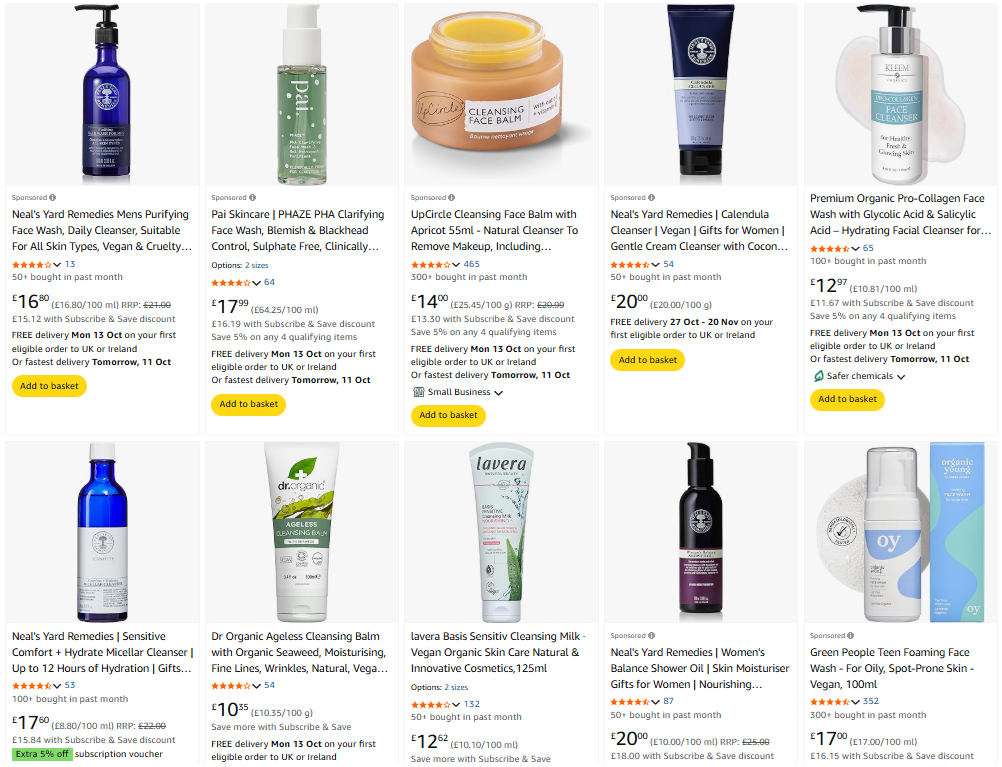
Tapping into the "Clean Beauty" trend is highly profitable. UK buyers are willing to spend extra for natural, organic, and cruelty-free face cleansers, with this sector of the market growing at a strong 15.2% CAGR.
The wholesale cost for these high-demand items can be as low as £3-£7, while the retail price comfortably sits between £15-£25, reserving excellent margins for brands that prioritise transparency.
Under-Eye Cream (70-75% Profit Margin)
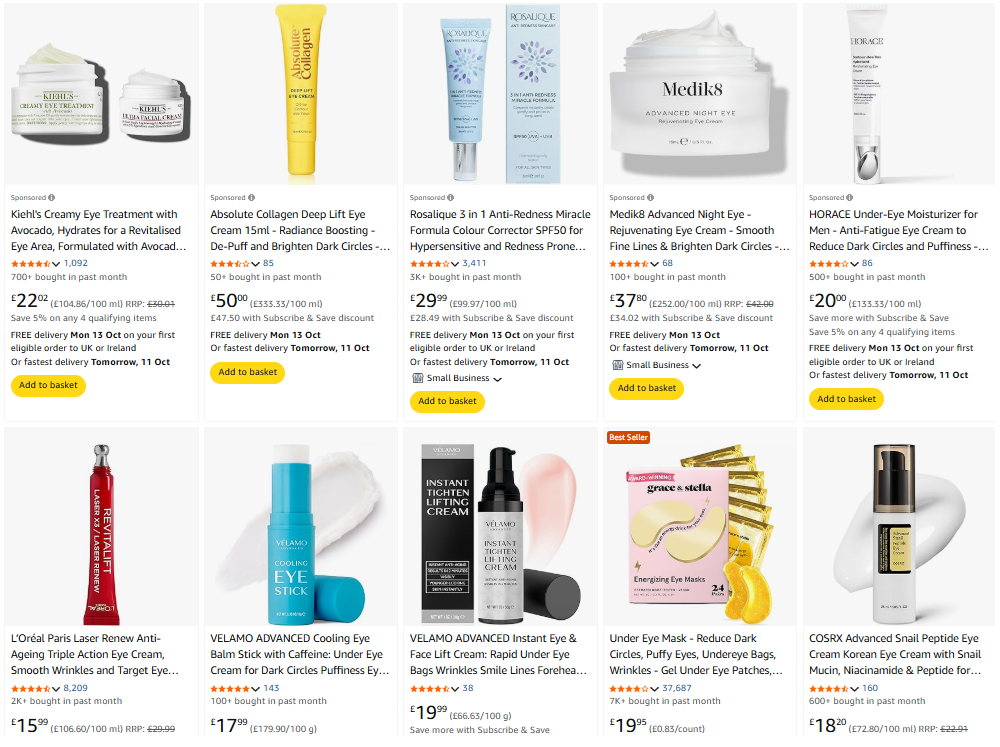
Eye care is a small, highly specialised niche that allows for premium pricing. Under-eye creams target common concerns like dark circles and puffiness, making them a profitable problem-solver product.
You can source specialised under-eye products for a Supplier Cost of £4-£8, yet the perceived value allows a retail price of £18-£35. These small-volume, high-value items are perfect for boosting the average order value (AOV).
Hydrating and Detoxifying Face Masks (60-70% Profit Margin)
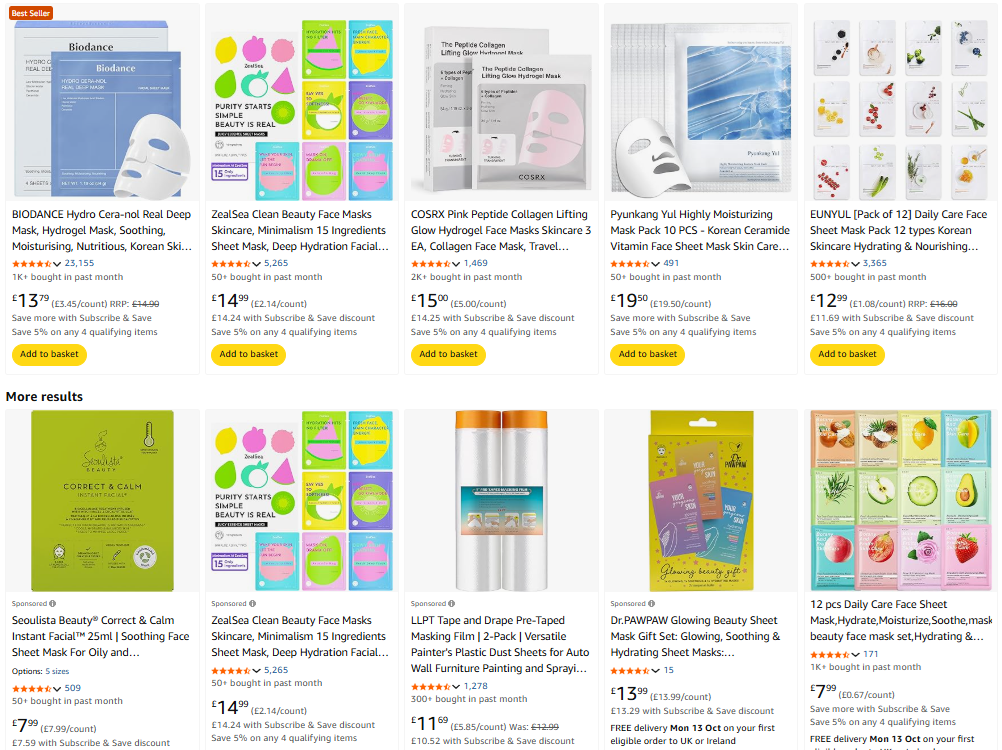
Face masks (including hydrating sheet masks and detoxifying charcoal or clay formulas) are highly popular for self-care and visual marketing. They boast a high repeat purchase rate due to their single-use nature or quick consumption.
A single mask can have a minimal Supplier Cost of £1-£3, yet sell for a Retail Price of £8-£15, guaranteeing quick inventory turnover and excellent gross margins.
2. Haircare Products: Specialisation Drives 22% of Sales
After skincare, haircare is the second most lucrative cosmetic category as it commands a 22% global market share. This market is incredibly robust and is projected to reach $112.96 billion globally by 2030.
The secret to profiting in haircare lies in specialisation. Modern consumers are moving away from general-purpose shampoos. They seek highly personalised products tailored to specific textures, chemical treatments, or scalp concerns.
By targeting these niche needs, you can secure profit margins of 50% to 65% for specialised formulas.
Hair Growth Oil (60-80% Profit Margin)
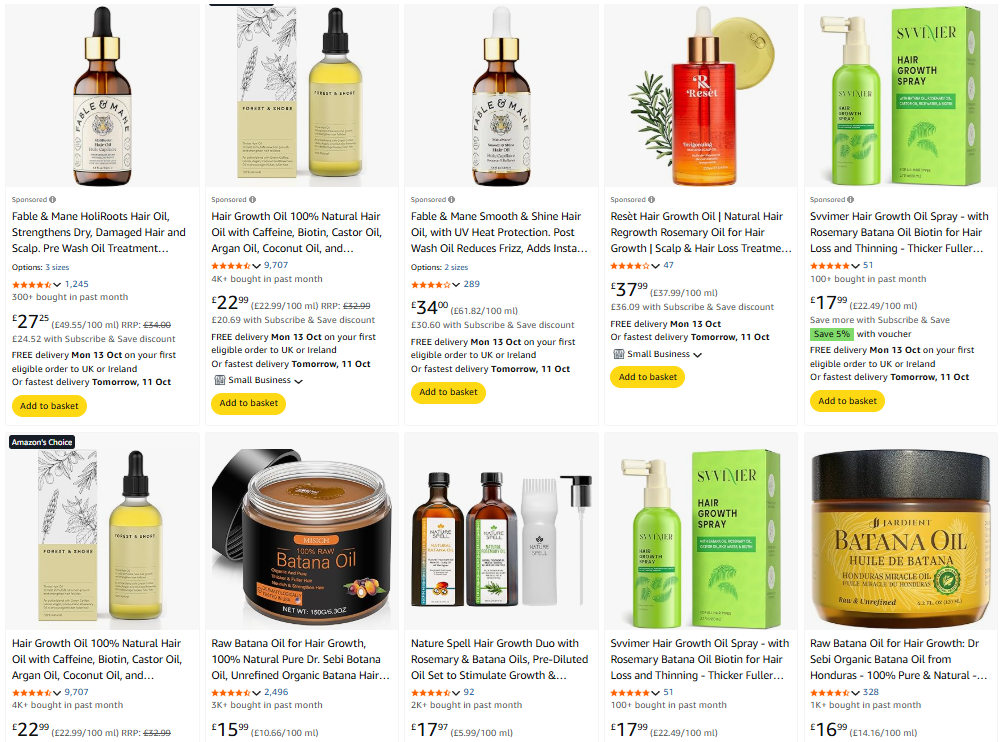
This is a premium-priced solution targeting both men and women, leading to highly repeatable sales despite the competitive market. The key to success here is ingredients. Customers scan labels to search for natural and science-backed elements.
Look for products featuring ingredients like Biotin, Peppermint oil, Vitamin E, Panthenol, and botanical extracts (e.g., Mountain ebony stem or Neem bark).
Products with a Supply Cost as low as £4.95 per bottle can deliver excellent profit margins, often between 60% and 80%, allowing for a Retail Price typically ranging from £15 to £25.00.
Sulfate-Free Shampoos and Conditioners (52-60% Profit Margin)
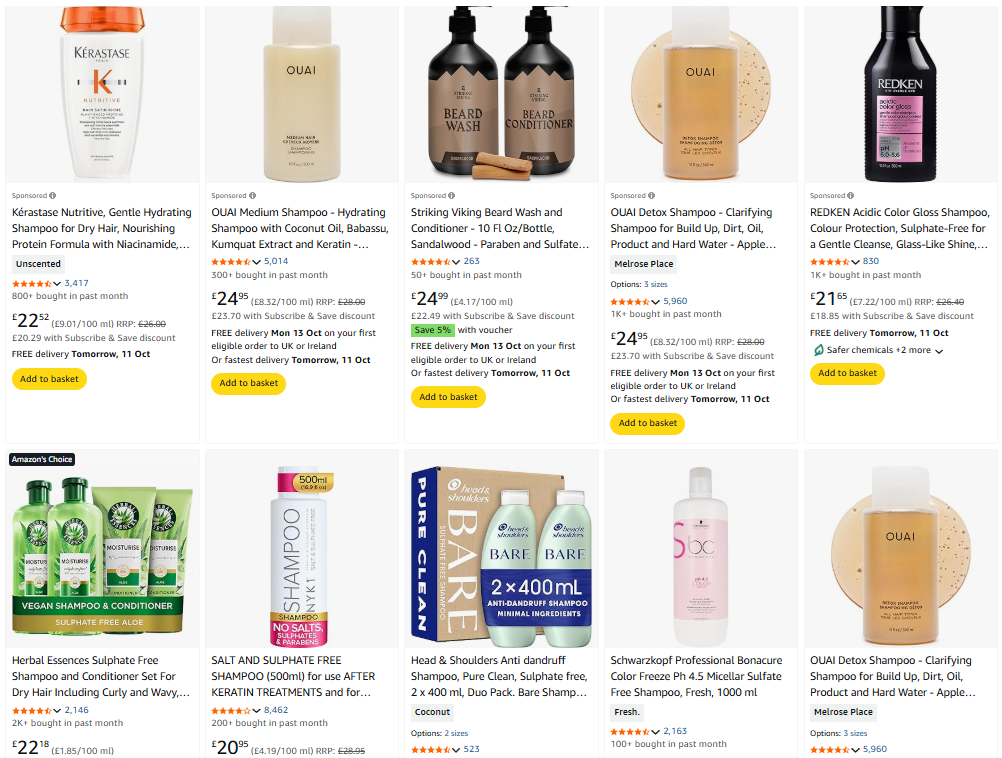
As we mentioned before, the demand for clean products is growing every day. The sulfate-free formulas are essential for maintaining colored hair and appealing to those consumers who want gentle and ethical products.
Focusing on colour-safe or texture-specific (e.g., curly hair) sulfate-free options builds strong customer loyalty and ensures high repeat purchases.
A typical Supply Cost for a good quality, private label set is around £8.10, supporting a Retail Price of £18.00 to £22.00 per set while maintaining a 52-60% profit margin.
Hair Extensions (60%+ Profit Margin)
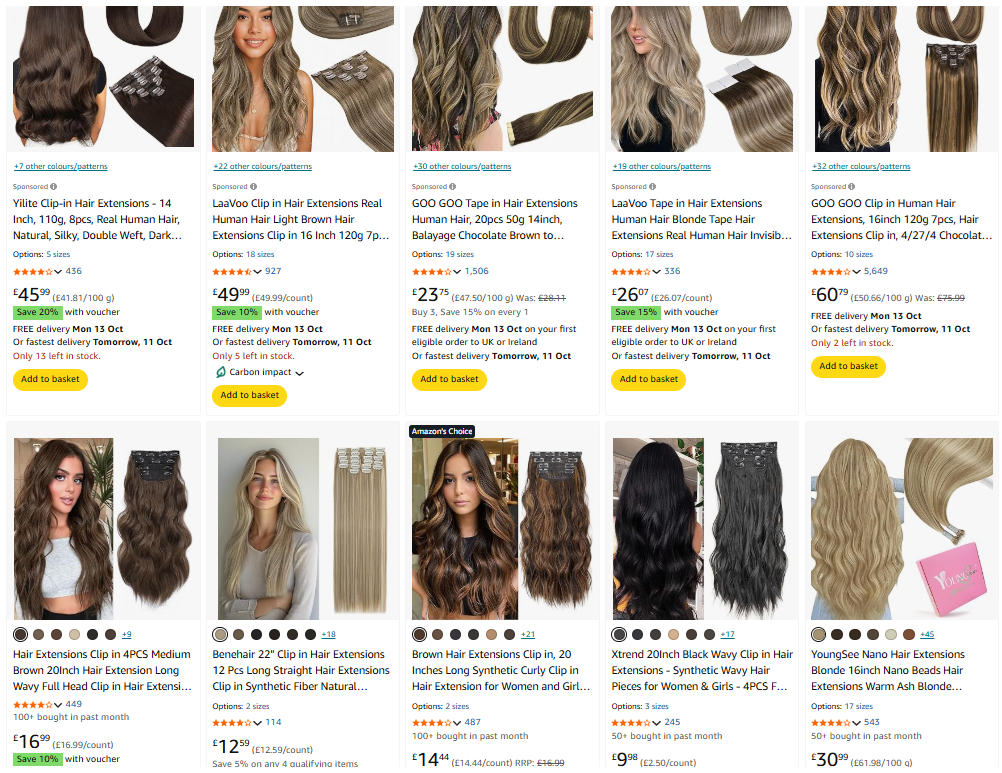
Hair extensions offer some of the highest potential returns in the beauty sector. The wide range of prices allows for flexibility in your wholesale strategy.
Supply Costs vary significantly from £6 to £105, depending on hair type and quality (synthetic to high-grade human hair), while Retail Prices range from £16 to £270 (or more). This results in reliable profit margins higher than 60%.
Hair Tools & Devices (Scalp Massagers, Brushes)
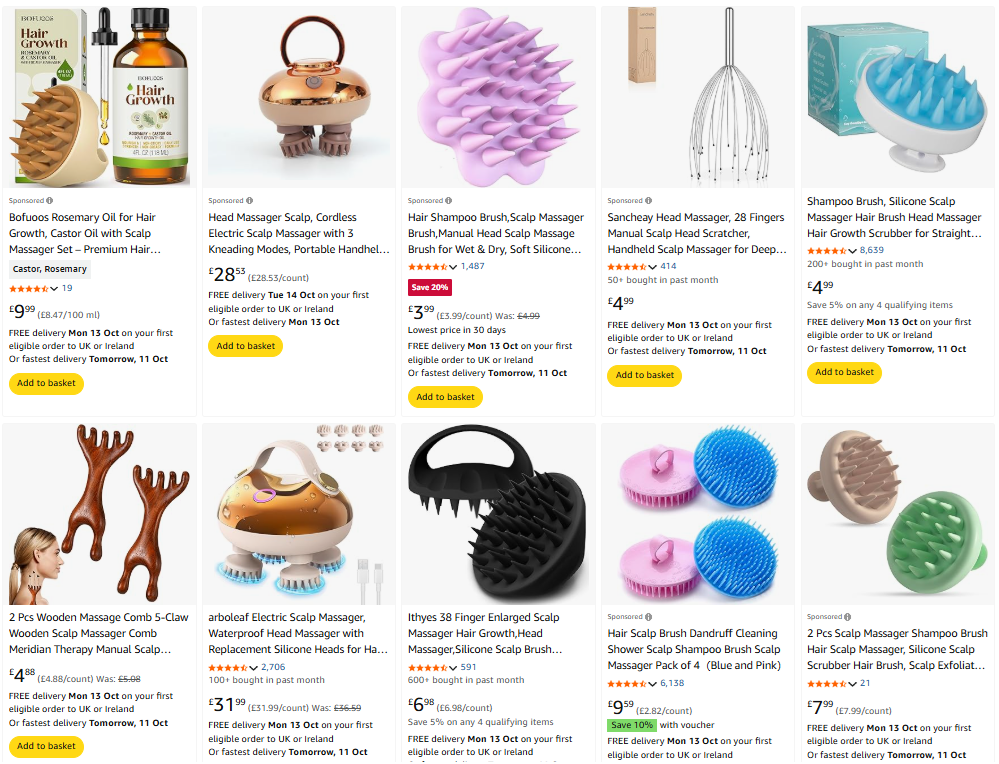
Hair tools are essential accessories that boost your average order value (AOV). Items like scalp massagers and detangle brushes are excellent add-ons.
With a Supply Cost between £3.00 and £7.00, they can be retailed for £5.00 to £18.00, making them simple, profitable items to bundle with liquid hair products.
3. Makeup Products: High-Profit and Popular Items
Makeup is still one of the most competitive yet profitable categories online. In 2024, UK consumers spent over £2.2 billion on colour cosmetics, with trends in cruelty-free and vegan products leading the way.
Average margins sit between 30%–55%, but can go higher for niche or private-label lines. If you want to secure these margins, you need to know how to buy makeup wholesale from the right distributors.
Small, affordable products perform best in this segment as they attract repeat buyers and generate quick turnover.
Liquid Lipsticks (55% Profit Margin)
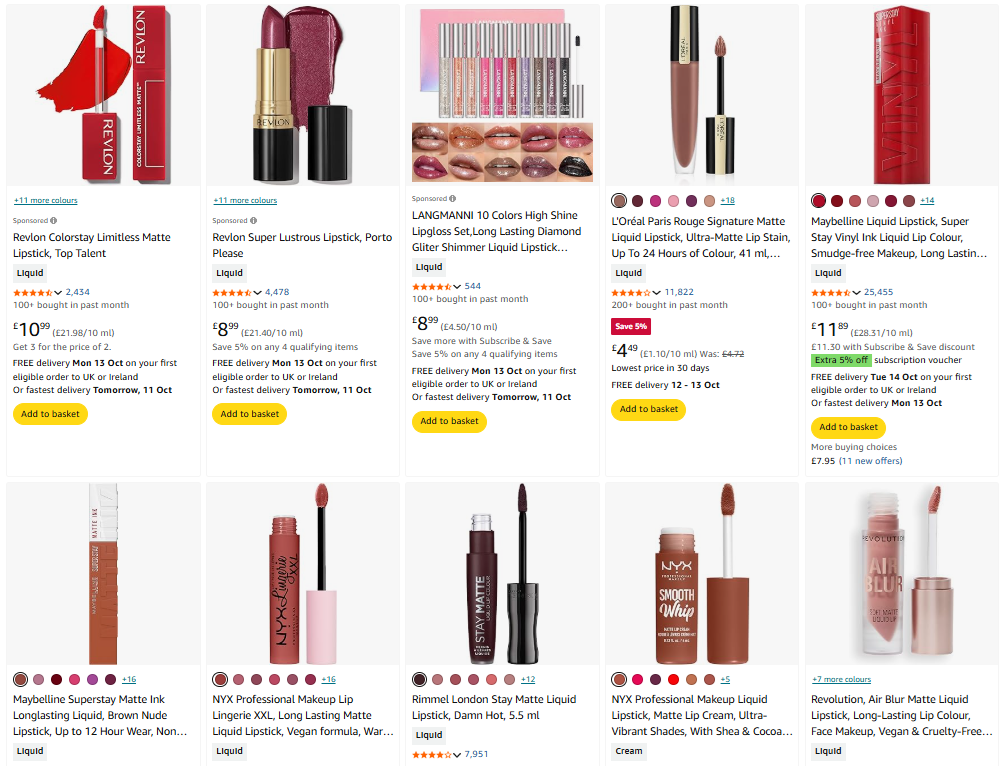
Customers highly seek liquid lipsticks because of their high social media appeal. The general supply cost for liquid lipsticks often falls between £3.00 and £5.00. Brands typically set the retail price for this product between £8.00 and £12.00, which allows them to capture the high 55% profit margin.
Cream Blushes (48% Profit Margin)
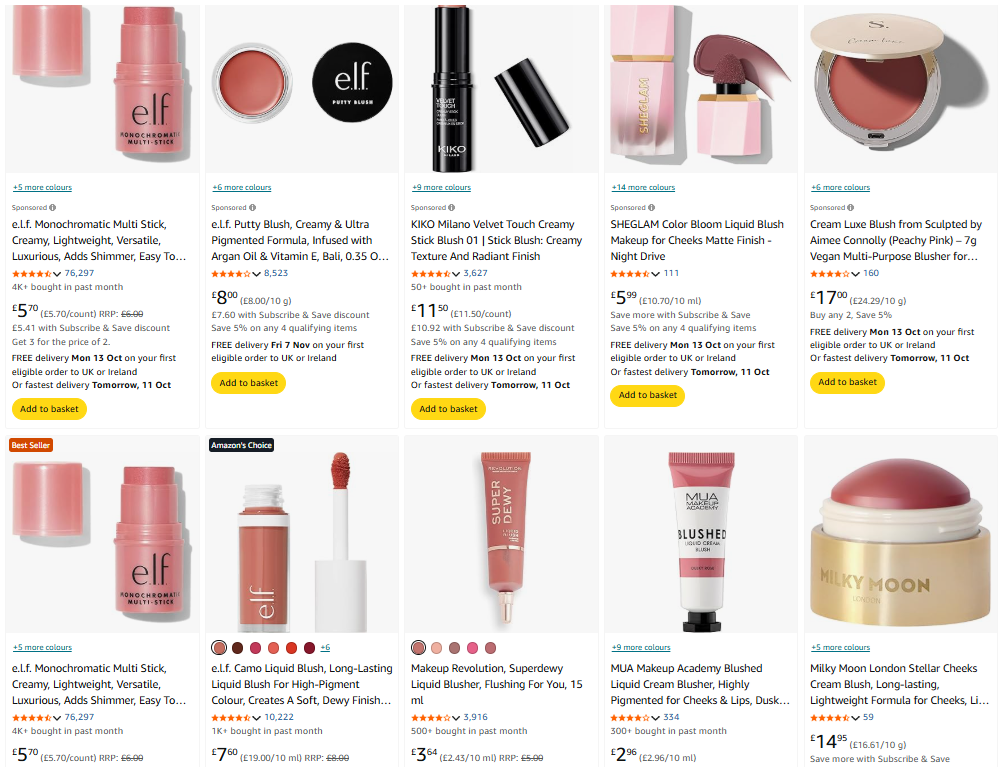
Cream blushes are popular because of their multi-use functionality, meaning customers can use them on their cheeks, lips, and sometimes eyes. This versatility helps brands charge a good price for the product.
The usual supply cost for a cream blush is around £2.50 to £4.00. The retail price usually sits between £7.00 and £10.00, securing the 48% profit margin.
Eyeshadow Palettes (45% Profit Margin)
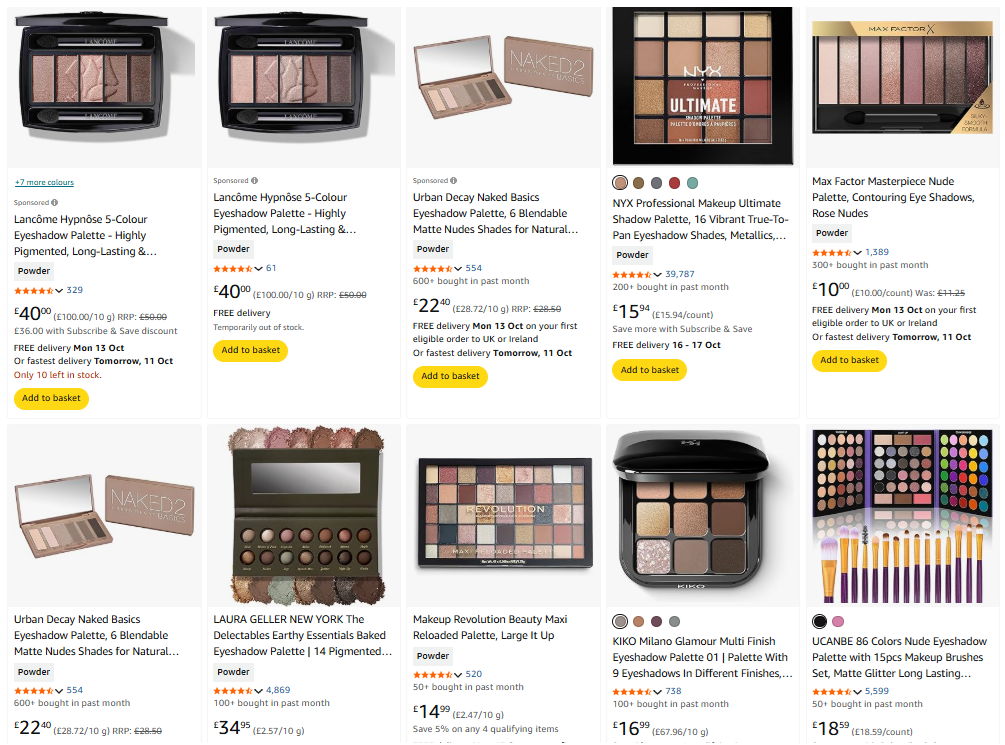
Eyeshadow palettes are usually bought as gifts, making them a great source of sales, especially during the holiday season. The value of the palette is judged by the quality of the packaging and the number of colours inside.
The common supply cost for palettes can range from £6.00 to £15.00, depending on the size and materials used. They are available at a retail price of £15.00 to £35.00.
Luminous Dewy Foundation (30%-50% Profit Margin)
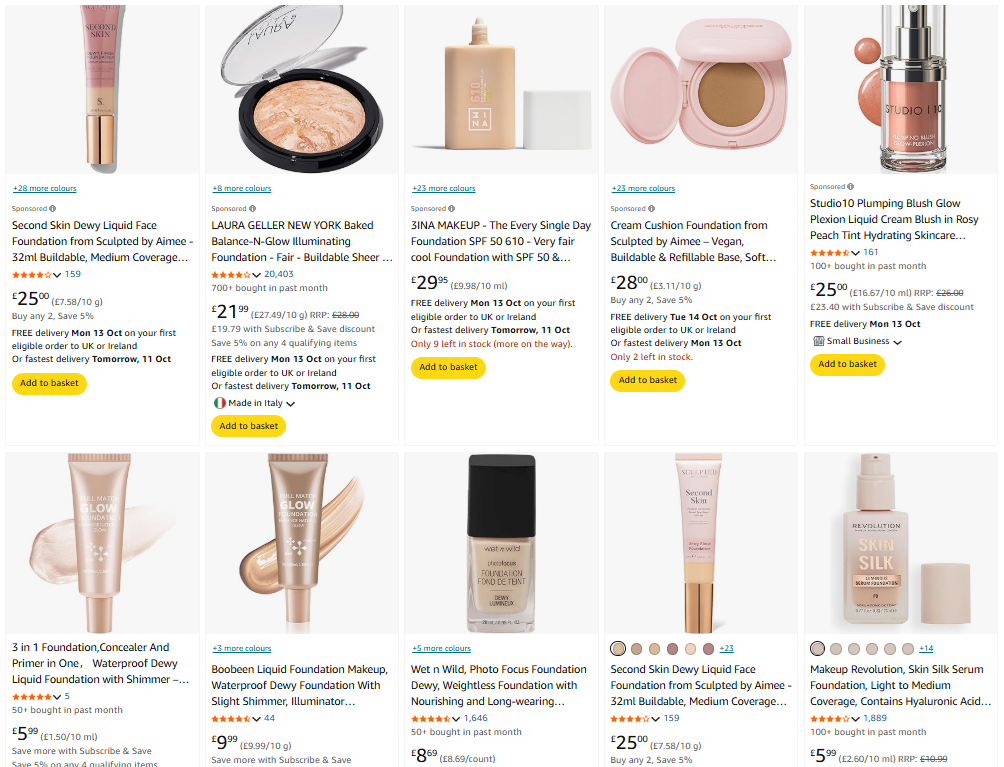
The costs for dewy foundation ingredients can vary greatly, with a wide base price from $6.50 up to $65.00. Brands usually offer this product to capture the trend for a glowing, fresh-faced look.
Due to the high-end appearance of the product, foundations are generally priced in the mid-to-high-end of the market. The typical retail price for a luminous foundation is between £20.00 and £35.00, though some luxury brands cost more (£65+).
Magnetic Lashes (40%-60% Profit Margin)
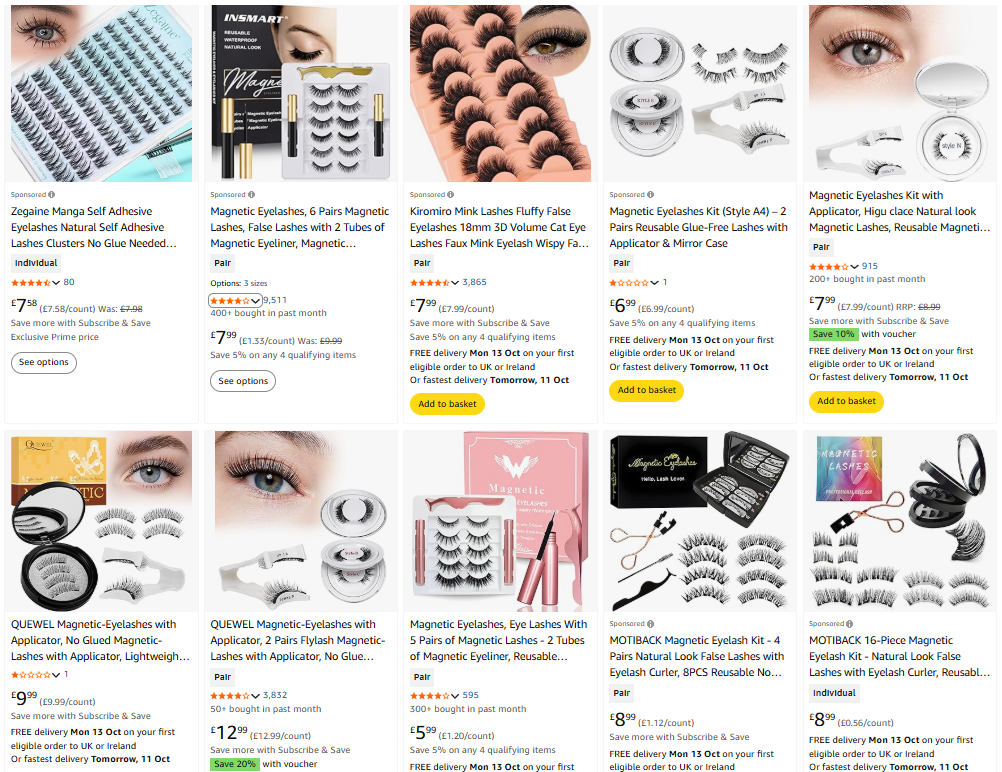
Magnetic lashes are a high-trend item, very popular with the younger market segment, especially women aged 18-24. Women buy them online across many regions, including Europe and North America.
The supply cost for magnetic lashes usually varies from $3 to $10. The average market price is typically set between $7 and $20.
4. Fragrance Products: The Highest Profit Margin Category
The fragrance business often has the largest profit margins in the entire cosmetics market. This is because the cost to make the scented liquid is very small compared to the price customers will pay for the brand name, the packaging, and the feeling of luxury.
Brands often achieve a gross profit margin between 70% and 85% in this category.
Fragrances perform especially well during gifting seasons, with the UK perfume market estimated to reach $4.20 billion by 2034.
Eau de Parfum (EDP) (70%-80% Profit Margin)
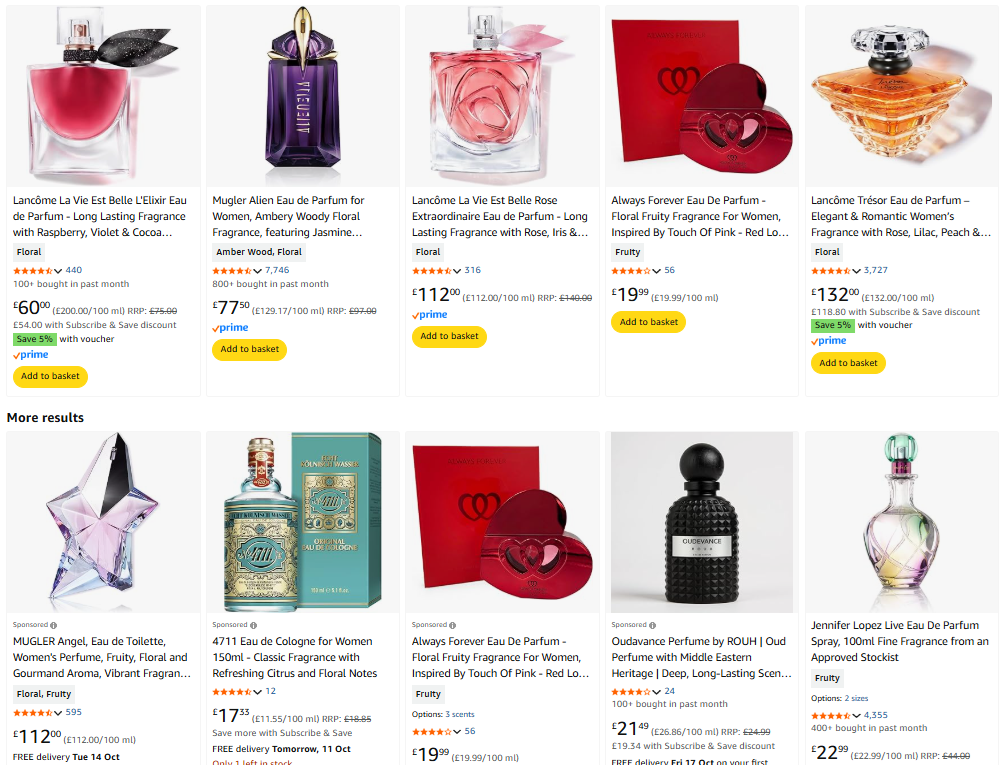
EDP is the most common type of spray perfume. It is highly valued because it has a high amount of oil, which means the smell lasts for many hours. Customers are paying for the whole package: the special scent, the lasting power, and the look of the bottle.
The general supply cost for the bottle and liquid usually runs between £10.00 and £25.00. Branded EDP typically sells at a retail price that starts around £50.00 and often reaches £150.00 for known products.
Perfume Oils / Attars (75%-85% Profit Margin)
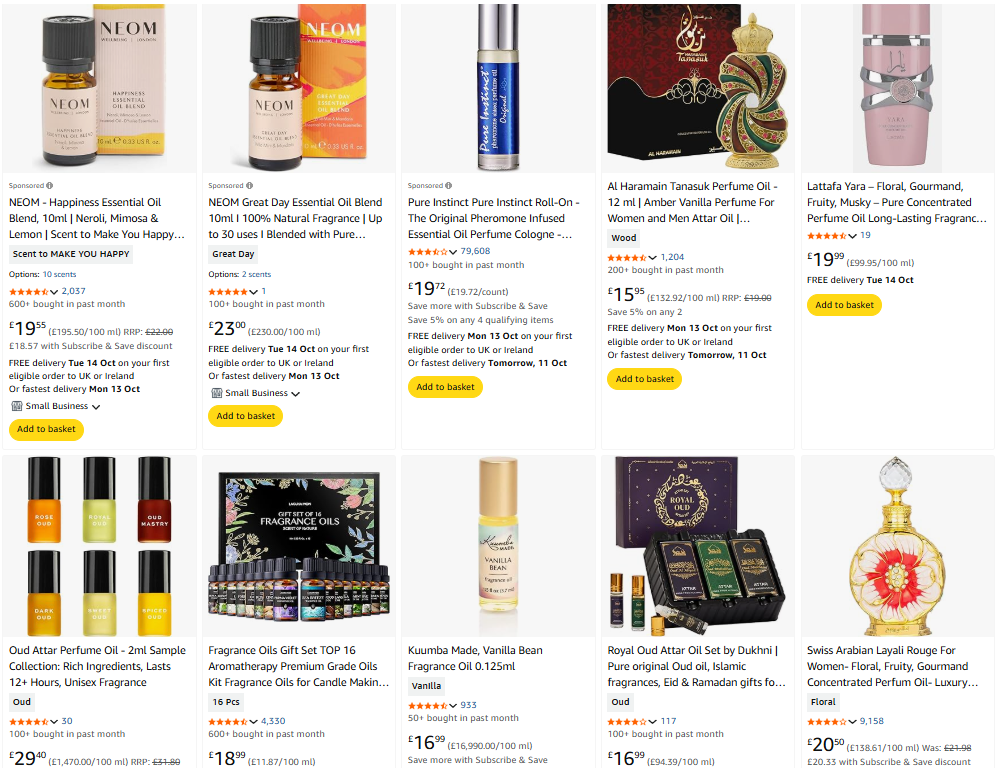
Perfume oils are highly concentrated scents that do not contain alcohol. They are sold in very small rollerballs or vials, which means they are very cheap to produce but have a high price for their size. This concentration allows them to achieve very high margins.
The supply cost for the oil and small packaging is often very low, usually around £2.00 to £5.00. These small, concentrated oils are generally available at a retail price between £15.00 and £30.00.
Solid Perfumes (60%-75% Profit Margin)
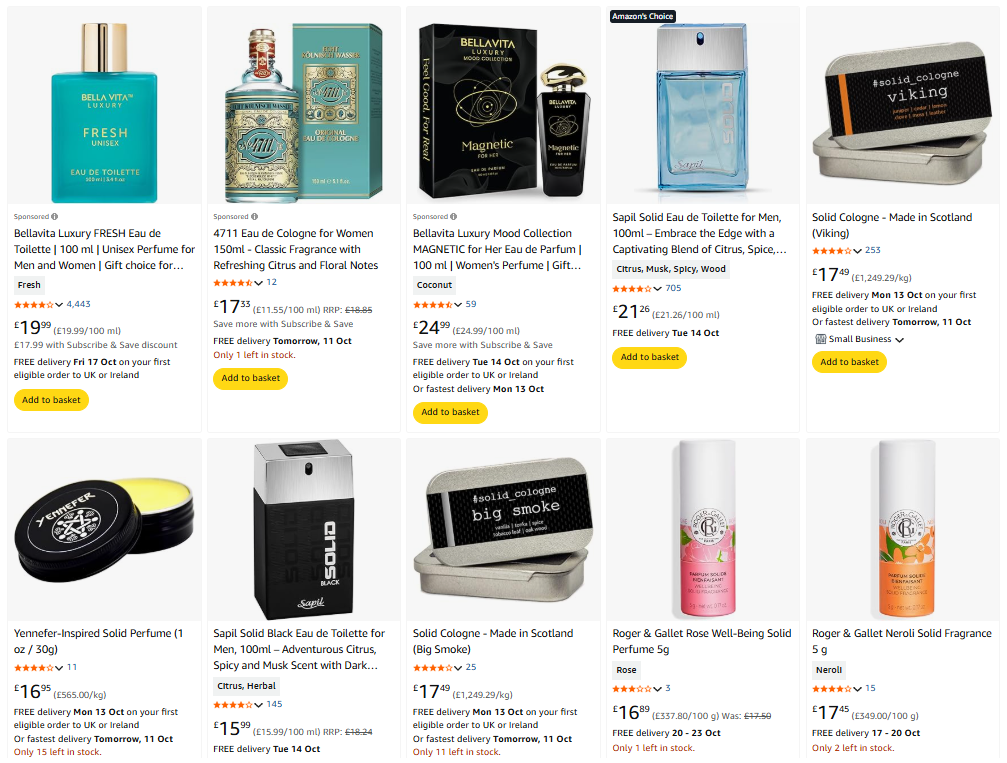
Solid perfumes are a growing trend because they are easy to carry, do not spill, and are good for travel. They are made from a wax base with scent added. Customers like them as a portable, easy-to-use option.
The supply cost for the wax and small container is usually between £4.00 and £8.00. The common retail price for solid perfumes ranges from £12.00 to £38.00, depending on the brand and the packaging.
5. Nail Care Products: High-Volume, Trend-Driven Sales
Nail care products are very cheap to buy and are heavily influenced by fashion and colour trends. Consumers see nail polish as a convenient way to follow new trends without incurring big expenses.
Because nail polish bottles are small and the products are used often, they have good profit margins and encourage customers to buy new colours frequently.
Standard Nail Polish (60%-75% Profit Margin)
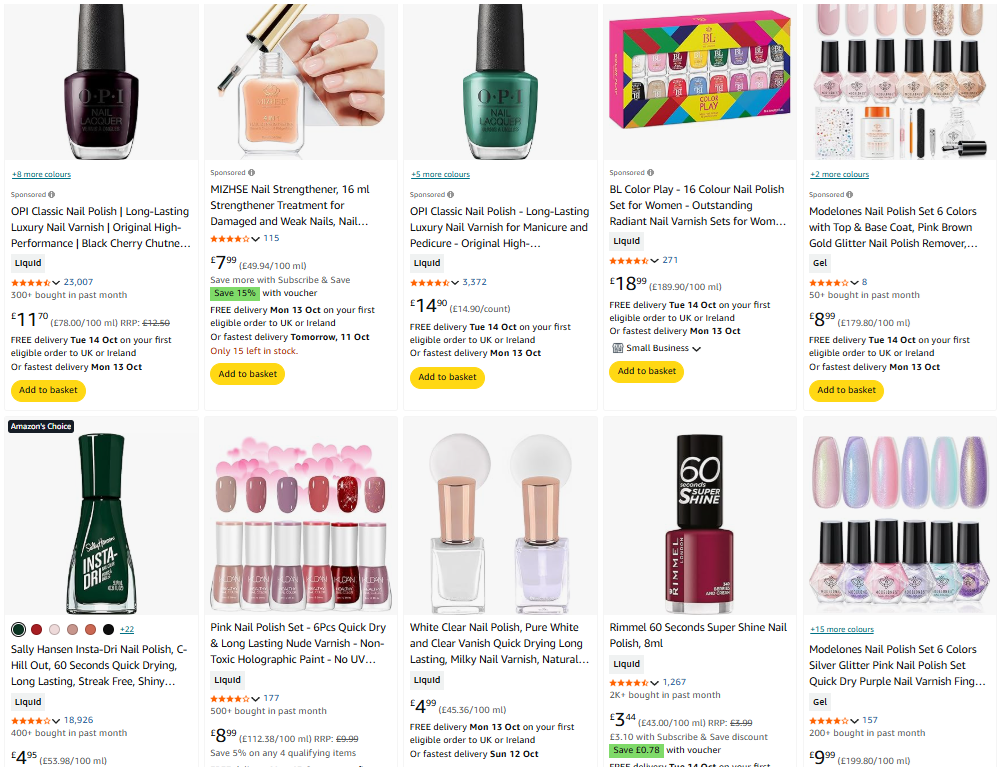
Nail polish is a small, low-cost luxury item. Customers often buy multiple colours at once. The common supply cost for a standard bottle of nail polish is quite low, usually ranging from £1.50 to £3.00. The standard retail price for branded polish is typically set between £6.00 and £12.00, which secures a strong profit margin.
Gel Polish and Kits (55%-65% Profit Margin)
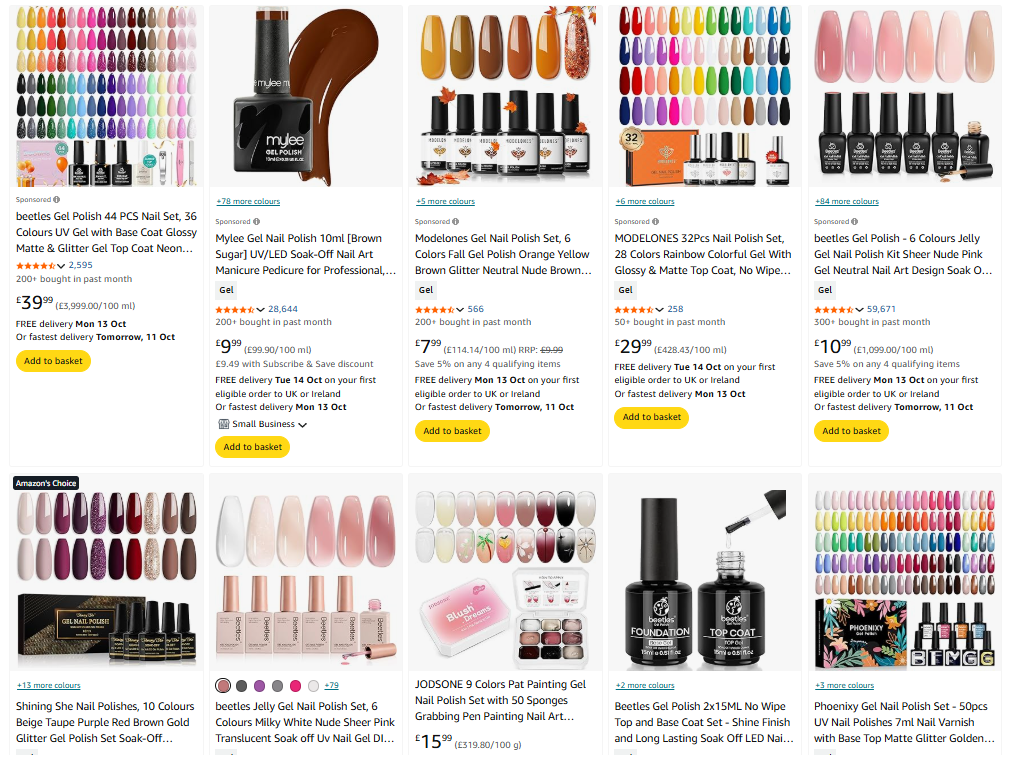
Gel polish is highly popular because it lasts much longer than regular polish. It is viewed as a higher-end product that gives a professional look at home. This perceived value allows for a higher price.
The supply cost for a single bottle of high-quality gel polish is often between £3.00 and £6.00. These are usually sold at a retail price of £10.00 to £18.00 per bottle, or bundled into kits with UV lights for even higher sales value.
Nail Treatments and Base Coats (65%-80% Profit Margin)
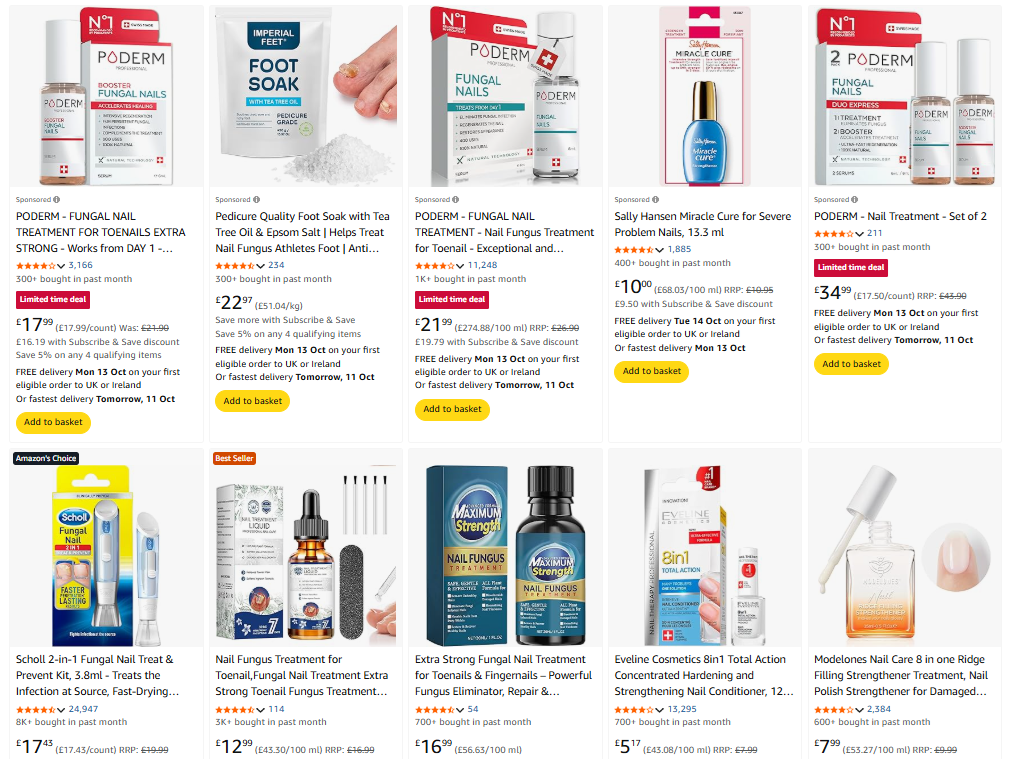
Specialised nail treatments include items like growth serums, cuticle oils, and protective base/top coats. These products are problem-solvers, and customers will pay more for a clear benefit. The formulas are simpler than colour polish, which keeps the costs low.
The supply cost for these items is typically between £2.00 and £4.00. Brands sell these treatments at a high retail price, usually ranging from £8.00 to £15.00.
Cosmetics Wholesale UK Suppliers List (Where to Find Them)
Finding the right source for your wholesale cosmetics UK is key to profit. The best and easiest way for small businesses to start is by using a dedicated B2B platform.
1. B2B Wholesale Platforms (The Smart Way)
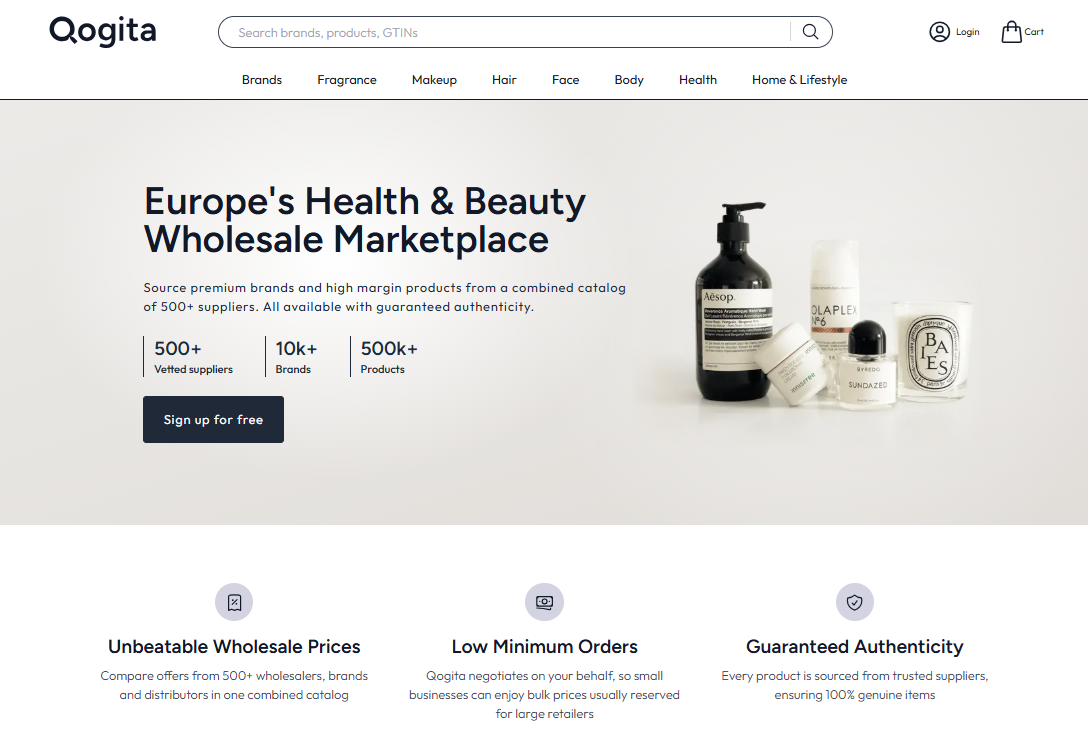
The best solution for any size of business is to use a large, specialized platform like Qogita. This wholesale marketplace solves all the hard sourcing problems at once:
- It offers a huge combined catalog of over 500,000+ products from 500+ vetted suppliers and 10,000+ brands.
- It guarantees authenticity for every product, which is essential for resale.
- It negotiates low minimum orders, allowing small businesses to get bulk prices usually reserved for large retailers.
2. Major UK Distributors
These are large companies that buy from many brands and sell to retailers. You can find them by visiting big trade shows or checking industry lists, like the ones from publications such as Cosmetics Business.
3. Direct-from-Manufacturer/Brand
This is often the best choice for a business that can buy extremely large volumes. By working directly with the brand, you can get the deepest discounts and secure exclusive deals on wholesale cosmetics.
How to Buy Wholesale Cosmetics for Amazon?
Before you can buy from a supplier, you must follow these steps to prove you are a legitimate business:
Step 1: Obtain a UK VAT number and necessary business registration.
Most suppliers will not talk to you unless you have a legally registered business name and the correct tax registration, like a UK VAT number. This proves you are buying for resale and not for personal use.
Step 2: Meet Minimum Order Values (MOV) and negotiate pricing.
Suppliers always have a Minimum Order Value (MOV), which is the smallest amount of product you can buy. By using a platform like Qogita, this negotiation and requirement is often already reduced on your behalf.
Step 3: Understanding UK/EU Import Duties and Logistics (If Importing)
When importing products from outside the UK, it is important for you to know all the additional costs. This includes import duties, tariffs, and logistics fees. These costs must be figured out before you buy, or they can quickly erase your profit margin.
When you source through Qogita, this step is simpler because the platform guarantees customs clearance.
How to Buy Wholesale Cosmetics Online?
Buying wholesale cosmetics online is fast but requires care.
To make sure a digital beauty wholesaler is trustworthy:
- Check reviews from other businesses
- Request a small product sample before placing a large order
- Ask for verifiable, authentic invoices to prove the products are real and legally sourced
Qogita helps with this by providing invoices designed to meet the rigorous requirements of third-party marketplaces and offering extra supply chain documentation where needed for resale compliance.
Making the Margin Work
To ensure you make a profit, you must calculate the landed cost of your product. This cost includes the supplier price plus all shipping, tax, and import duties. You must then subtract the selling fees from your planned retail price.
For sellers on Amazon UK, these fees include the Amazon FBA fees (for storage and shipping) and the referral fees, which typically range from 8% to 15% for beauty products.
The final remaining amount is your actual profit.
Thriving on Amazon UK: Compliance and Strategy
Selling beauty products on Amazon UK requires you to follow strict rules for both compliance and product safety. Once you have a reliable supplier, you need a strong plan to win sales on the platform.
Mandatory Amazon Compliance
To sell beauty items, you must meet all UK and EU product safety laws.
- Product Safety: Every cosmetic product must comply with UK/EU regulations, including the proper notification to the Cosmetic Products Notification Portal (CPNP) where applicable. This proves your product is safe and legally allowed to be sold.
- Packaging & Labelling: Amazon is very strict about labelling for beauty products. Packaging must clearly show the manufacturer details, a traceable batch code (for recalls), a complete ingredient list, and an expiration date where required. Poor or incomplete labelling can result in your listing being removed.
To know more, read our complete guide on UK Cosmetic Regulations.
Strategy: Winning the Amazon Buy Box
The Buy Box is the white box on an Amazon product page where customers can click the "Add to Basket" or "Buy Now" button. It is crucial because winning it means your offer, out of all sellers, is the one Amazon features for that product.
Winning the Buy Box is essential for success on Amazon, as it is where most sales happen. You need to focus on a few key areas to ensure your brand stands out:
Tip 1: Focus on premium packaging.
While the product inside is very important, the packaging quality is also a key factor for beauty products. High-quality packaging increases the perceived value and helps you stand out from cheaper, generic sellers.
Tip 2: Build a Brand Store.
Creating a dedicated Brand Store on Amazon allows you to showcase your full range of wholesale cosmetics and tell your brand's story. This helps build customer trust and drives repeat business, which is highly valued by Amazon's algorithm.
Tip 3: Prioritise positive reviews and excellent customer service.
Great reviews are the single most important trust signal for new buyers. You must focus on quick shipping, careful packaging, and fast customer service to ensure positive feedback.
Advertising for Beauty: Utilizing Amazon PPC
To get your brand noticed in the busy beauty market, you must use Amazon PPC (Pay-Per-Click) advertising. Running these sponsored ads makes sure your products show up at the very top of what customers search for. You should use two main types of ads:
- Sponsored Brands are best for promoting your entire Brand Store and showing off your whole product line.
- Sponsored Products are used to target the exact words (keywords) that shoppers type into the search bar when looking for high-profit items, like "retinol serum" or "organic face wash." This puts your product right in front of the buyer at the moment they are ready to purchase.
Conclusion
Success in the beauty market depends on two clear steps: knowing which products make the most money and how to source them safely. The highest profits come from specialised items like Skincare (serums) and Fragrances, where margins exceed 75%.
To secure this profit, you must use a trustworthy wholesale source. By partnering with platforms like Qogita, you guarantee product authenticity, clear costs, and reliable customs clearance.
Most Profitable Wholesale Cosmetics FAQs
What cosmetics are most profitable to sell online?
The most profitable categories are generally Skincare (especially anti-ageing serums, Vitamin C, and Hyaluronic Acid) and Fragrances. These products have a high perceived value, which allows for profit margins often exceeding 75%.
Which cosmetic products are most profitable for beginners?
Beginners should focus on high-demand, low-complexity products that allow for a Lower Minimum Order Value (MOV). Examples include Lip Products (balms, glosses), Nail Treatments (cuticle oils), and Simple Skincare (moisturisers and cleansers).
These items typically offer strong margins (60%-75%) without the high initial investment of complex electronics or advanced formulas.
How much money do I need to start selling cosmetics?
The startup cost varies widely based on your sourcing method. If you are starting small by buying wholesale lots or using a platform like Qogita to meet lower MOVs, you can potentially start with an inventory investment as low as £1,000 to £3,000.
This capital covers the first small inventory order, business registration, and initial marketing fees.
What are the legal requirements for selling cosmetics online?
The main legal requirements in the UK/EU are to confirm product safety and correct labelling. Every single product must comply with UK/EU cosmetic regulations (including CPNP registration where applicable).
Packaging must clearly display the full ingredient list, the manufacturer's details, a batch code, and the expiration date to meet Amazon and regulatory standards.