
Have you ever spotted a great deal at a store and wondered if you could flip it for a profit? You aren't alone.
Reselling on Amazon has evolved from a simple side hustle into a massive global industry, with independent sellers now accounting for over 60% of everything sold on the platform. Whether you are looking to earn extra monthly income or build a scalable Amazon business, the opportunity is massive.
In this guide, we will show you how to start a reselling business on Amazon from scratch. From navigating Amazon Seller Central to sourcing high-demand Amazon stock, you’ll learn the exact steps to turn products into profit in 2025.
Is Reselling on Amazon Legal and Worth It?
The short answer is yes. Under a legal concept called the First Sale Doctrine (or the "Exhaustion of Rights" in the UK), once you legally purchase a product, you generally have the right to resell it.
You don't need a special permit to be an Amazon reseller, but you must ensure the items are authentic and "materially" the same as the original listing.
But is reselling on Amazon actually worth it? Consider these numbers:
- Global Reach: Amazon receives more than 2 billion visits monthly, giving you instant access to a worldwide audience.
- Healthy Margins: Most successful resellers achieve margins of 15% to 25%.
- Success Rate: About 64% of sellers become profitable within their first 12 months.
- Scalability: With Amazon FBA, you can outsource storage and shipping, allowing you to run a high-volume business without a warehouse.
While it is more competitive than it was five years ago, reselling remains highly profitable for those who use data to pick "winning" products rather than guessing.
Different Ways of Reselling on Amazon
There is no "one-size-fits-all" approach to reselling on Amazon. In 2026, successful sellers choose a model based on their budget, how much time they have, and how quickly they want to see a return.
Here is a breakdown of the most popular ways to source and sell:
1. Wholesale
Wholesale is considered the most professional and sustainable reselling model. Instead of hunting for individual items, you partner directly with brands or authorized distributors to buy products in bulk at a significantly lower wholesale price.
It allows you to sell established brands (like LEGO, Neutrogena, or Sony) that already have thousands of customers searching for them daily.
Pros:
- Consistent Inventory: You can simply reorder stock when you run low rather than "hunting" for new deals.
- Brand Approval: Invoices from authorized distributors make it much easier to get Amazon's permission to sell "gated" (restricted) brands.
- Less Competition: The higher barrier to entry (needing a business license and capital) means fewer casual sellers to compete with.
Cons:
- High Startup Costs: Most wholesalers have a Minimum Order Value (MOV) of £500 to £5,000, which ties up your capital.
- Low Margins: While volume is high, your profit per unit is lower than arbitrage model.
2. Retail Arbitrage
Retail arbitrage is the classic "buy low, sell high" model. You physically visit retail stores like Walmart, Target, TK Maxx, or local supermarkets, and look for clearance or discounted items.
Using the Amazon Seller App, you scan the barcode to see what it’s currently selling for on Amazon. If there is a healthy gap between the store price and the Amazon price after fees, you buy the stock.
Pros:
- Low Entry Cost: You can start with as little as £50–£100.
- Immediate ROI: You can find a "hidden gem" today and have it listed for sale tonight.
- No Contracts: You aren't tied to any suppliers or long-term commitments.
Cons:
- Hard to Scale: Your growth is limited by how many stores you can physically visit and how much stock is on the shelves.
- Time Intensive: You spend a lot of time driving and scanning items that may not be profitable.
3. Online Arbitrage
Similar to retail arbitrage, but the entire process happens from your computer. You hunt for deals on websites like eBay, Disney Store, or niche retailers. You look for site-wide sales, coupon codes, or "price glitches" where the online price is significantly lower than the Amazon marketplace price.
Pros:
- Work from Anywhere: You don't need to leave your house or drive to stores.
- Software Assisted: You can use 2026 AI tools (like Tactical Arbitrage) to scan thousands of websites automatically for deals.
Cons:
- Fierce Competition: Thousands of other sellers are looking at the same websites and using the same software.
- Shipping Delays: You have to wait for the items to be shipped to you (or a prep center) before you can send them to Amazon.
4. Amazon Business
This isn't a simple way to source, but a way to sell. By enrolling in the Amazon Business program, you open your inventory to millions of business, school, and government buyers. These customers buy in massive quantities and often care more about reliability and "Business Pricing" than finding the absolute lowest single-unit price.
Pros:
- High Volume Sales: Instead of selling 1 unit to a person, you might sell 100 units to a single office.
- Lower Returns: Business customers are statistically less likely to return items than standard consumers.
Cons:
- Strict Metrics: Amazon requires B2B sellers to maintain near-perfect account health (very low late shipment and defect rates).
- Pricing Pressure: You often need to offer "Quantity Discounts" to stay competitive for bulk buyers.
How to Start a Reselling Business on Amazon
Starting a reselling business requires a mix of administrative setup and strategic research. Here are the steps you need to follow to start reselling on Amazon:
Step 1: Market Research (The Data Phase)
Before you buy a single unit of stock, you must use data to ensure there is a "gap" in the market. In 2026, you cannot simply guess what will sell; you need to verify it using professional tools like Helium 10, AMZScout, or Jungle Scout.
Checking the BSR (Best Sellers Rank)
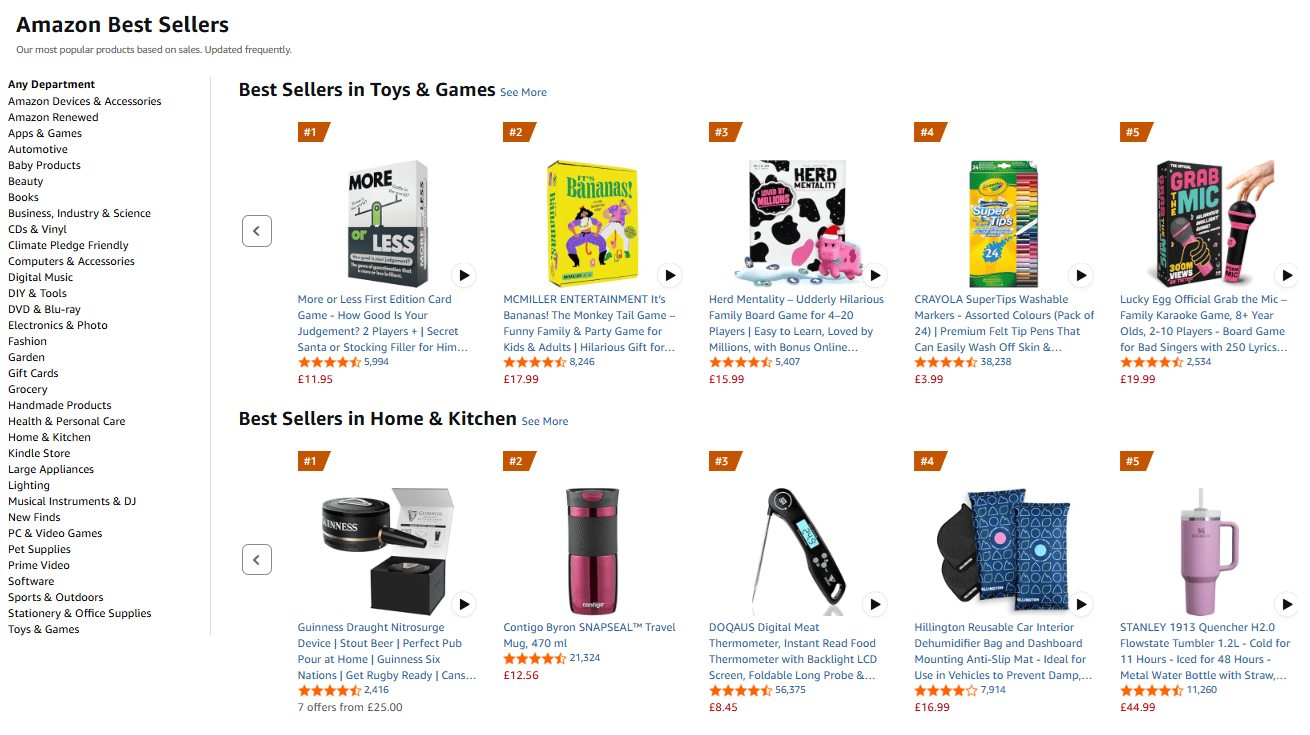
The BSR is Amazon's way of ranking products based on sales volume. A lower number means the item sells faster.
Look for products with a BSR under 50,000 in major categories (like Home or Toys). This usually indicates the product sells at least 10–15 units per day, ensuring your stock won't sit on a shelf gathering dust.
Analyzing "Buy Box" History
The "Buy Box" is the "Add to Cart" button that leads to 80% of sales on Amazon. Use the Keepa tool to check the Buy Box price history over the last 90 days.
If the price graph looks like a jagged heartbeat (constantly spiking up and down), it means sellers are in a price war. You want a stable, flat line, which suggests you can maintain your profit margins over time.
Step 2: Amazon Seller Central Setup
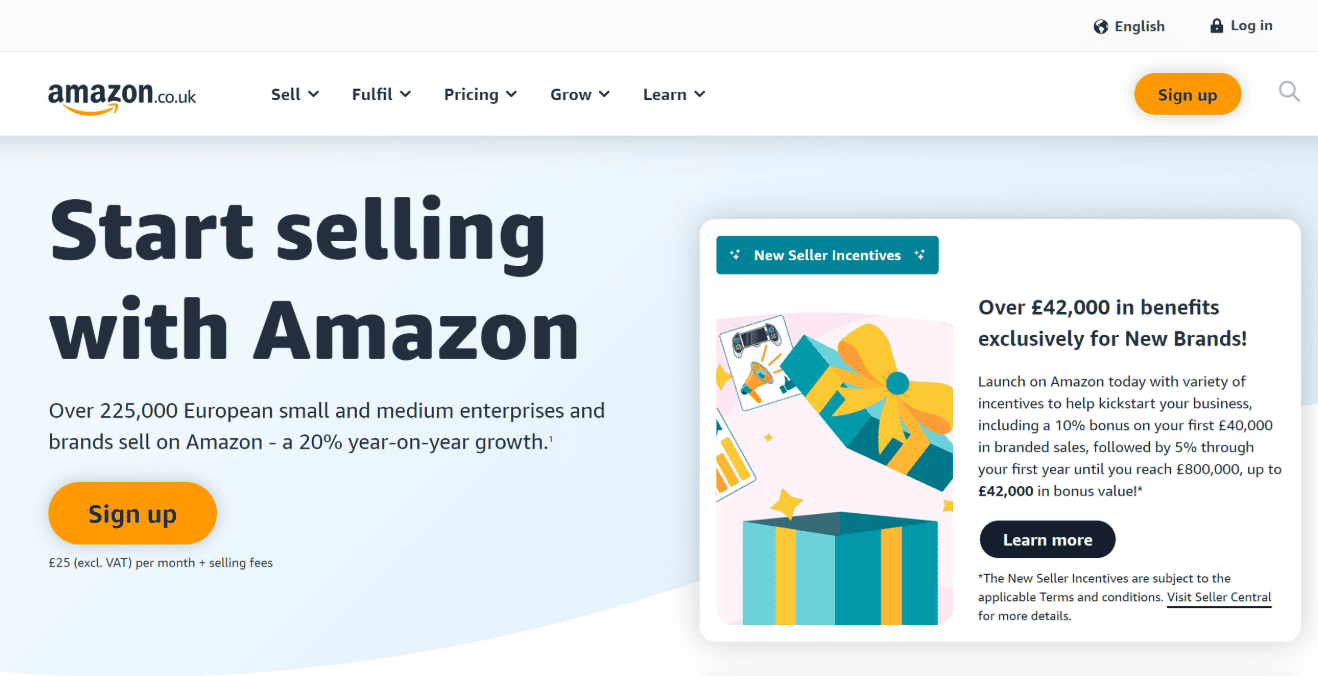
Once your research is done, you need to register your business on Amazon Seller Central.
1. Individual vs. Professional Plan
You must choose a plan that aligns with your sales volume and business goals.
- Individual Plan: Best for testing. It costs £0.75 per item sold with no monthly subscription fee. You cannot win the "Buy Box" on this plan, meaning customers have to manually find you under "Other Sellers."
- Professional Plan: The industry standard for reselling. It costs £25 per month (excl. VAT). This plan makes you eligible to win the Buy Box, allows you to sell in restricted categories (like Grocery), and gives you access to advertising and automated repricing tools.
2. Amazon UK Specifics: Sole Trader vs. Limited Company
Deciding on your legal structure is a very important step in the UK registration process.
- Sole Trader: The simplest and cheapest way to start. You register as "self-employed" with HMRC. It’s perfect for low-risk testing, but the downside is that you are personally liable for all business debts.
- Limited Company: It means your business will be treated as a separate legal entity. While it involves more paperwork (Companies House filings) and accountancy costs, it offers Limited Liability protection and is much more tax-efficient once your profits grow past £30,000–£50,000.
3. Registration Requirements
To get through verification smoothly, have these ready:
- Government ID: A high-quality scan of your Passport or Driving Licence.
- Proof of Address: A bank statement or utility bill from the last 180 days.
- Chargeable Credit Card: For identity verification and fee payments.
- Bank Account: Must be in your name or your registered business name.
Make sure the name and address on your ID match exactly with those on your bank statement. Amazon’s verification system is very strict. Even small differences, like a missing middle name, can lead to your documents being rejected.
Step 3: VAT Registration and Key Rules
VAT is the most confusing part of selling in the UK, but once you get it right, it can actually work in your favour.
1. The £90,000 Threshold
As of April 2024, the UK VAT registration threshold is £90,000. You must register for VAT with HMRC if:
- Your taxable turnover exceeds £90,000 in any rolling 12-month period (not the calendar or tax year), or
- You expect your turnover to exceed £90,000 in the next 30 days alone.
Important exception (non-UK sellers): If you are based outside the UK but store inventory in the UK (for example, in an Amazon FBA warehouse), there is no VAT threshold. You are required to register for UK VAT from your very first sale.
2. Why Voluntary Registration Helps
Many resellers choose to register for VAT even if they are making less than £90,000. This is known as Voluntary Registration.
- Reclaiming 20% on Fees: Since August 2024, Amazon charges 20% VAT on most seller fees (referral fees, storage, and FBA fulfillment) for UK-based businesses. If you are VAT-registered, you can reclaim this 20% back from HMRC, instantly improving your margins.
- Sourcing Advantage: When you buy stock from VAT-registered wholesalers (like Qogita), you pay VAT on that purchase. If you are registered, you get that money back.
- Professional Image: Having a VAT number on your Amazon profile can make your business look more established to high-end suppliers and B2B customers.
3. Reclaiming VAT Paid Before Registration (Pre-Registration VAT)
You cannot reclaim VAT until you are VAT-registered, but once registered, HMRC allows limited recovery of VAT paid before registration:
- Goods (inventory): VAT paid up to 4 years before registration can be reclaimed, as long as you still hold the stock.
- Services (e.g. Amazon fees): VAT paid up to 6 months before registration can be reclaimed.
This VAT is reclaimed through your first VAT return with HMRC, not via Amazon refunds.
Step 4: Sourcing Your First Wholesale Products
Finding a reliable supplier is where your profit is made, so this step is the most important for all Amazon resellers.
Most sellers begin by typing things like “wholesale suppliers UK” or “wholesalers near me” into Google. That’s fine for getting started, but it’s rarely where the best opportunities are. The suppliers that show up on page one are usually spending heavily on ads, which often means higher prices and tighter margins for you.
The more reliable wholesale deals tend to come from places that aren’t built around search rankings at all.
Wholesale Directories
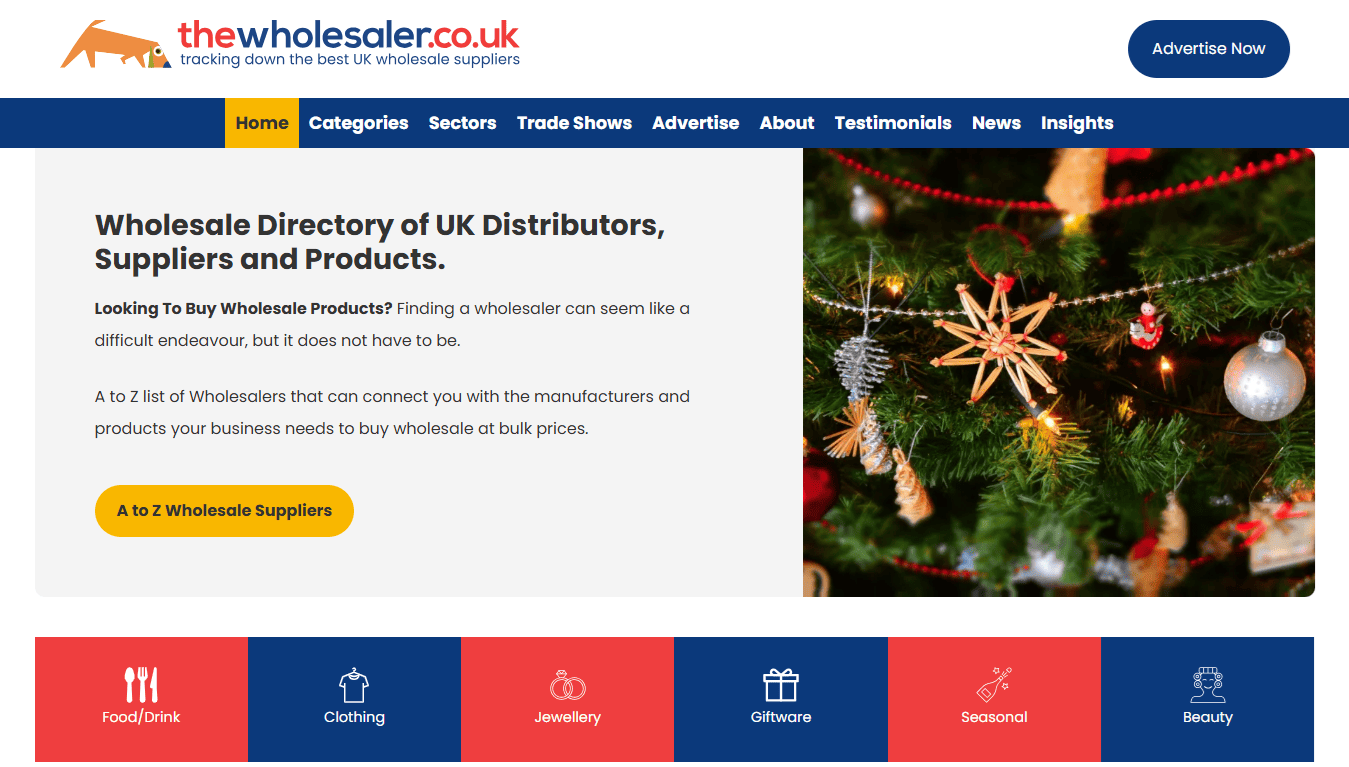
Platforms like eSources or The Wholesaler UK act as curated databases of trade suppliers. These businesses are usually vetted and actively supply retailers, but many of them don’t invest much in online marketing.
This makes directories especially useful for finding smaller or niche UK distributors that are hard to discover through Google alone.
Trade Shows
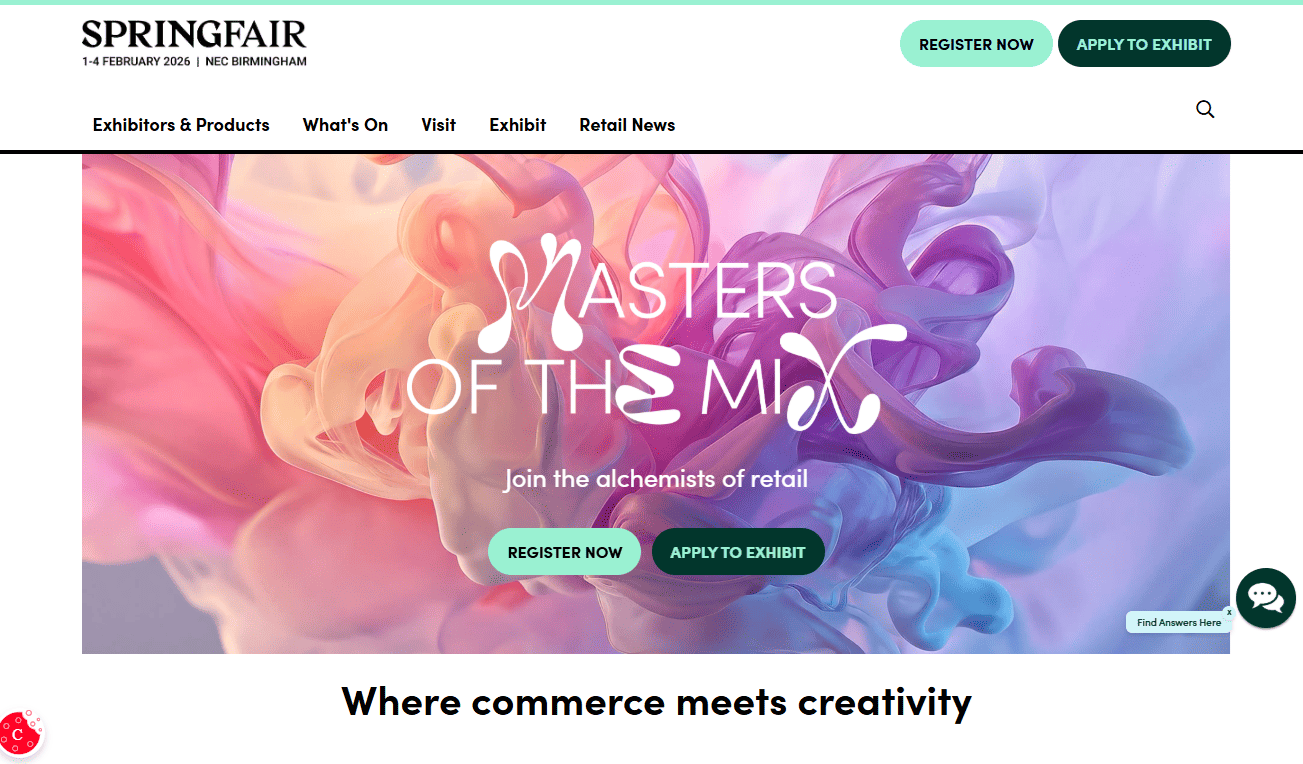
Trade shows are another powerful option, especially if you’re serious about building long-term supplier relationships. Events such as Spring Fair at the NEC Birmingham let you speak directly with brand owners and authorised distributors.
These conversations often lead to access to wholesale price lists, lower minimum order quantities, and even accounts that are not available online or to the general public. For many established sellers, trade shows are where their best supplier relationships actually begin.
B2B Wholesale Marketplaces
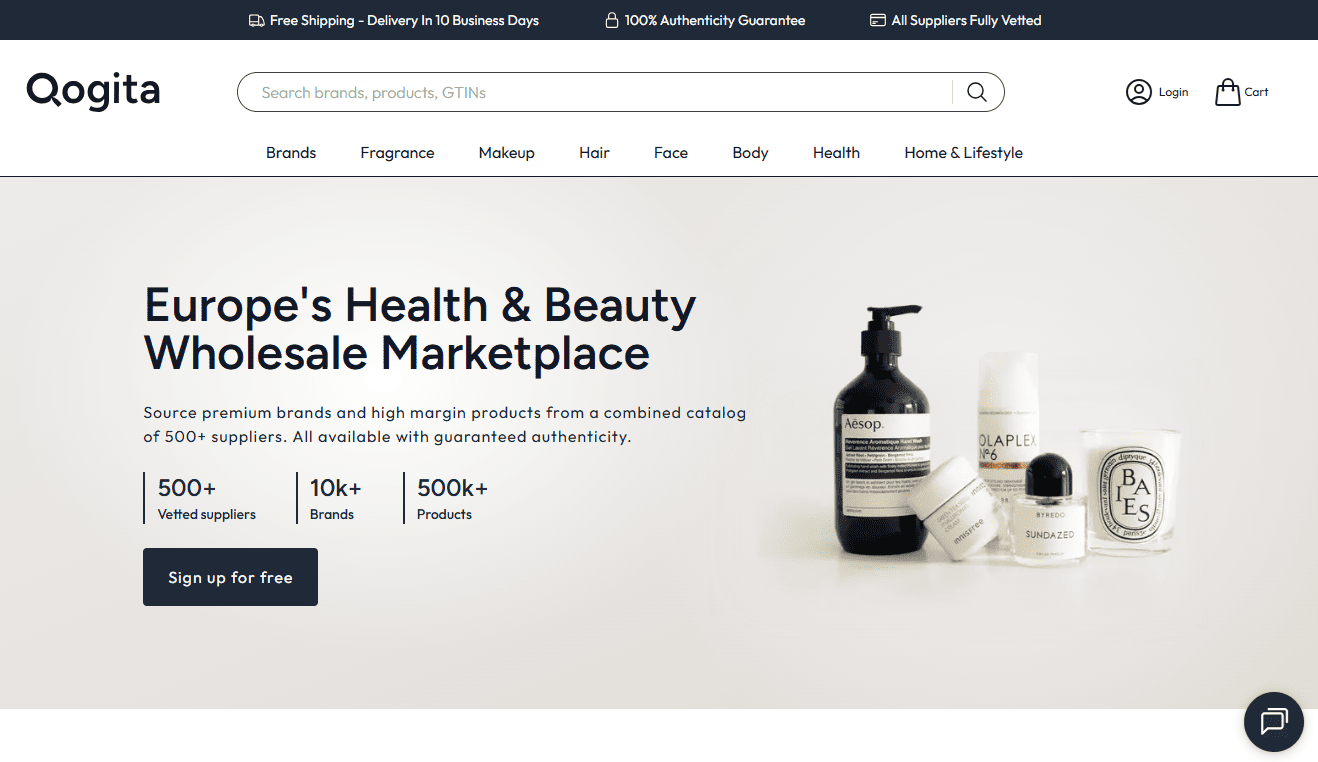
If you’re looking for a more streamlined approach, many resellers use wholesale marketplaces like Qogita and Faire. These platforms offer many advantages over traditional wholesale sourcing.
Qogita, for example, is a wholesale marketplace that aggregates over 500,000 products from hundreds of vetted distributors across the UK and Europe.
Instead of spending months building individual relationships with dozens of different brands, you get instant access to a massive catalog of health, beauty, and household goods.
What makes Qogita particularly helpful for new sellers is their “Marketplace Invoices" filter. This tool allows you to shop specifically for products from suppliers who are pre-verified to provide the exact chain-of-supply documentation Amazon requires for brand approval.
It takes much of the guesswork out of the question "Will Amazon accept this invoice?"
Getting "Ungated": The Reselling Hurdles
When you first open your Amazon store, you will notice that many popular products are locked. This is what the community calls gating. Amazon restricts certain categories and brands to ensure that customers only receive authentic, safe products from professional sellers.
What are Gated Categories?
Restrictions are categorized by either the type of product or the brand name.
- Gated Categories: These include Beauty, Grocery, Health & Personal Care, Fine Jewelry, and Baby Products (excluding apparel). These often require safety documentation or FDA/regulatory proof.
- Gated Brands: Even in an open category like "Home," big brands like LEGO, Disney, Samsung, or Nike are restricted. You cannot list them until you prove you have a legitimate supply chain.
The Ungating Process
To unlock these items, you must submit a formal application through Seller Central.
- Find the Product: Go to Catalog > Add Products and search for the item.
- Request Approval: Click the "Apply to Sell" button.
- Submit Your Invoice: You will typically be asked for a purchase invoice from a manufacturer or distributor. The invoice must show a purchase of at least 10 units of the brand you are trying to unlock. The document must be a high-quality PDF (no screenshots) and must show your business name and address exactly as they appear in your Amazon account.
The 2025 AI Review Shift
In 2025, Amazon have moved toward AI-driven manual reviews. This means a computer algorithm is often the first set of eyes on your document.
- Zero Alterations: Never edit or "photoshop" an invoice. AI can detect digital traces of editing that the human eye cannot see, which can lead to an immediate account ban.
- Clean PDFs: Use clean, professional invoices from sources like Qogita that are already optimized for Amazon's verification systems. If your invoice is messy or handwritten, the AI will likely reject it automatically.
Amazon Fulfillment: FBA vs. FBM
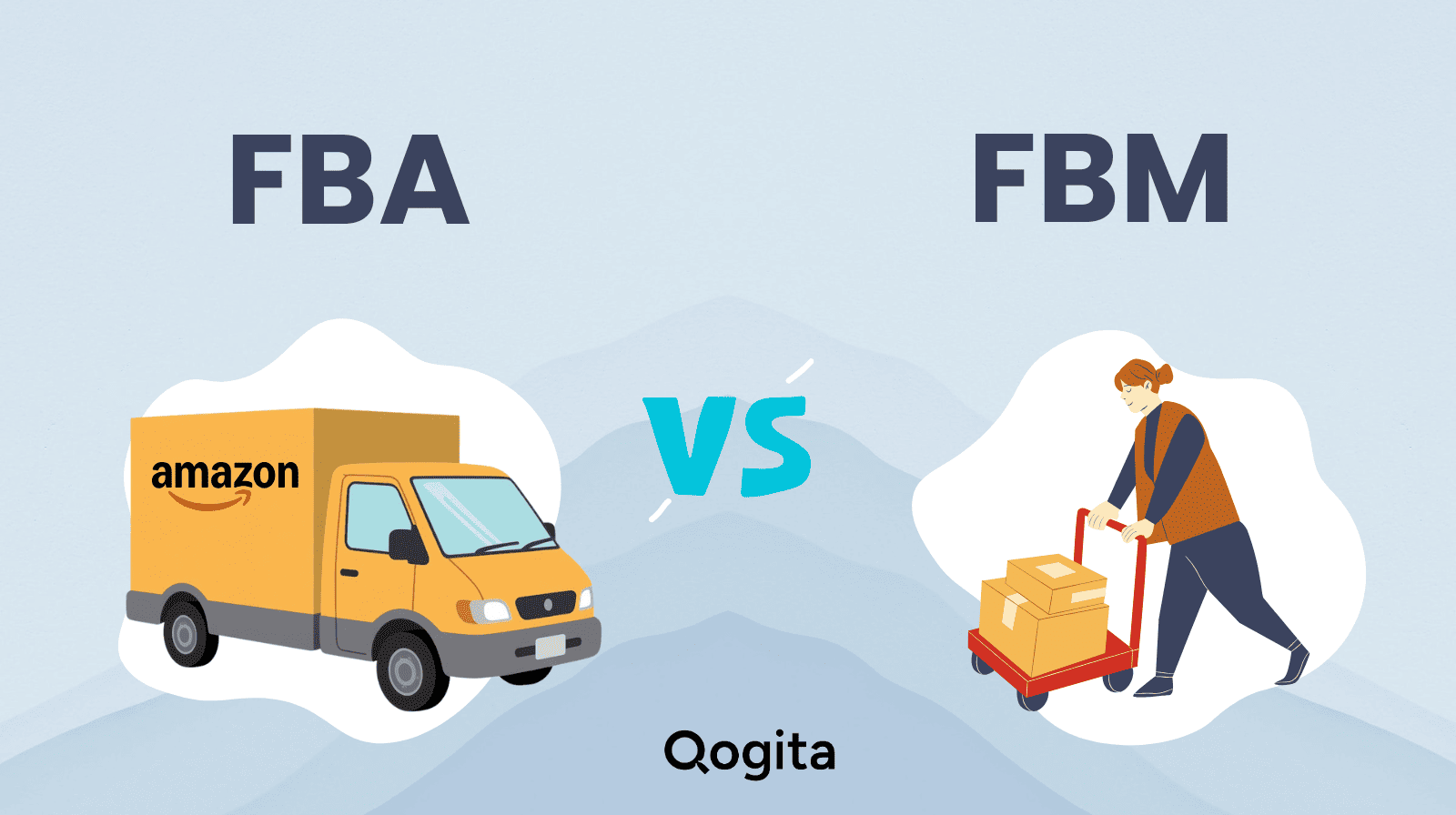
Choosing how to get products to your customers is a major strategic decision. The best method often depends on the size of your product, your storage capabilities, and how quickly you want to scale.
Fulfillment by Amazon (FBA)
With FBA, you send your stock to an Amazon fulfillment center, and they handle the rest. This model is essentially a "hands-off" logistics solution. Once your inventory reaches their warehouse, Amazon takes over the storage, packing, shipping, and even the customer service.
The most significant advantage remains the Prime Badge. Because Amazon guarantees the delivery speed, your products become eligible for Prime, which significantly increases your conversion rate.
For example, imagine you are reselling a popular brand of electric toothbrushes. If you use FBA, a customer can order that toothbrush at 10 PM and have it on their doorstep by the next morning.
Amazon handles the middle-of-the-night logistics, and if the customer decides to return it, Amazon’s staff processes the refund and puts the item back into your sellable stock. This allows you to scale your business without ever having to touch a cardboard box or hire warehouse staff.
Fulfillment by Merchant (FBM)
With FBM, you (the seller) store the products and ship them directly to the customer when an order is placed. While this requires more manual labor, it offers total control over your margins and branding. You aren't subject to Amazon's storage fee hikes or aged inventory surcharges, which can be expensive if a product doesn't sell within 180 days.
Take a large, heavy item, such as a designer floor lamp, as an example. Sending 50 of these bulky lamps to an Amazon warehouse would incur massive monthly storage fees because of the space they occupy.
Furthermore, the FBA Fulfillment Fee for heavy items is significantly higher than what you might pay a local courier like DPD or Royal Mail to deliver the same item.
By using FBM for reselling on Amazon, you can store the lamps in your own garage or a cheap local storage unit and only pay for shipping when a sale actually happens, keeping much more of the profit for yourself.
Winning the "Buy Box" (Featured Offer)
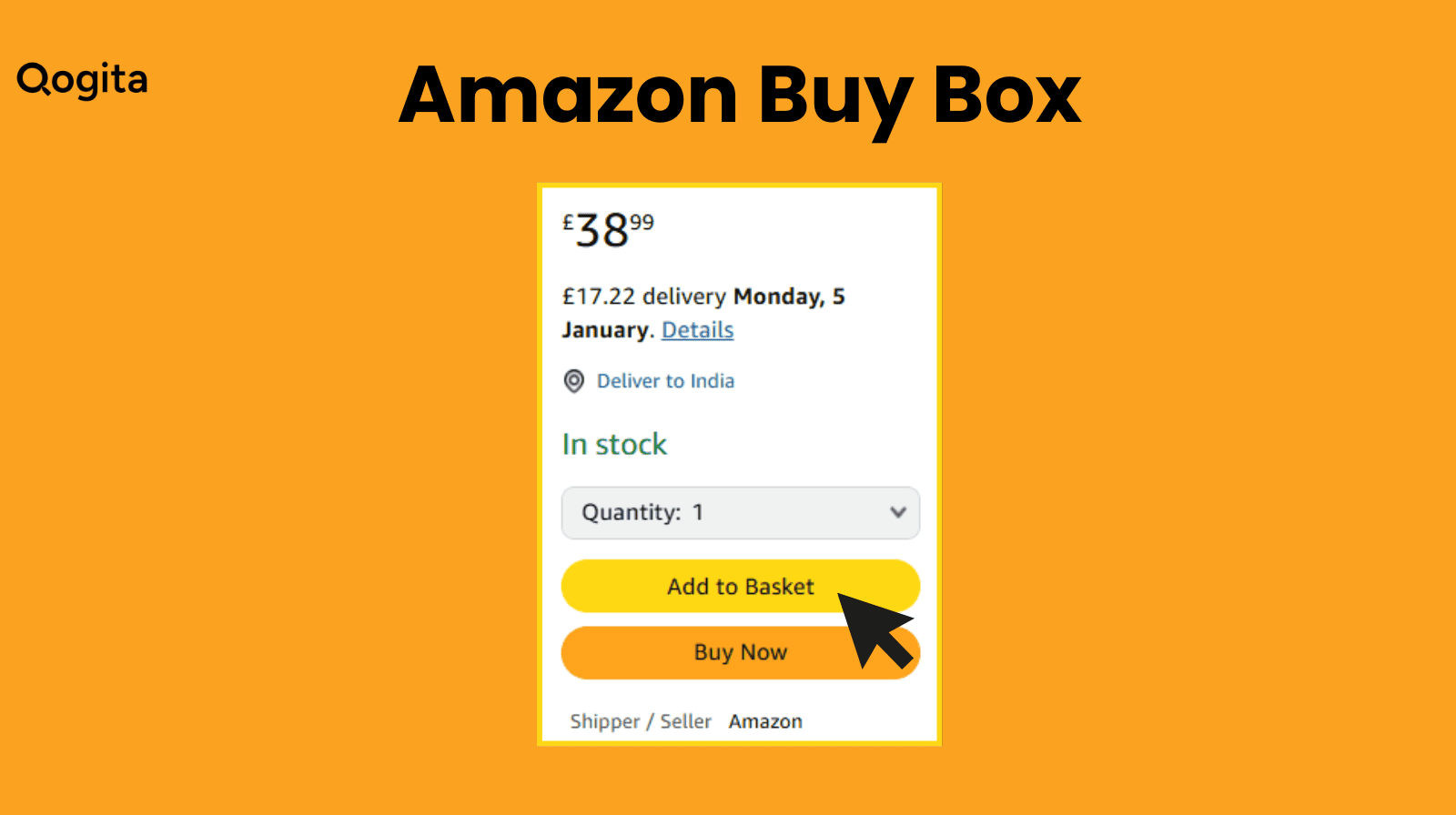
The "Buy Box" (now formally referred to by Amazon as the “Featured Offer") is the white box on the right side of a product page containing the "Add to Cart" and "Buy Now" buttons.
More than 80% of all Amazon sales happen through this box. If you aren't the seller featured in that box, your sales will likely be near zero, even if your product is listed on the page.
How the Algorithm Works
Amazon’s algorithm selects the seller who provides the best overall value and reliability. The algorithm essentially rotates the Buy Box between eligible sellers throughout the day.
If you and another seller have identical metrics, you might each hold the Buy Box for 50% of the time. However, if your delivery speed is faster or your account health is better, the algorithm may grant you the Buy Box 90% of the time, leaving your competitor with only 10%.
For example, imagine three sellers are offering the same LEGO set. Seller A has the lowest price (£45) but ships via FBM with a 5-day delivery estimate. Seller B prices the item at £48 and uses FBA for next-day delivery. Seller C matches Seller B’s price but has a history of late shipments.
In this scenario, Seller B will likely dominate the Buy Box because Amazon prioritizes the "Prime" experience and delivery speed over a £3 saving.
The Importance of Account Health Rating (AHR)
Your Account Health Rating (AHR) is a very important "gatekeeper" for Buy Box eligibility. Amazon uses a point-based system (0-1,000) to measure your compliance with its policies. If your AHR drops below 200 (into the yellow or at-risk zone), Amazon may suppress your Buy Box entirely, regardless of how low your price is.
You have to maintain an Order Defect Rate (ODR) of less than 1% to stay competitive. This means that for every 100 orders, you cannot have more than one instance of negative feedback, an A-to-Z guarantee claim, or a credit card chargeback.
Amazon’s AI now monitors these metrics in real-time, and even a small dip in performance can lead to an immediate loss of the Featured Offer.
Best Categories for Beginners in 2026
Choosing the right category for reselling on Amazon is about balancing profit potential with ease of entry. Beginners should prioritize low-friction categories....those that are easier to ship, have lower return rates, and aren't heavily restricted (gated) from day one.
Top Beginner-Friendly Categories
- Books: Books have a very low entry cost and a high Return on Investment (ROI). They are durable, easy to pack, and rarely result in customer returns.
- Home & Kitchen: This is a "safe" category because most sub-sections are ungated for new sellers. These are everyday essentials that people buy regardless of the economic climate.
- Office Supplies: This category is a "bread and butter" niche. If you enable Amazon Business, you can sell in bulk to schools and offices that are less price-sensitive and buy in large quantities.
- Pet Supplies: Pet owners often prioritize their pets' needs over their own. This category has seen massive growth heading into 2026.
- Toys & Games: This category sees huge sales volume, especially during the golden quarter (October–December). While some big brands are gated, many niche toys are open to all.
- Baby Products (High Repeat Demand): Parents are among Amazon's most loyal customers. They frequently buy essentials through "Subscribe & Save."
Conclusion
Reselling on Amazon is no longer about guessing what might sell. Success comes from treating Amazon like a real business and making decisions based on data, documentation, and long-term planning.
In the early stages, your goal should not be maximum profit. It should be consistency, compliance, and learning how the system works. Once you secure your first approved brand, verify your documents, and understand the process, things become much clearer.
Stay patient, stay organised, and grow step by step.
Reselling on Amazon FAQs
What is reselling on Amazon?
Reselling is a business model where you buy existing products from retailers, wholesalers, or brands and list them for a higher price on Amazon. Unlike creating your own brand, you leverage the established demand for known products to generate profit.
What are the benefits of being an Amazon reseller?
It offers a lower barrier to entry since you don't need to design products or build a brand from scratch. You also benefit from Amazon’s massive customer base and world-class logistics (FBA), which handles shipping and customer service for you.
How much does a reseller on Amazon make?
Earnings vary wildly, with many side-hustlers making £500–£2,000 per month, while professional sellers often see six-figure annual revenues. Most successful resellers aim for a 15–25% net profit margin after all fees and product costs are deducted.
How much does it cost to resell on Amazon?
Expect to invest between £500 and £1,000 to start professionally. This covers your Amazon subscription (£25/month), essential research software like Keepa, and your initial inventory of roughly 10–50 units to get your business moving.
Can I sell on Amazon UK if I live outside the United Kingdom?
Yes, but you must register for UK VAT immediately if you store any inventory in a UK warehouse. There is no minimum sales threshold for non-residents, so you must have your tax affairs in order before sending your first shipment.
What happens if my product doesn't sell?
If stock lingers in an FBA warehouse, you will face aged inventory surcharges. To prevent this, you can lower your price to beat competitors, run Amazon ads, or create a "Removal Order" to have the items shipped back to you for sale on other platforms.
Can I resell my stuff on Amazon?
Yes, you can sell used or "pre-loved" items in most categories, provided they are functional and accurately described. However, consumable categories like grocery and beauty are restricted to new conditions only for safety and hygiene reasons.
Do I need a business license to start reselling?
While you don't need a specific reselling license, you must register as a Sole Trader or Limited Company with HMRC. Amazon requires this legal status to verify your account and provide you with a Professional seller profile.