

Top 10 UK Small Business Wholesale Suppliers for 2026
You have the business plan and the numbers in place, but your success eventually comes down to where you source your inventory.
Most thriving brands do not manufacture their own goods. Instead, they buy in bulk from wholesale suppliers at a lower price and resell them for a profit.
In 2026, the goal of every small business should be to find partners that offer a mix of great prices, a good range of products, and fast shipping. This guide covers the 10 best UK small business wholesale suppliers to help you stock your shop and keep your margins healthy this year.
What is a Small Business Wholesale Supplier?
A wholesale supplier sells products in large quantities to other businesses rather than directly to the public. They act as the middle link in the supply chain. Typically, they buy goods at very low prices from manufacturers and sell them to you (the retailer) in bulk.
As a small business owner, you buy these items at wholesale prices, which are significantly lower than retail prices. This gap between the wholesale cost and your final selling price is where your profit lives. Working with these suppliers lets you stock a wide variety of items without building a factory yourself.
Wholesale Suppliers vs. Wholesale Distributors
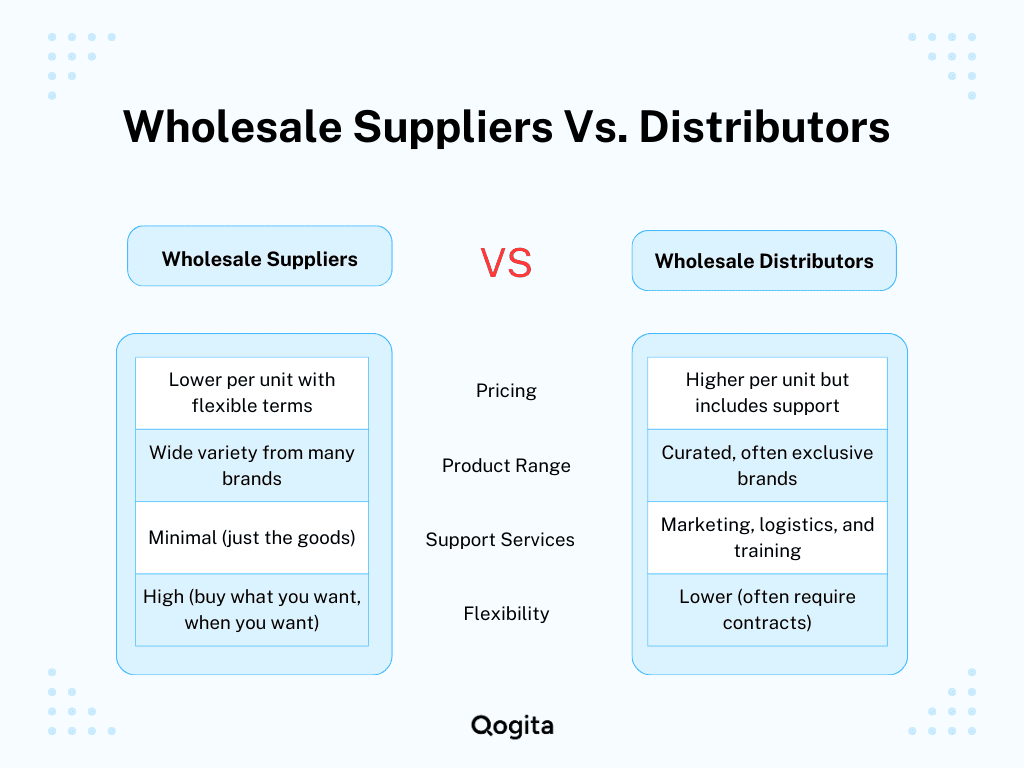
While people often use these terms interchangeably, they are slightly different. Knowing the difference helps you decide which one fits your current stage of growth.
Wholesale suppliers typically offer products from multiple brands and manufacturers in one place. This gives you more flexibility. You can test different products, switch ranges quickly, and adjust your inventory as demand changes.
Wholesale distributors usually work much more closely with a specific manufacturer. In some cases, they may be the only company authorised to sell that brand in the UK or EU. Because of this relationship, they often provide added support such as marketing assets, training, or product guidance.
The trade-off is that distributors tend to have stricter onboarding requirements and less flexibility in what you can sell.
10 Best UK Small Business Wholesale Suppliers
Not all wholesale suppliers are worth your time. We’ve created a list of the top 10 that stand out for pricing, product range, and delivery, with options in the UK and worldwide.
1. Qogita
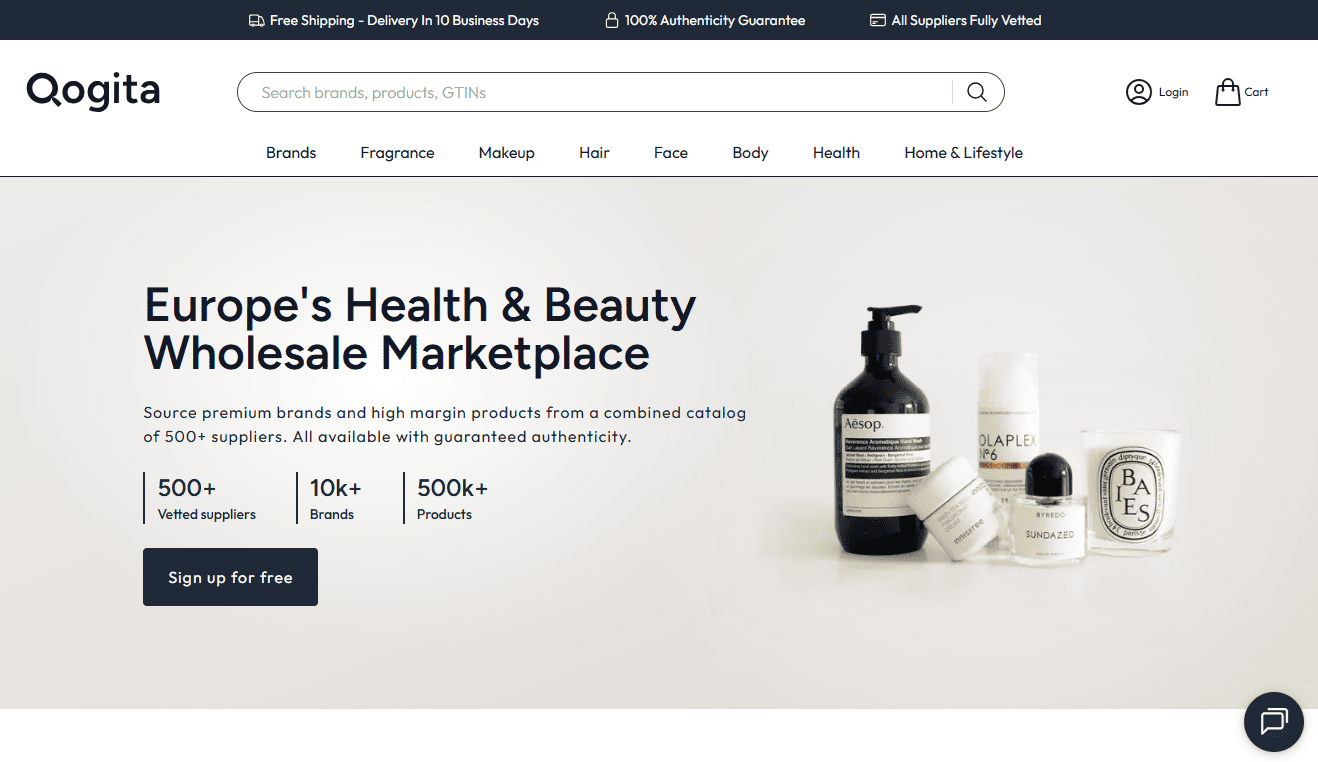
Best for: Health, beauty, and premium brand sourcing.
Qogita is a digital marketplace that has changed the way small retailers buy famous brands. Instead of you having to negotiate with dozens of different companies, Qogita uses an algorithm to find the best prices from over 500 vetted suppliers.
In 2026, it is particularly popular because it handles all the complicated logistics for you. If you are an Amazon seller or a local chemist, you can use their invoices to prove your supply chain is legitimate.
There are no rigid contracts, and they have a low "Minimum Order Value" (MOV) of around €300, making it very accessible for small shops.
It is an ideal platform if you want to stock big-name brands like L’Oréal, Charlotte Tilbury, Medik8, and Clinique without the stress of managing multiple international vendors.
2. Faire
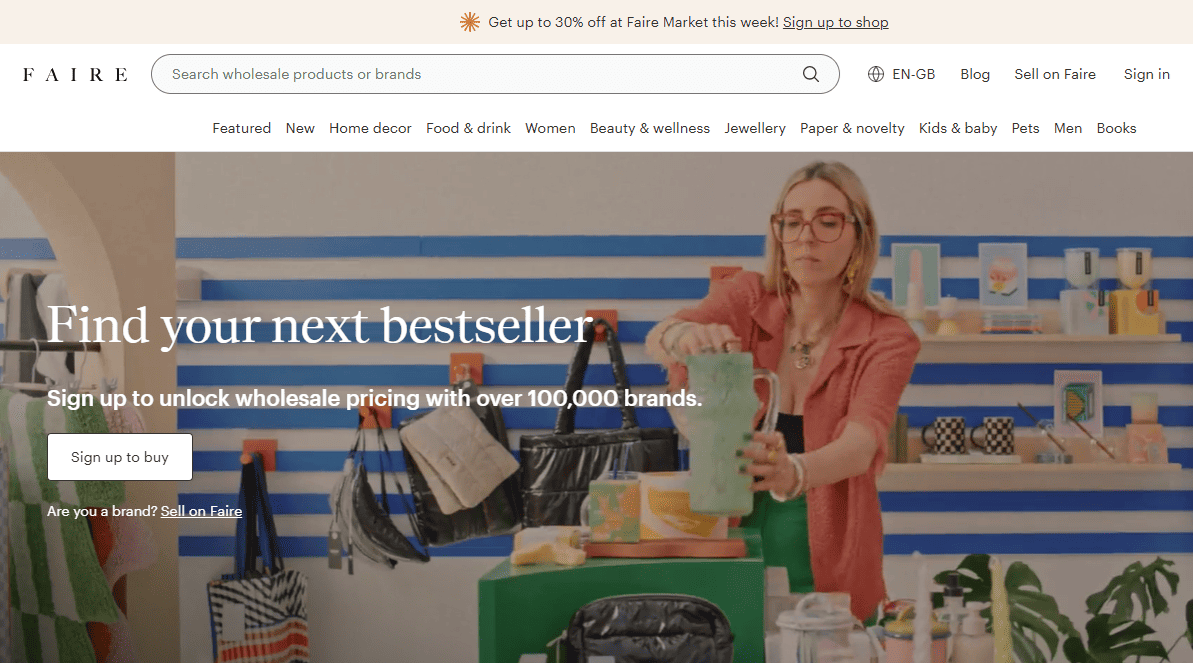
Best for: Testing viral and trending products with minimum risk.
Faire has quickly become the go-to platform for small, independent shops that want to stand out from big-box retailers. It connects you with thousands of independent makers and artisan brands.
One of Faire’s biggest selling points is its Net 60 payment terms. This allows you to buy stock today and pay for it 60 days later, which is a massive help for your cash flow.
Faire remains a top wholesale supplier because of its "Free Returns" policy on first orders. This allows you to test a new brand in your shop with almost zero risk. If the products don't sell, you can send them back for a refund.
3. Ankorstore
Best for: European retailers looking for low minimum orders and local EU brands.
Ankorstore is the leading European alternative to Faire and is highly recommended if your business is based in the EU. They have a vast network of over 30,000 European brands across categories such as home decor, food, and fashion.
Ankorstore particularly stands out for its low entry point, as many brands have a minimum order of just €100. They also offer a specialized "Ankorlogistics" service, which has recently expanded to make shipping between the EU and the UK much smoother, helping you avoid some of the post-Brexit paperwork headaches.
4. Rayburn Trading
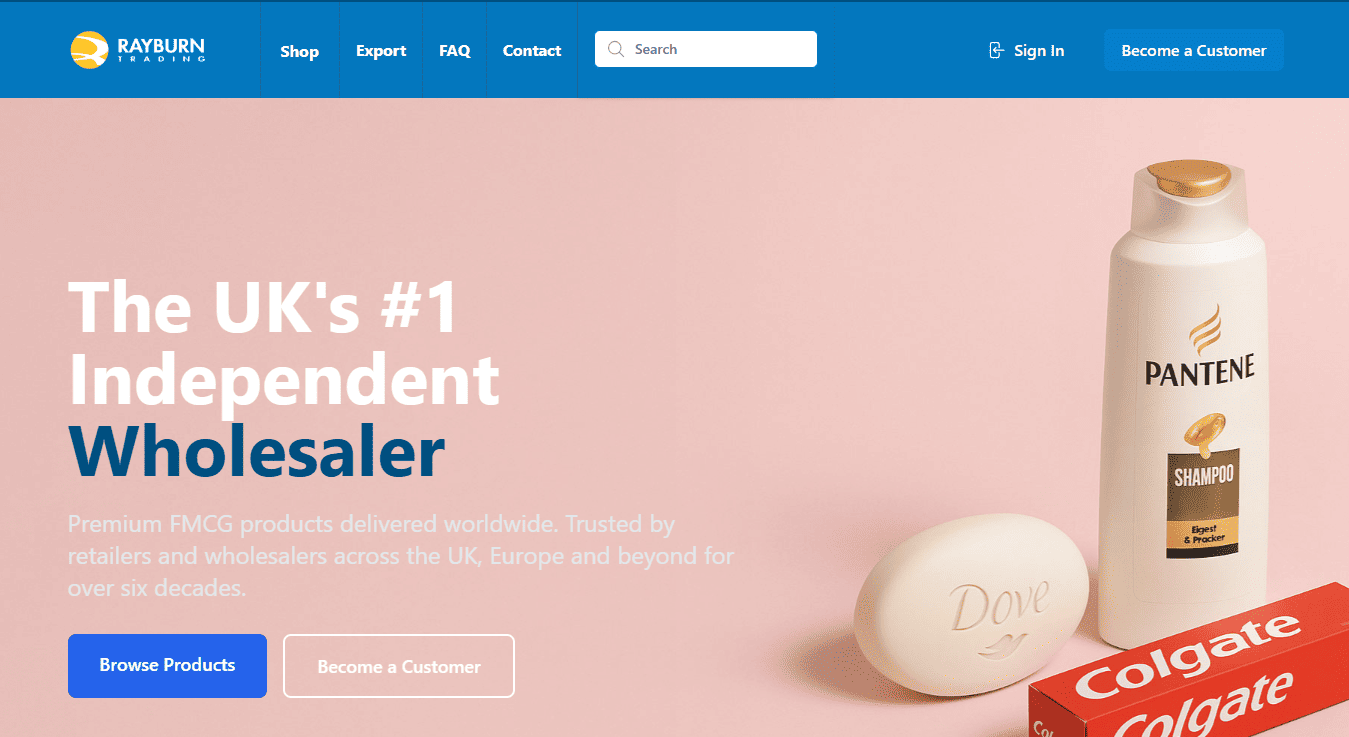
Best for: High-volume household goods, toiletries, and confectionery.
Based in Manchester, Rayburn Trading is one of the largest independent wholesalers in the UK. They stock more than 5,000 product lines from major global brands such as Unilever, Procter & Gamble, and Nestlé. This makes them a strong option for convenience stores, discount retailers, and high-volume online sellers.
Rayburn stands out for scale. Their 200,000 sq ft warehouse and dedicated export team make it easier to handle large orders and international shipping, including customs paperwork.
This is a supplier built for growth rather than small test orders. Minimum order values are typically around £1,600 for UK deliveries, but in return, you get highly competitive per-unit pricing on well-known brands.
5. Alibaba
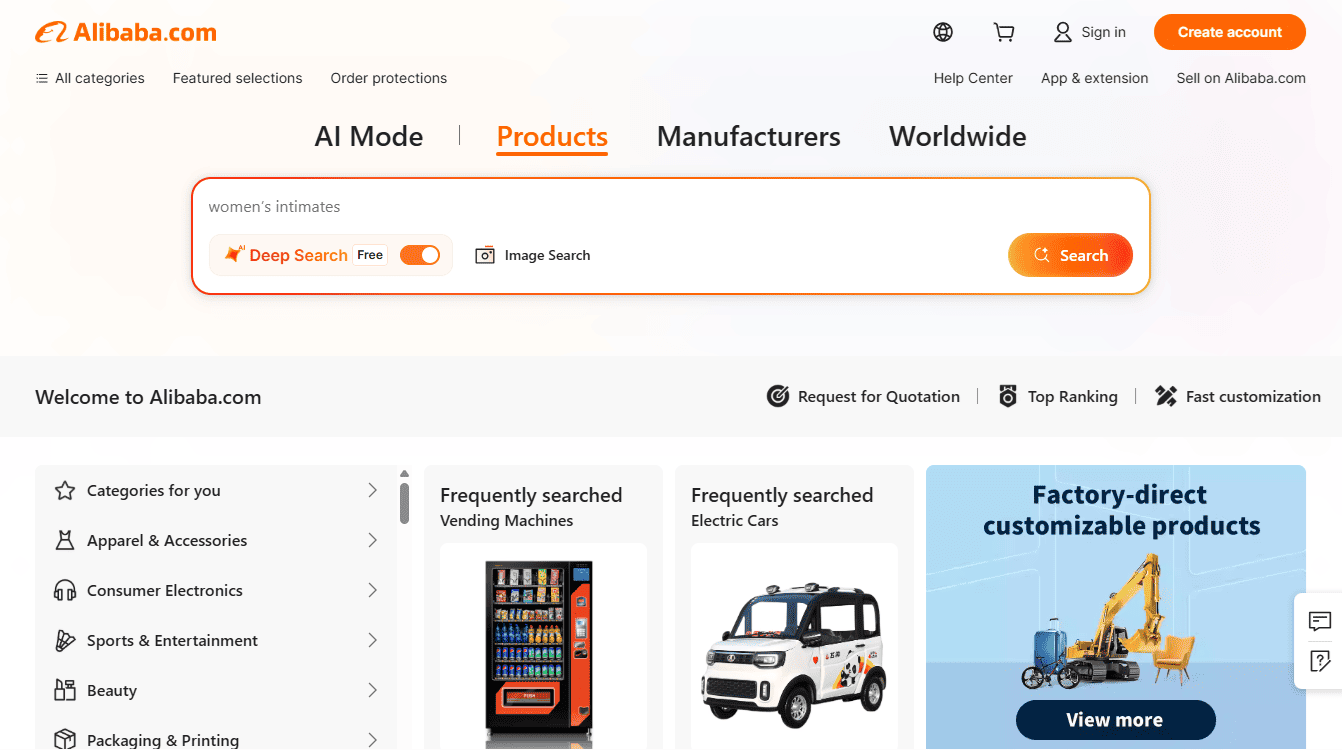
Best for: Custom manufacturing and private-label products at factory-level pricing.
Alibaba is the go-to platform for sourcing directly from manufacturers, primarily in China. It is designed for traditional wholesale, where you place large orders and work closely with factories rather than resellers.
The platform is especially useful if you want to create private-label products. Many suppliers allow you to customise packaging, apply your own branding, or modify existing designs.
It offers the lowest unit costs and the most control over product specifications, making it a strong choice for sellers building their own brand rather than reselling existing ones.
However, Alibaba is not without trade-offs. Higher minimum order quantities mean more upfront capital and greater risk if a product does not perform as expected.
6. Joe Davies
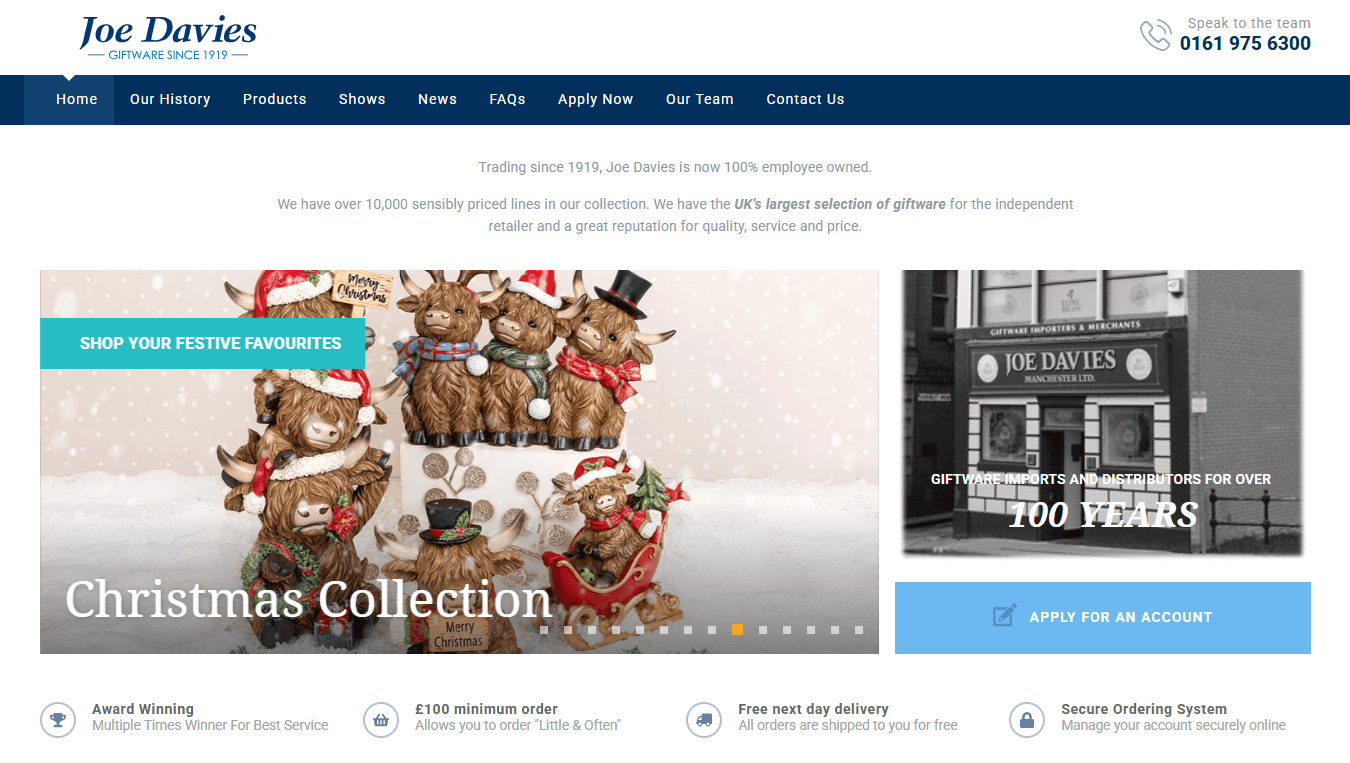
Best for: Independent gift shops and retailers who want to order little and often.
Joe Davies is a well-known name in the UK giftware industry. They are a 100% employee-owned company, which often results in a higher level of personal customer service. They carry over 10,000 lines, including home decor, fashion accessories, and jewellery.
They are ideal for small businesses because of their "Little & Often" policy. You only need a £100 minimum order to get free next-day delivery in the UK mainland. This allows you to keep your inventory fresh without having to store large amounts of stock at once.
7. Hughes Trade
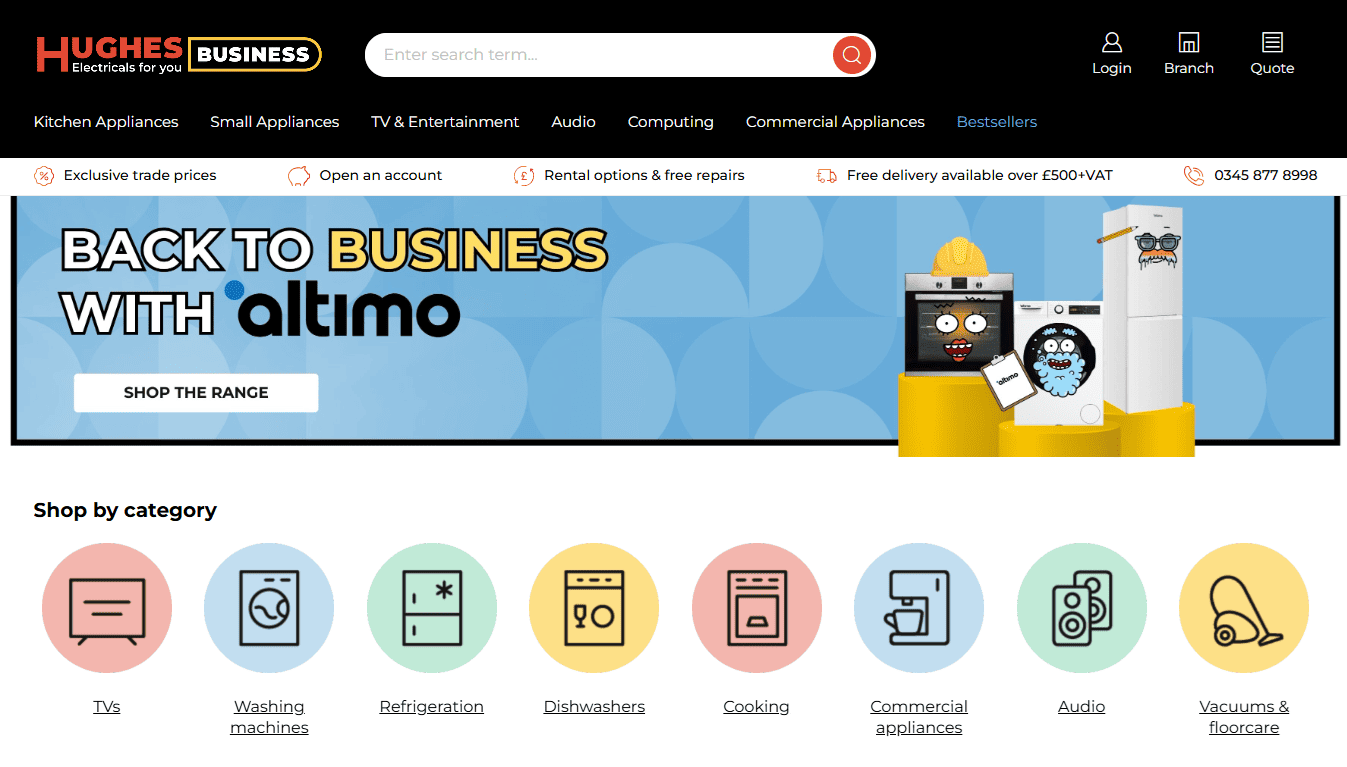
Best for: Consumer electronics and domestic appliances for UK businesses.
Hughes Trade is one of the top choices if your business sells technology or domestic appliances. They are a massive distributor that provides trade-only pricing on everything from small kitchen gadgets like kettles to high-end televisions and washing machines.
What makes them a great partner is their impressive stock availability and fast fulfillment. They provide a dedicated trade dashboard that lets you manage quotes and track orders easily.
For small businesses, their free delivery threshold on orders over £500 and their reliable next-day shipping service make them a solid partner for high-value inventory.
However, margins on branded electronics are notoriously thin. Even with wholesale pricing, you will be competing with giant retailers like Currys or Amazon, who often sell at prices very close to the wholesale rate.
8. Something Different Wholesale
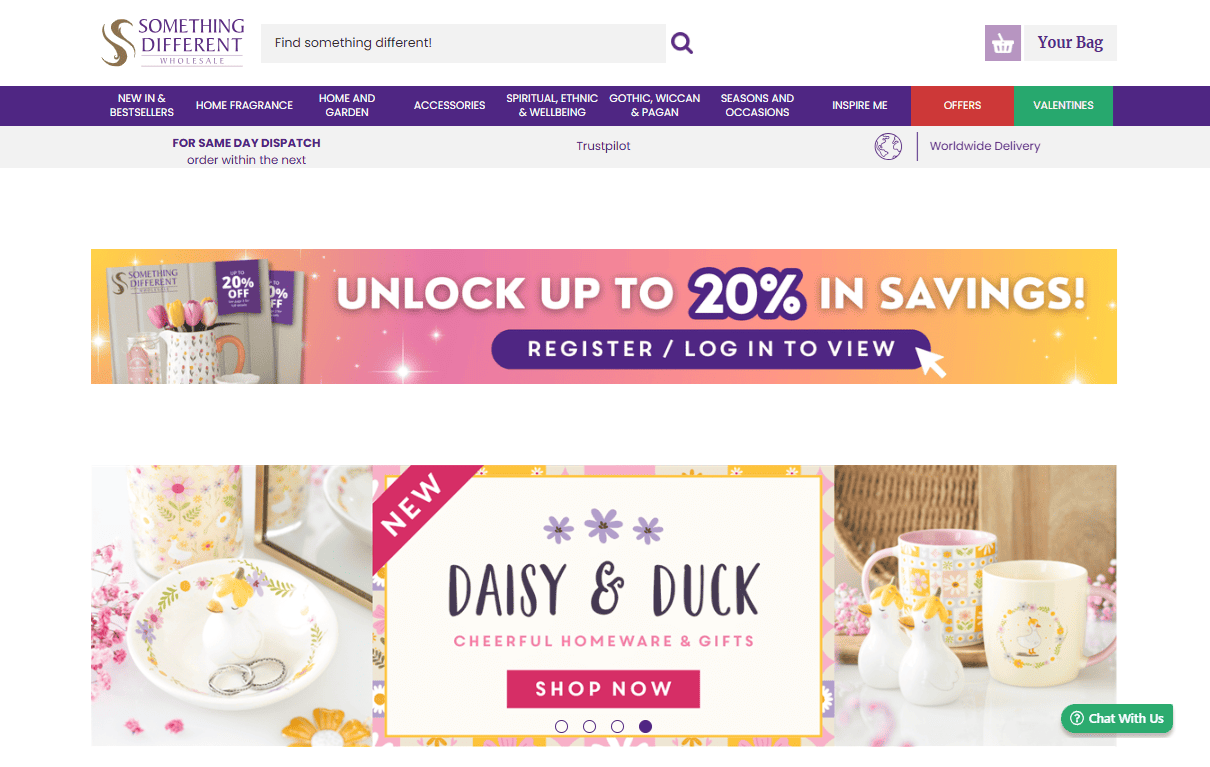
Best for: Spiritual, mystical, and trend-led home accessories.
This supplier specialises in niche giftware, including home decor, incense, and crystals. They are an excellent partner for boutique owners who want unique products that aren't found in every high-street shop.
A major advantage for businesses shipping to the EU is their Delivered Duty Paid (DDP) shipping service. This means they handle the customs and VAT paperwork for you, so your order arrives without surprise fees at the border.
Because they stock unique and imported items, popular products frequently go out of stock. If you build your brand around a specific bestseller from them, you might find it unavailable for months at a time.
9. Gem Imports
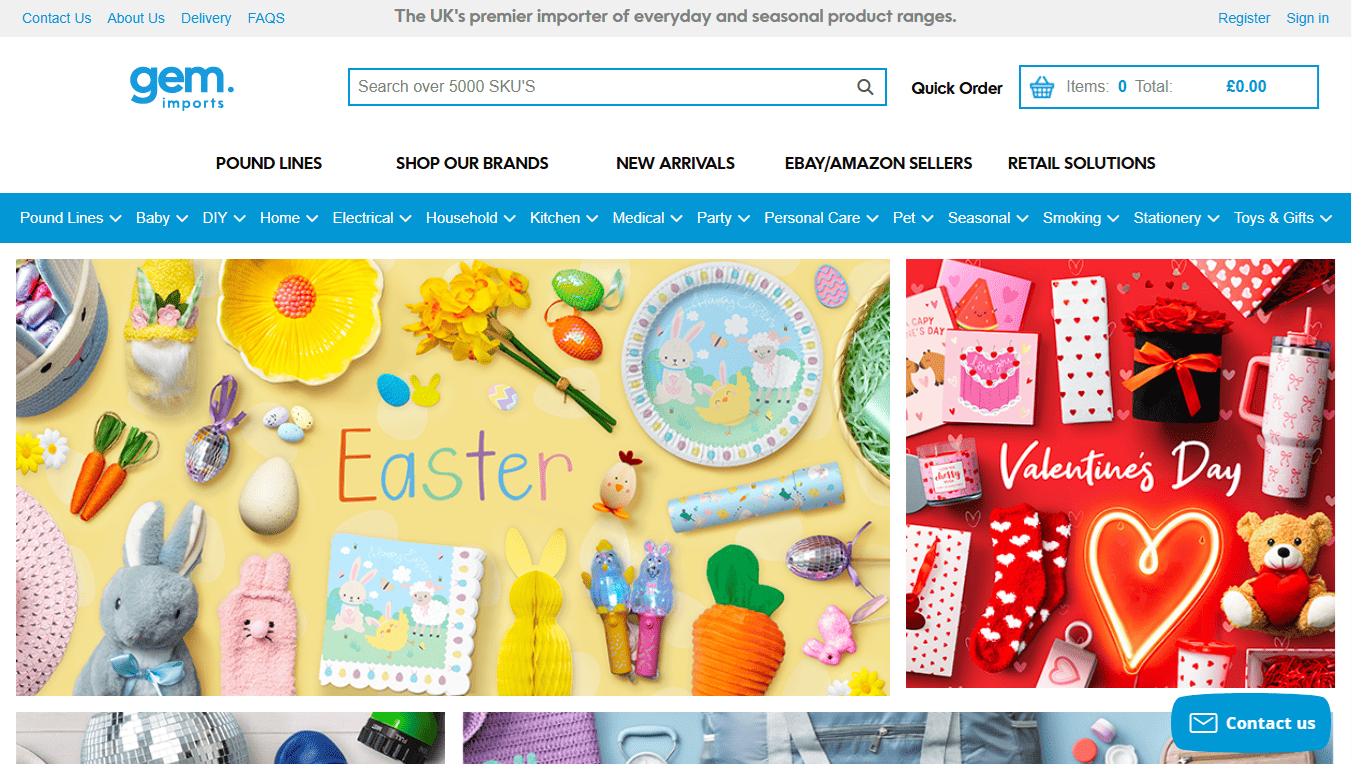
Best for: High-margin discount lines and seasonal pound-shop items.
Gem Imports is a premier importer of everyday and seasonal goods in the UK. They focus on products that allow for quick turnover, such as stationery, toys, and party supplies. If you sell on marketplaces like eBay or Amazon, their products are often designed to fit standard shipping sizes and competitive price points.
They operate with a minimum order of £500 for UK mainland deliveries. While this is a larger initial investment, it ensures you are getting "direct from the importer" prices.
10. MiiN Trade
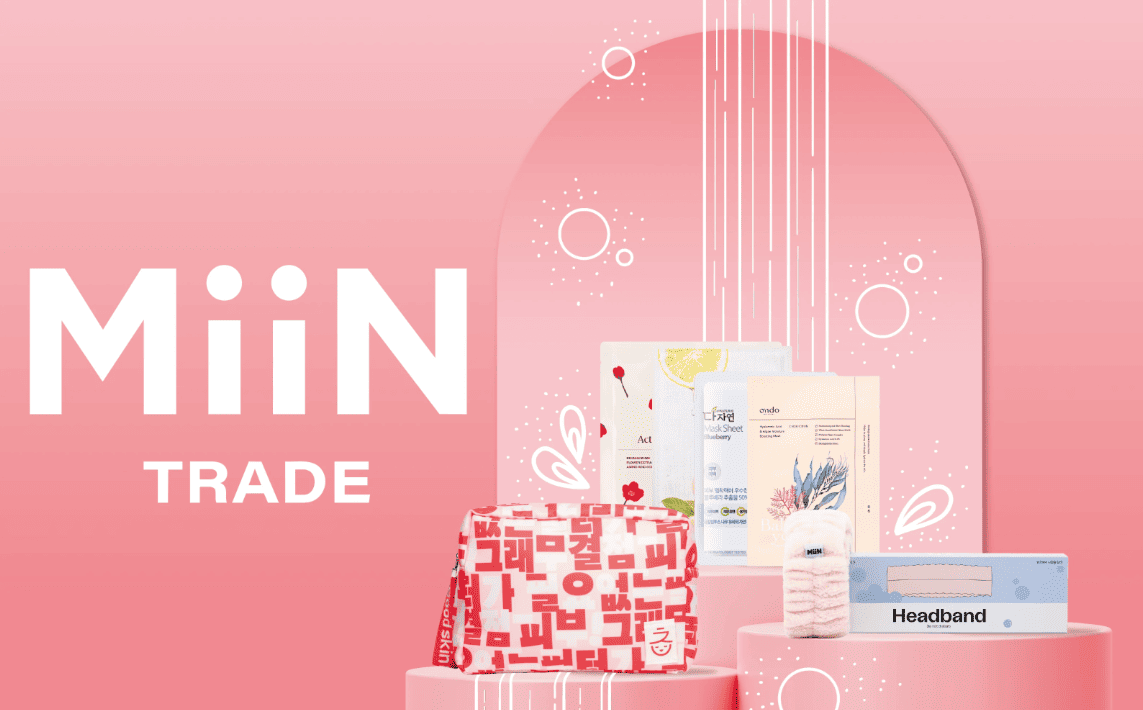
Best for: Authentic K-Beauty and Korean skincare.
Korean beauty (K-Beauty) remains one of the fastest-growing categories in skincare. MiiN Trade is the leading European distributor for these products, ensuring that everything they sell is fully compliant with EU and UK safety regulations.
They stock a curated selection of popular Korean brands such as Laneige, COSRX, Dr.Jart+, Klairs, and Innisfree, all shipped directly from their European warehouses.
MiiN Trade also provides marketing support and product training to retailers, which is very useful for selling skincare products. Their minimum order for the UK is typically around £500, with free shipping available on bulk orders.
How to Find and Vet Your Wholesale Supplier
Once you have a list of potential partners, the next step is to filter out the high-risk options. Finding a supplier is easy, but finding one that is reliable and honest requires a bit of detective work.
Here is a simple three-step process to find and vet your wholesale supplier.
Step 1: Initial Search
The best way to start is to be as specific as possible. General terms like "clothing wholesaler" will give you thousands of irrelevant results. Instead, try searching for your specific niche and location. For example, "organic cotton baby clothes wholesale UK" or "eco-friendly packaging supplier Europe."
Aside from the Google search, you can find suppliers by:
- Checking Product Packaging: Look at the labels of products you admire to see who the distributor or manufacturer is.
- Trade Shows: Visiting events like the Autumn Fair (UK) or Maison&Objet (EU) allows you to meet suppliers face-to-face and see the quality of their items in person.
Step 2: Verification
Before you even send an email, you must check if the company is legitimate. Scammers often create professional-looking websites to trick new business owners.
- Check Official Records: In the UK, use Companies House to see if the business is officially registered and how long they have been trading. In the EU, use the VIES system to verify their VAT number.
- Verify the Address: Search their physical address on Google Maps. If the address turns out to be a residential house or a random field, it is a major red flag.
- Read Independent Reviews: Look for the company on Trustpilot or Google Reviews. Be wary of suppliers with only five-star reviews on their own website, but none elsewhere.
Step 3: Direct Contact
Once you are confident the company is real, it is time to reach out. Your first email should be professional and clear. Ask for their trade pack or a price list, but also ask specific questions to gauge their service level-
Here are the questions you should ask:
- What is your Minimum Order Quantity (MOQ)?
- Can I order a sample of [Product Name] before placing a bulk order?
- What are your standard lead times from payment to delivery?
- Do you offer "Delivered Duty Paid" (DDP) shipping for international orders?
Pro Tip: If a supplier takes more than 3 days to reply to a simple sales inquiry, they will likely be even slower when you have a problem with an order later.
Things to Consider When Choosing a Small Business Wholesale Supplier
Before committing to a supplier, you need to look past the product photos and understand the logistics. These factors will determine whether your business actually makes a profit or loses money to hidden fees.
Total Landed Cost (TLC)
The most common mistake new businesses make is looking only at the unit price. To find your real profit margin, you must calculate the Total Landed Cost. This is the final amount you pay to get the product all the way to your warehouse or door.
The TLC Formula:
Total Landed Cost = Product Price + Shipping + Customs Duties + Insurance + Payment Fees
For example, a product might cost £5 from a supplier, but after adding £1 for shipping, £0.50 for duties, and £0.20 for currency conversion fees, your actual cost is £6.70. If you do not track this, you might price your items too low and end up selling at a loss.
Price
Price is a starting point, not the full story. Before you get excited about a too-good-to-be-true deal, check what it really costs to get that product into your customers' hands.
Always request a full quote, including unit price, shipping, duties, and any extras. If a supplier cannot or will not provide this, it is best to walk away.
Ask your wholesale supplier:
- What is the unit price for [Product Name] at different volume tiers?
- Is there a discount for paying upfront or using specific payment methods?
- Does the quoted price include all packaging and labeling costs?
- Are there any "small order" surcharges if I don't meet a certain spend?
- Can you provide a breakdown of any handling or "picking" fees?
- Are your prices fixed, or do they fluctuate based on raw material costs?
- How much notice do you give before a price increase takes effect?
- Does the quote include local taxes, or will those be added at checkout?
Order Minimums (MOQs and MOVs)
Wholesale suppliers usually set two types of minimums to make sure each order is worthwhile for them:
- Minimum Order Quantity (MOQ): The smallest number of units you can buy (for example, 50 t-shirts).
- Minimum Order Value (MOV): The smallest total spend required (for example, £200 across your order).
High minimums can tie up a lot of cash in stock that doesn’t sell quickly. If you’re just getting started, it’s better to work with suppliers like Qogita, which have lower MOVs and let you test products without committing a large upfront investment.
Shipping & Returns
Shipping in the current market requires attention to detail, especially when moving goods between the UK and the EU.
- DDP (Delivered Duty Paid): The supplier handles all taxes and duties. This is the best option for small businesses as there are no surprise bills or delays at the border.
- DDU (Delivered Duty Unpaid): You are responsible for paying import VAT and duties when the goods arrive. This can delay your shipment and cost you extra in "brokerage fees" from the courier.
Location
Where your supplier is based can have a big impact on both your margins and how quickly you get stock. The key is figuring out which matters more for your business: speed or cost.
- Domestic (UK/EU): You benefit from shorter delivery times, no customs delays, and simpler returns. Products made locally can also justify a higher retail price. The downside is that per-unit costs are usually higher.
- International: You get access to lower prices and a wider product range. The downside is longer shipping times, complex paperwork, and occasional communication challenges.
We suggest that you to work with local suppliers for fast-selling products and international suppliers for high-margin items where longer lead times are manageable.
Conclusion
Finding the right wholesale partner is often the last big step before your brand can take off. Sourcing becomes much easier when you know where to start, and the wholesale suppliers on this list take a lot of the guesswork out of the process.
Before placing an order, double-check shipping costs, minimum orders, and overall expenses for your location. Once you find a partner who delivers high-quality, reliable products, you can stock your shelves and focus on growing your business with confidence.
Small Business Wholesale Suppliers FAQs
How can I find wholesale suppliers?
You can find suppliers by searching online directories like The Wholesaler UK, using B2B marketplaces like Qogita or Faire, and attending trade shows like the Autumn Fair. You can also contact manufacturers directly to ask for a list of their authorized distributors.
Does an EIN number allow you to buy wholesale?
In the US, an EIN is often used to apply for a resale certificate, which allows for tax-free wholesale purchases. However, in the UK and EU, an EIN is generally only needed if you are hiring US staff or opening a US bank account; it does not grant wholesale access locally.
Can I buy wholesale without an LLC?
Yes, you can buy wholesale as a sole trader or a startup without a formal limited liability company (LLC). Most wholesalers only require proof that you are trading for business purposes, such as a business website, a professional email address, or a recent invoice from another trade supplier.
Can I use my LLC to buy wholesale?
Yes, using your LLC (or Limited Company) is the standard way to open a trade account. Providing your registered company number and VAT details (if you have them) gives you immediate legitimacy and can often help you secure better credit terms or higher order limits with suppliers.