
If you are a retailer selling cosmetic products in the UK market, understanding the legal framework is very important. Every product requires proof of safety and correct documentation before you can sell it.
The complexity has increased since the UK departed from the EU. Where there was once a single system, there are now two separate legal pathways for Great Britain (England, Scotland, Wales) and the European Union.
In this guide, we will educate retailers on their duties under the cosmetic regulations UK. We will simplify the necessary compliance steps, ensuring you understand every detail, from establishing a Responsible Person and completing mandatory testing to correctly notifying your products.
Understanding Cosmetic Regulations in the UK
To sell your products legally, you first need to understand what the law considers a "cosmetic product."
What is a "Cosmetic Product"?
Under both the UK and EU regulations, a cosmetic product is defined as:
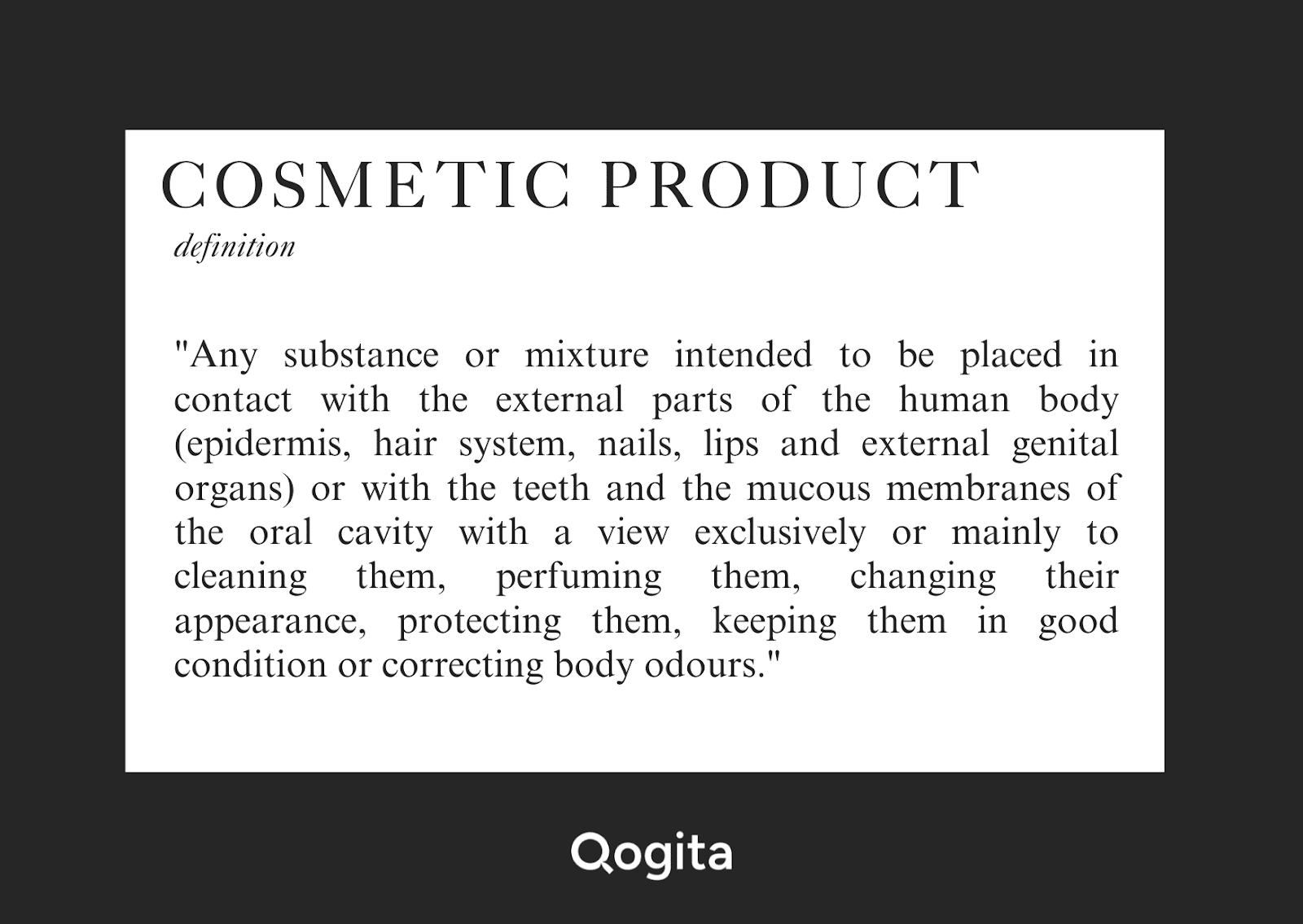
This broad definition covers almost everything from soap, shampoo, and perfume to makeup, toothpaste, and even sunscreens. If your product aims to change the appearance or maintain the condition of the outside of the body, it’s a cosmetic and must comply.
The Regulatory Frameworks
As a retailer, you must be wondering, "Is the beauty industry regulated in the UK?"
Yes, the beauty industry is heavily regulated in the UK, ensuring products are safe. The core law is based on a retained version of EU legislation, but they now operate separately:
The Impact of the Post-Brexit Split
The biggest change for retailers is the divergence in the notification portals.
- Before 2021: A single notification on the EU's CPNP covered the whole UK and EU.
- Now: If you sell a product in Great Britain, it must be notified on the UK's SCPN. If you also sell the same product in the EU or Northern Ireland, it must also be notified on the CPNP.
This means businesses trading across the Channel must now comply with two sets of admin requirements and, critically, adhere to two separate (and increasingly diverging) lists of approved and banned ingredients.
These legal systems are why checking the cosmetic products regulations in the UK is now a fundamental step for your business.
Who Is the Responsible Person (RP) and Why It Matters
The Responsible Person (RP) is perhaps the most critical concept in cosmetic regulations. This individual or legal entity is the single point of accountability for a product's safety and compliance in a specific legal market.
So, who is a responsible person?
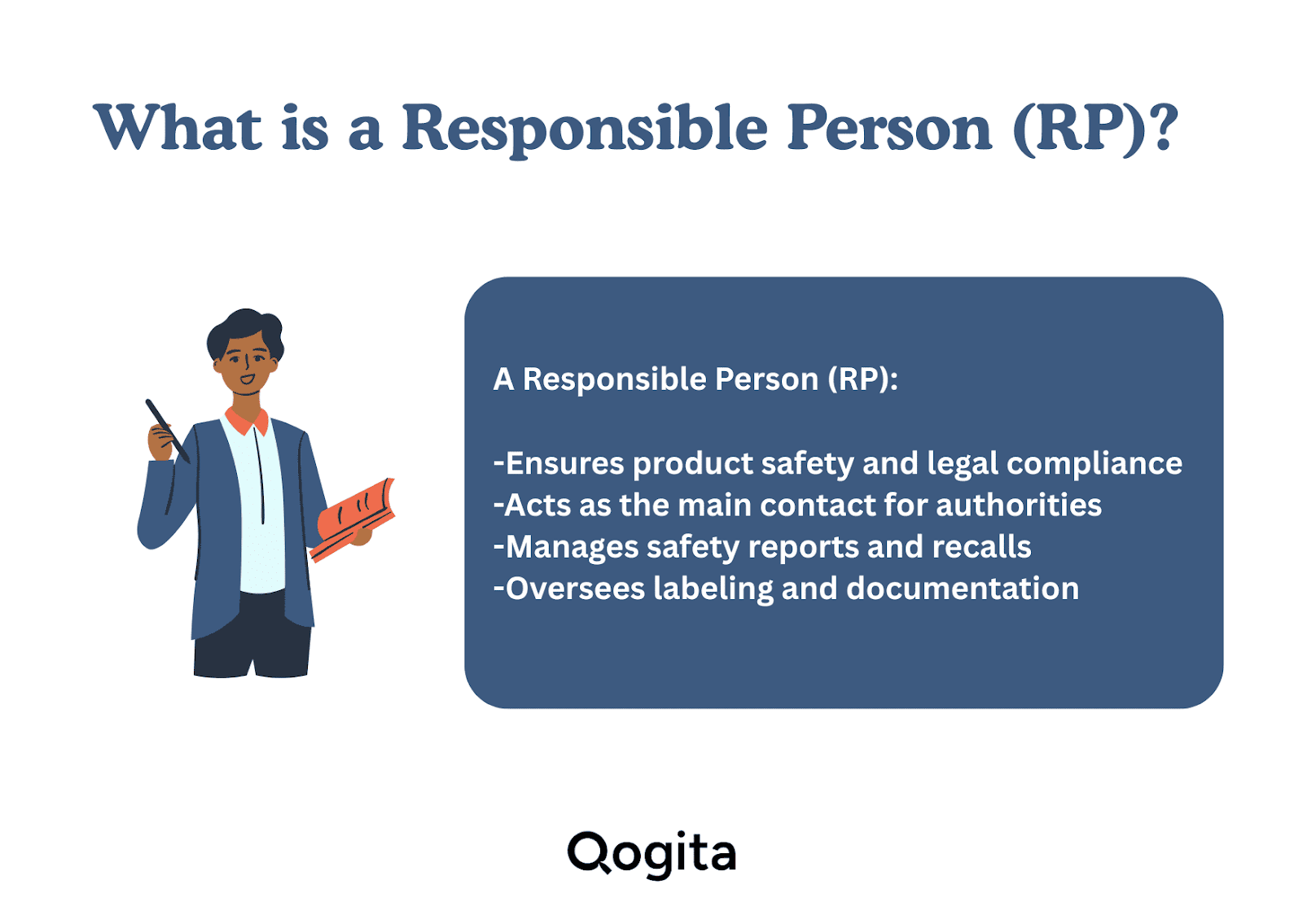
The RP is the legal face of the product. Their name and address must appear on the product label.
- Their Main Duty: To ensure the product meets all the requirements of the relevant laws, including the cosmetic products safety regulations UK, from manufacture to the moment it's sold.
- Point of Contact: The RP is the person that national authorities (like the Office for Product Safety and Standards, OPSS, in the UK) contact in the event of an investigation, safety concern, or recall.
How a Retailer or Brand Owner Becomes the RP
For small brands and retailers, the role of the RP usually falls to one of two parties:
- The Manufacturer/Formulator (if based in the market): If you manufacture the product in Great Britain (GB) and sell it only in GB, you are the UK Responsible Person.
- The Importer/Designated Agent: If you import a product into GB from outside the UK, you become the UK Responsible Person, or you must formally appoint a UK-based agent to take on this role for you.
The RP's Core Responsibility: The CPSR
The primary legal responsibility of the RP is to hold the complete Cosmetic Product Safety Report (CPSR).
The cosmetic product safety report is a mandatory legal document that confirms your product is safe for human use under normal or reasonably foreseeable conditions. A qualified toxicologist or safety assessor must write it.
The CPSR is divided into two parts:
- Part A (Safety Information): Contains all the data needed, including the product's exact formula, raw material toxicological profiles, product stability data, and microbiological test results.
- Part B (Safety Assessment): This is the qualified assessor's conclusion. It states that, based on the data in Part A, the product is safe to use and meets all requirements of the relevant regulation.
Without a valid CPSR, you cannot legally sell the product. The RP must keep this report (and the entire PIF) ready for inspection by authorities for ten years after the last batch is sold.
7 Steps to Legally Sell Cosmetics in the UK
Once you have identified the Responsible Person (RP), you must execute the mandatory legal steps for each product formula. Failing any one of these steps makes selling your product illegal.
Step 1: Product Formulation
Regardless of your chosen path (whether it’s in-house formulation, using a white label product, or purchasing pre-assessed recipes) the legal burden of product safety rests entirely on the Responsible Person (RP).
You must ensure that every single ingredient complies with the UK CR Annexes, particularly Annex II (Prohibited Substances) and Annex III (Restricted Substances). For example, over 1,300 substances are banned, including certain skin lighteners and corticosteroids.
It is also very important to select a reliable cosmetic ingredients supplier in the UK who can provide full safety data sheets (SDS) and technical specifications. This documentation is essential for ingredient traceability and is a core requirement of the subsequent safety assessment.
Step 2: Stability and Challenge Testing
These tests are mandatory requirements under the UK CR and form a critical part of the Product Information File (PIF).
Stability Testing
This is done to prove the product maintains its physical, chemical, and microbiological quality, as well as its functional efficacy, under reasonably foreseeable storage and transport conditions.
- Testing can be done in real-time (for the duration of the claimed shelf life) or via accelerated conditions (often 3 months at elevated temperatures like 37°C or 45°C).
- This test must also assess the compatibility between the product and its packaging to ensure the container doesn't degrade or leach substances into the formula.
Microbiological (Challenge) Testing (PET)
For any product containing water, the Preservative Efficacy Test (PET) is a must. It verifies the formula's preservative system is effective at fighting microbial contamination introduced during normal use.
While established protocols exist (like the ISO 29621 framework), modern, complex formulas (like probiotic or "just add water" products) may require tailored and risk-based testing plans.
Step 3: Cosmetic Product Safety Report (CPSR)
The CPSR is the most critical piece of documentation. It is a formal assessment by a qualified safety assessor (usually a toxicologist) who confirms the product is safe for human health.
As we discussed before, the CPSR includes:
- A toxicological profile of all raw materials.
- The finished product’s chemical structure and stability data.
- A risk assessment based on the intended use and consumer exposure.
This report is fundamental to compliance with cosmetic products safety regulations UK and must be prepared before the product is sold.
Step 4: Labelling Requirements
All product containers and external packaging must display specific information clearly, legibly, and permanently in English. Non-compliant labels are one of the fastest routes to market rejection.
Key legal requirements include:
- INCI List: A full list of ingredients (using the International Nomenclature of Cosmetic Ingredients) in descending order of weight.
- Responsible Person Details: Name and address of the UK-based RP.
- Batch Number: An identification code for manufacturing traceability.
- Shelf Life: Either a 'Date of Minimum Durability' or the Period After Opening (PAO) symbol (an open jar icon with a number, e.g., '12M').
- Warnings and Precautions: Any necessary statements (e.g., "Avoid contact with eyes").
Step 5: Product Information File (PIF)
The PIF is the complete technical file for your cosmetic product, held by the Responsible Person for ten years after the last batch is placed on the market. It is essentially the master record of your product's compliance.
Required documentation includes:
- The product description.
- The fully approved CPSR.
- A statement on Good Manufacturing Practice (GMP).
- Stability and Challenge Testing data.
- Proof and evidence to justify all marketing claims.
- Ingredient traceability documentation.
The file must be readily accessible to enforcement authorities in the English language.
Step 6: Batch Records and Traceability
Batch records are detailed manufacturing records for every unique production run. They document exactly when, where, and how a batch was made, including the raw materials used, their suppliers, and the operator who made it. These records are useful for:
- Traceability: The batch number on the product label allows the RP and authorities (like Trading Standards) to isolate and trace a faulty or contaminated batch instantly in the event of a safety alert or recall.
- Inspection: Trading Standards may request batch records as part of their enforcement duties to verify GMP compliance.
Step 7: Notification on the UK SCPN Portal
The final mandatory step before selling is notifying the product on the UK Submit Cosmetic Product Notification (SCPN) portal. This is the official UK register used by market surveillance authorities and poison centres.
- Process: The Responsible Person submits key data, including the product name, category, RP details, ingredient list, and a copy of the label/packaging.
- UK vs. EU: While the EU requires notification on the CPNP, the UK requires notification on the separate SCPN portal. There is no automatic data transfer; products sold in both territories must be notified in both systems.
Non-compliance is a serious offense that can result in unlimited fines in England/Wales, or up to £5,000 in Scotland, and potentially lead to prison terms.
Product Claims and Marketing Substantiation
All claims fall under the strict governance of the UK Cosmetics Regulation (UK CR), reinforced by the Common Criteria (Regulation 655/2013). The overarching principle is that any claim must be true, not misleading, and supported by documentary evidence held within the PIF.
The Six Common Criteria
Every single claim, whether explicit or implied (e.g., through imagery), must comply with these six criteria:
Substantiating Functional Claims
Claims related to efficacy such as "reduces wrinkles," "24-hour hydration," or "clinically proven" require the highest level of evidential support.
- Required Evidence: This typically involves robust, well-designed clinical studies, instrumental testing (e.g., corneometer readings for hydration), or consumer perception studies where the results are statistically significant and reflect the claim made.
- The PIF Link: The Proof of Effect document required in the PIF is this substantiation package. If the authorities audit the PIF, this evidence must clearly and unambiguously support every claim used in marketing.
High-Risk Claims: 'Free-From'
Claims like "Paraben-Free," "Sulfate-Free," or "Alcohol-Free" are highly scrutinised because they often violate the Honesty and Fairness criteria by implying that legally authorised and safe ingredients are harmful.
- Denigration Risk: Claims that imply a product is safer because it lacks an ingredient that is perfectly safe and authorised under the UK CR are generally not permitted.
- Acceptable Use: 'Free-from' claims are generally acceptable only if they enable an Informed Decision for a specific target group.
Example 1: "Free from animal-derived ingredients" for a vegan target market.
Example 2: "Free from acetone" in nail polish for consumers avoiding the specific odor.
Special Categories
Post-Market Obligations: Vigilance and GMP
Once a product is on the market, the RP’s job doesn’t end. Their focus shifts from getting the product approved to making sure it stays safe and compliant.
This means regularly monitoring its safety, handling any issues that arise, and following good manufacturing practices (GMP) to maintain quality and protect consumers throughout the product’s life.
Maintaining Good Manufacturing Practice (GMP)
Good Manufacturing Practice (GMP) must be followed at every stage of production, not just for the first batch. The UK Cosmetic Regulations require ongoing compliance with ISO 22716, which sets international standards for quality and safety.
The RP should regularly audit their own facilities or those of contract manufacturers to check product quality, raw material handling, and record accuracy.
Any major change in equipment, process, or factory setup must be reviewed for its impact on product safety and stability, and all updates must be reflected in the Product Information File (PIF).
Post-Market Surveillance (PMS)
Post-Market Surveillance (PMS) is the ongoing process of reviewing product safety once it’s already on the market. It helps identify potential problems early and ensures continued consumer protection.
The RP must monitor all possible feedback sources, including:
- Direct consumer complaints and inquiries.
- Social media comments and reviews.
- Feedback from distributors and retailers.
Even minor issues, such as mild irritation, must be documented and reviewed by the Safety Assessor to decide whether the safety report (CPSR) needs updating or if additional label warnings are required.
The Vigilance System: Serious Undesirable Effects (SUE)
The vigilance system, known as cosmetovigilance, is one of the most important legal duties after a product is launched. It focuses on identifying and managing serious adverse reactions, called Serious Undesirable Effects (SUE).
A SUE is any reaction that causes disability, hospitalization, lasting harm, birth defects, or poses a life-threatening risk. If the Responsible Person becomes aware of such an event, they must report it to the OPSS through the SUE reporting system and submit a complete report within 20 days.
This report must include product details, the incident description, and any corrective steps taken, along with full cooperation during the investigation.
Product Withdrawal and Recall
If a product is found to pose a serious risk to human health, the RP must act quickly to fix the problem. This can include stopping sales or organizing a product recall to protect consumers.
They must work closely with OPSS and local Trading Standards to manage the recall effectively, clearly communicate the risks to the public, and provide clear instructions for return or safety.
All actions, reports, and recall records must be carefully documented in the Product Information File (PIF) as evidence of compliance and due diligence.
Penalties and Enforcement
Non-compliance with the UK Cosmetics Regulation (UK CR) is a serious criminal offense. Enforcement is managed by multiple governmental and local authorities. Let's take a look at the main ones:
Enforcement Authorities in the UK
Several authorities are responsible for executing cosmetic regulations in Great Britain:
- Office for Product Safety and Standards (OPSS): OPSS handles the notification portal (SCPN), monitors the market for high-risk products, and coordinates major national product safety actions and serious undesirable effects (SUE) reporting.
- Local Authority Trading Standards (TS): These local bodies conduct the bulk of physical market surveillance. They carry out compliance checks, factory inspections, document audits (requesting the PIF), and initiate local prosecutions for non-compliance (such as incorrect labelling or unauthorised claims).
- Advertising Standards Authority (ASA): While not a statutory product safety body, the ASA enforces the Common Criteria in marketing and advertising. They can demand withdrawal of non-compliant claims from websites, packaging, and social media.
Types of Enforcement Action
Authorities use a range of escalating actions based on the severity of the non-compliance:
1. Improvement Notices: Issued for minor or administrative failures (e.g., a missing batch number on a label or minor PIF documentation gaps). The RP is given a specific timeframe to fix the issue.
2. Prohibition Notices: Issued for more serious safety concerns (e.g., contamination risks or restricted substances). This immediately prevents the product from being placed on the market or sold further until the risk is entirely eliminated.
3. Suspension Notices: Issued when there is reasonable suspicion that the product presents a serious risk. This immediately stops the supply of the product while authorities carry out formal risk assessment.
4. Product Withdrawal and Recall: Mandatory action if the product is proven to pose a serious risk to human health.
Criminal Penalties for Non-Compliance
The most severe consequences are legal prosecution and financial penalties, which are set out in the regulations for England, Wales, and Scotland.
Conclusion
The cost of full compliance (investment in testing, safety assessment, and documentation) is always lower than the potential cost of non-compliance. Legal penalties, coupled with the inevitable reputational damage caused by a product recall or regulatory action, can be business-ending.
To manage this risk, a critical step is guaranteeing the products you buy are 100% real and safe. Counterfeit or low-quality ingredients pose an immediate, high-stakes danger to customers and your legal standing.
This is where Qogita helps simplify things. Qogita secures your supply chain by offering 100% authentic wholesale cosmetics from a network of over 500 vetted suppliers.
This guarantee reduces the risk of using banned or contaminated items, allowing you to focus on your key responsibilities as the Responsible Person.