

Selling your products one by one to individual customers is a great way to start a business, but it is hard to grow that way forever.
If you want to reach more people and move more inventory, selling in bulk to other shops is the most effective path. This approach, known as wholesale, allows you to get your brand into new cities and stores that you could never reach on your own.
The scale of this industry is huge. Experts expect the global wholesale market to reach about $73 trillion by the end of 2029. This means there is plenty of room for brands of all sizes to find a spot on retail shelves.
In this guide, we will break down the simple steps you need to take to build your own wholesale strategy for retail.
15 Steps to Build and Execute Your Wholesale Strategy
A strong wholesale strategy for retail is only effective when it’s executed well. These steps will help you move from planning to action with confidence.
1. Identify Your Ideal Retail Partners

The first step in your wholesale strategy for retail is finding stores that actually match your brand. Not every shop is a good fit. If you sell luxury handmade candles, you probably don’t want them sitting on the shelves of a discount grocery store.
Take a look at your current customers and see where else they shop. Create a list of dream retailers that share your brand values.
For example, a sustainable skincare brand might target eco-friendly boutiques or high-end spas. Researching where your competitors are stocked is also a great way to find new leads.
2. Calculate Your Wholesale Floor Price
Wholesale pricing is different from retail pricing because you have to leave room for the shop owner to make a profit. Most retailers expect a 50% discount off the suggested retail price. This is often called Keystone Pricing.
If you sell a shirt for $50 on your website, a wholesale buyer will expect to pay you $25. You must ensure that $25 still covers your materials, labor, and overhead while leaving you with a profit. If your margins are too thin, you may need to adjust your production costs before moving forward.
To learn more about wholesale pricing, profit margins, and formulas, read our detailed guide.
3. Establish a Minimum Order Value (MOV)

A Minimum Order Value (MOV) is the lowest dollar amount a retailer must spend to place an order. This is vital to your wholesale strategy for retail because it ensures every shipment is worth your time and covers your warehouse costs.
For instance, many brands set an initial MOV of $500 for new accounts and a lower reorder MOV of $250 for existing ones. This strategy is common because it forces the retailer to buy enough variety to create an attractive display in their store.
4. Draft a Minimum Advertised Price (MAP) Policy
To keep your brand from being devalued, you need a MAP policy as part of your wholesale strategy for retail. This is a simple document stating that the retailer cannot advertise your product online or in print for less than a specific price.
Imagine you sell a jacket for $200, but one of your wholesale partners lists it for $140 to move stock quickly. This makes your own website look overpriced and can upset your other retail partners. Having a clear MAP policy ensures that no matter where a customer finds your product, the brand value remains consistent.
5. Design a Digital Line Sheet
A line sheet is a sales menu designed to help a buyer make a quick decision. Unlike a marketing catalog, it should be simple, featuring high-quality images on plain backgrounds, SKU numbers, wholesale prices, and shipping terms.
Efficiency is key here because, according to a Demand Gen Report, approximately 67% of B2B buyers rely more on digital content than they did in previous years to make purchasing decisions.
By providing a clear, downloadable PDF or digital link, you make it easy for a buyer to share your brand with their internal team for quick approval.
6. Build a Password-Protected Wholesale Portal
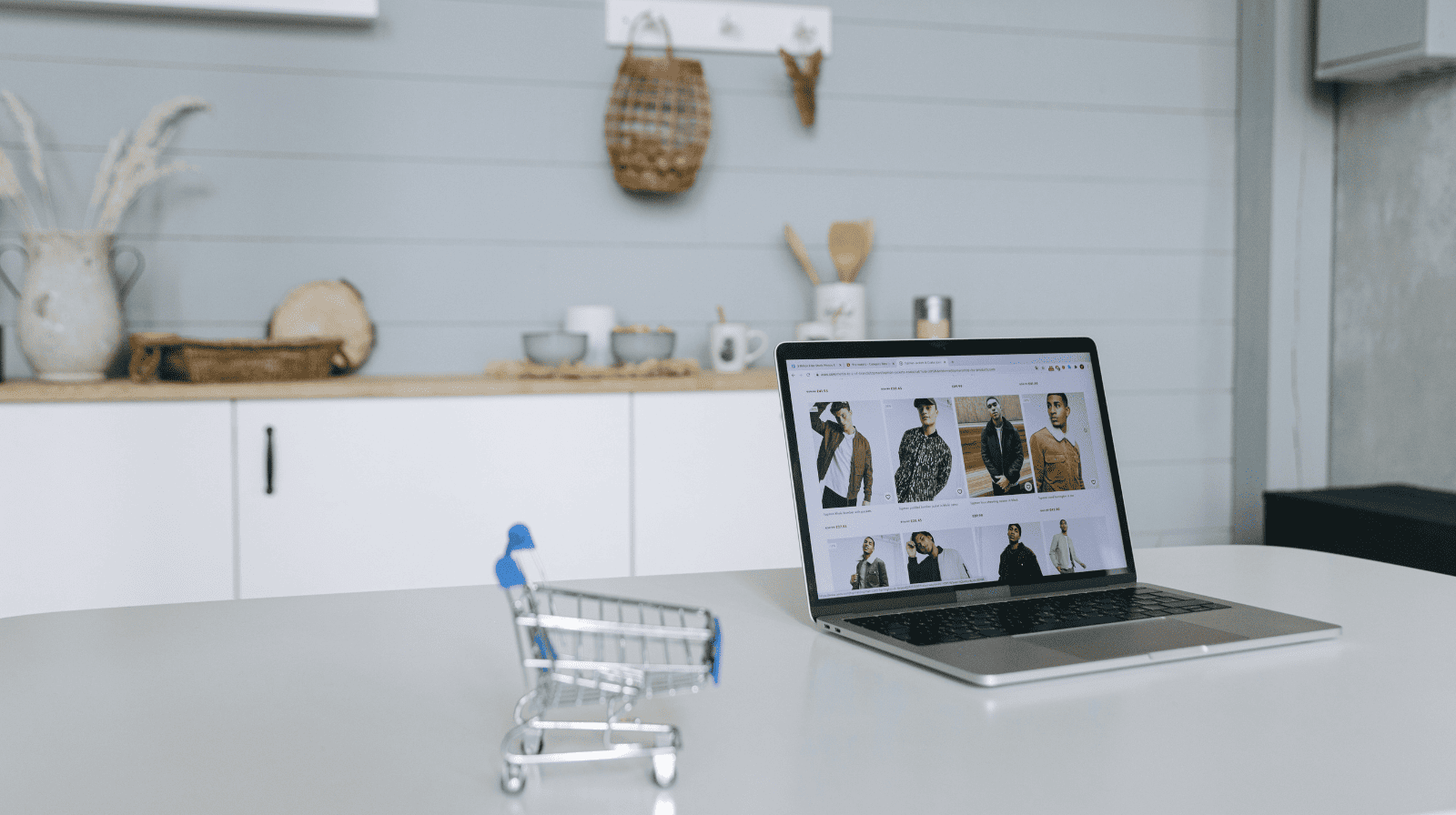
In today’s market, buyers want the convenience of ordering 24/7 without waiting for a sales representative to answer the phone. You can use platforms like Shopify B2B to create a password-protected area of your site where retailers can log in to see their specific pricing and bulk stock levels.
This setup helps prevent ghost orders by syncing your inventory in real time. Data shows that global B2B e-commerce sales reached over $30 trillion in recent years. It proves that retailers are shifting away from manual paper orders and moving toward automated, self-service digital platforms.
7. Leverage B2B Marketplaces for Discovery
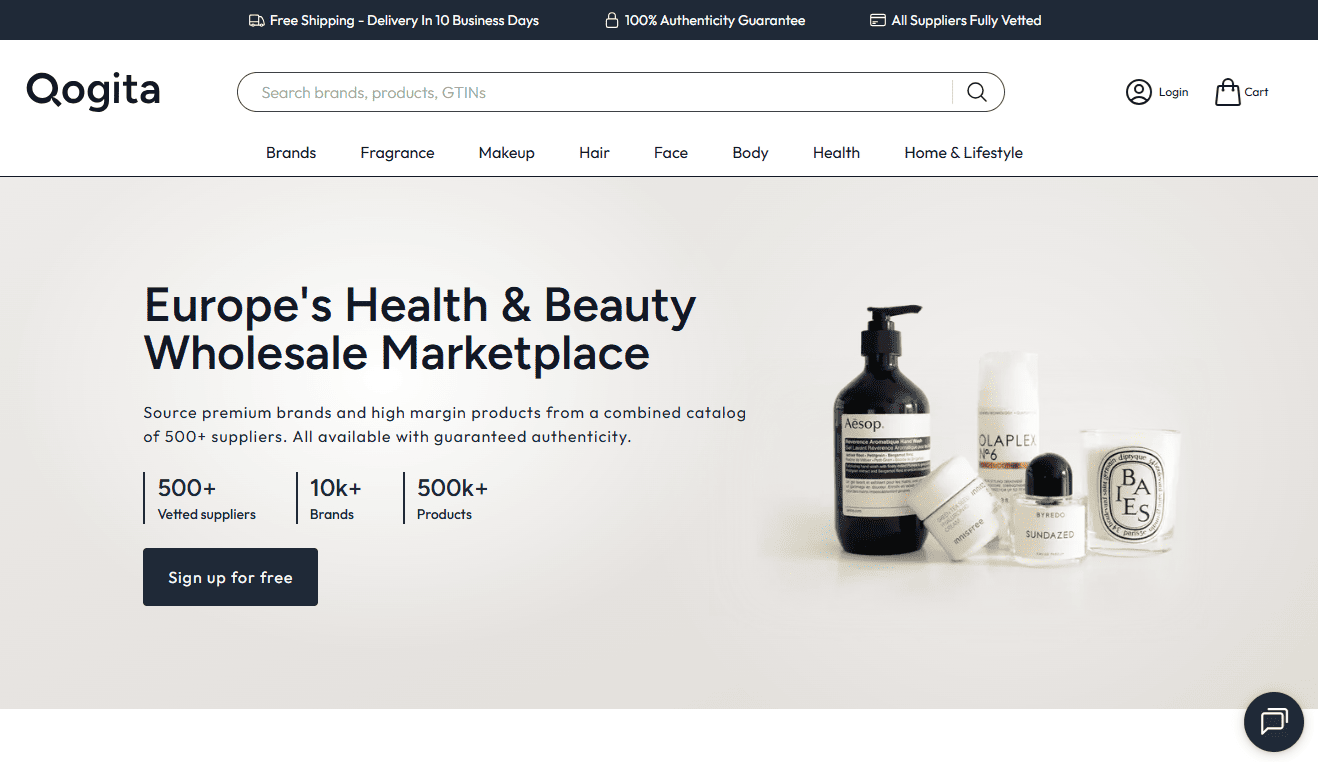
You don't always have to find the buyers yourself; sometimes you can let them find you. Listing your brand on wholesale marketplaces like Faire or Qogita connects you with a massive network of verified retailers.
Faire, for example, currently services over 700,000 retailers globally, offering them "Net-60" payment terms, which reduces their risk of buying from a new brand.
Qogita is particularly built for efficiency at scale. It helps retailers source trusted household and beauty brands by using intelligent pricing algorithms to find the best wholesale deals across a global supplier network.
Using these platforms as part of your wholesale strategy for retail acts as a passive sales engine that runs in the background while you focus on other areas of your business.
8. Execute the Top 20 Outreach Campaign
Rather than sending out 500 generic emails, you will see much better results by picking 20 dream retailers and personalizing your pitch to them. A study by Backlinko analyzed over 12 million cold emails and found that personalized subject lines increase response rates by 32.7%.
Instead of a generic email blast, send a personalized note to each store owner or lead buyer. Mention something specific about their store, like, "I saw on Instagram that you carry [Brand Name], and I think my eco-friendly candles would look great on the shelf next to them."
This shows you have done your homework and aren't just spamming their inbox, making them far more likely to request samples or a line sheet.
9. Attend Industry Trade Shows
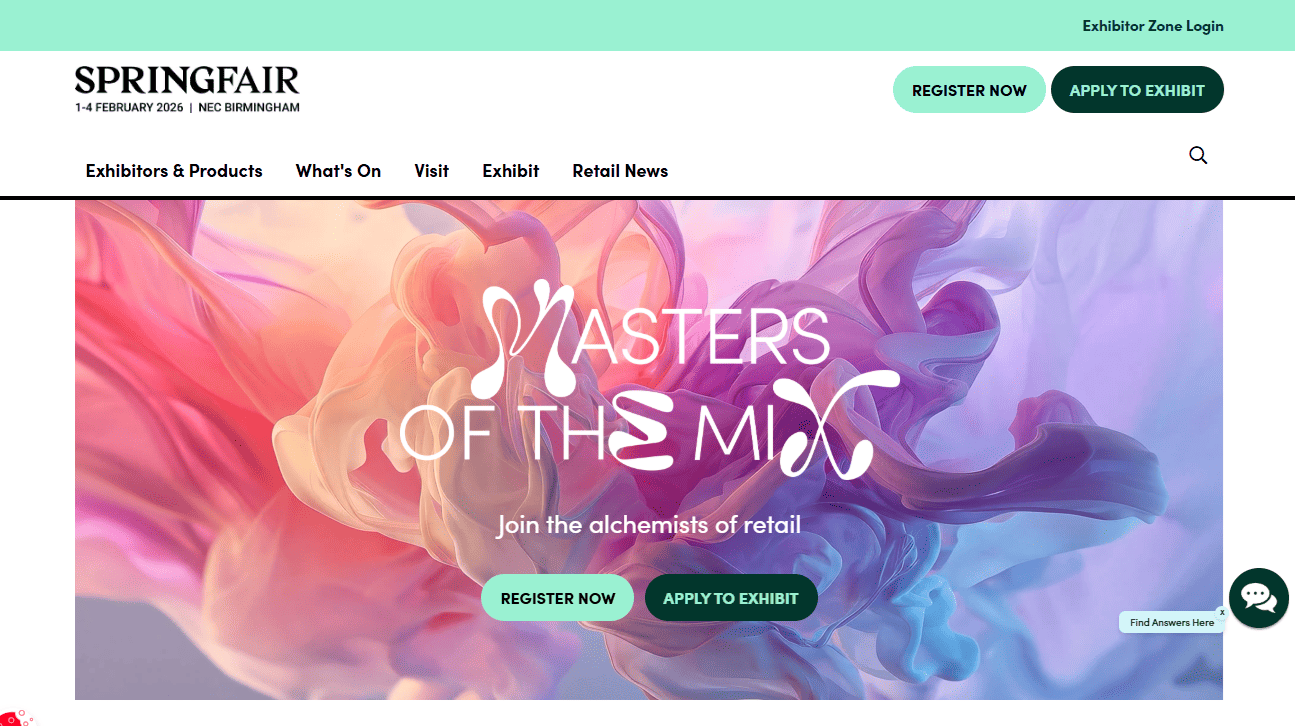
Trade shows are the most effective wholesale strategy to get your products into the hands of hundreds of buyers at once.
For brands based in the UK and EU, events like Spring Fair at the NEC Birmingham or Maison&Objet in Paris are essential for meeting high-volume buyers. While a booth is an investment, the efficiency is unmatched.
According to data from the Association of Event Organisers (AEO), roughly 82% of trade show attendees have buying authority, meaning you are speaking directly to the decision-makers.
Meeting in person allows them to feel the quality of your materials, which often closes a deal much faster than a digital pitch.
10. Offer a First-Order Incentive
A retailer takes a financial risk every time they stock a new brand. To lower that hurdle, offer a special deal for their first purchase. Common incentives include free shipping on their opening order or a 10% discount if they meet your Minimum Order Value (MOV).
This is a proven tactic for a successful wholesale strategy for retail because it encourages the buyer to test your product in their store with less financial pressure.
Once they see your items sell through to their customers, they will be much more comfortable placing larger, full-price reorders in the future.
11. Set Clear Net Payment Terms
As you grow, professional retailers will eventually ask to pay on Net terms, such as Net-30. This means they receive your products today but have 30 days to pay the invoice.
While this helps the retailer’s cash flow, it can be very risky for your own cash flow. You can use credit insurance or trade finance tools to vet new partners and protect yourself. But you have to take that risk because providing these terms is a standard industry practice across Europe.
Retailers expect this flexibility, and suppliers that can offer clear, well-managed credit terms are often seen as more reliable and competitive partners.
12. Sync Your Inventory Management System

There is nothing worse than a wholesale buyer placing a large order for a product that you just sold out of on your retail website. You need an Inventory Management System (IMS) that connects all your sales channels in real time.
If a boutique buys 100 units, your system should immediately deduct those from your total stock across your online store and warehouse. This prevents overselling, which can ruin your reputation with a new retail partner.
Industry data from IHL Group shows that retailers lose billions annually due to out-of-stock issues, so having a synced system ensures you never promise inventory you don't have.
13. Focus on Sell-Through Support
Your job is not finished once the retailer pays your invoice. If your products sit on their shelves and do not sell to end consumers, the shop owner will not place a second order.
You should provide sell-through support to help them move your stock. This includes giving them professional photos for their social media or physical signs for their store.
Research shows that the in-store experience is a massive driver of sales. A study of over 3,000 shoppers found that 82% of purchase decisions are made while they are actually in the shop. Even more importantly, 16% of unplanned purchases are triggered by seeing a promotion or a sign while walking the aisles.
In-store signage might look old-school, but it creates an “aha moment” that inspires purchases and helps capture the attention of 62% shoppers who make impulse-buy decisions. When you help retailers move your stock, you make it much easier for them to say yes to a reorder.
14. Launch a Wholesale Referral Program

Word of mouth is just as powerful in B2B as it is in B2C. You can encourage your current happy stockists to refer your brand to other non-competing retailers by offering a referral incentive.
For example, if a boutique owner introduces you to a shop in a different city, you could give both of them £50 off their next order. This strategy is highly effective because buyers trust the recommendations of their peers.
Recent studies show that B2B referrals have a 70% higher conversion rate than other marketing leads. It is one of the cheapest ways to find new accounts and should be a recurring part of your wholesale strategy for retail.
15. Monitor the Reorder Rate KPI
While getting a huge first order feels great, the reorder rate is the most important metric for a healthy wholesale strategy for retail. This is the percentage of customers who come back to buy from you again.
If you have 50 wholesale accounts but only 5 are reordering, you have a problem with your product or your pricing. Tracking this Key Performance Indicator (KPI) allows you to see which stores are successful and which might need extra support.
High-performing wholesale brands typically aim for reorder rates of 60% to 70% to ensure long-term stability.
16. Navigate International Logistics
If you are based in the UK or EU, selling across borders is a natural way to scale, but you must understand the shipping terms. For international wholesale, most brands use Incoterms like Ex Works (EXW), where the buyer pays for and arranges the shipping, or Delivered Duty Paid (DDP), where you handle everything, including customs.
Expanding across borders can significantly boost your revenue. Data shows that over 80% of retailers who sell into new international markets see higher sales and better profit potential. It is best to start with nearby countries where the rules are similar.
Once you feel comfortable with those shipments, you can gradually move into markets with more complex customs requirements.
Conclusion
Building a successful wholesale strategy for retail is one of the most effective ways to take your business to the next level. It moves you away from the slow process of finding one customer at a time and lets you reach thousands of new shoppers through established partners.
By getting your pricing right and using the right digital tools, you can create a system that runs smoothly and brings in consistent revenue.
The key to long-term success is building strong relationships with other shop owners. If you focus on supporting your retailers and helping them move your products, your brand will continue to grow for years to come.
Wholesale Strategy for Retail FAQ
What is a wholesale strategy?
A wholesale strategy is a plan where a business sells its products in large quantities to other retailers rather than selling directly to the public. These retailers then sell the products to their own customers at a higher price. This strategy helps a brand grow faster by using the reach and reputation of established shops.
How do I create a wholesale strategy for retail?
Start by setting your wholesale prices and a Minimum Order Value to confirm every deal is profitable. Next, you create a line sheet and a professional way for buyers to order, such as a digital portal. Finally, you find retail partners through direct outreach, trade shows, or online marketplaces.
What is the main benefit of a wholesale strategy for retail?
The biggest advantage is the ability to scale your brand quickly by reaching new audiences through established stores. Instead of finding one customer at a time, you sell hundreds of units to a single buyer. This lowers your marketing costs and helps you move large amounts of inventory in one go.
How do I find wholesale buyers for my products?
You can find buyers by researching stockist pages on competitor websites to see which stores carry similar items. You can also join digital marketplaces like Faire or Qogita to get your brand in front of thousands of retailers.
Is it better to sell on a marketplace or contact stores directly?
A mix of both is usually best. Marketplaces like Faire or Qogita give you instant access to thousands of verified buyers who are already looking for new products. However, direct outreach lets you build personal relationships with dream retailers who may not yet be active on those platforms.
What is a Minimum Order Value (MOV) and why do I need one?
MOV is the smallest amount of money a retailer must spend to place an order with you. It guarantees that every shipment is large enough to cover the time and cost of picking, packing, and shipping the goods. Without a set MOV, you might lose money on small, inefficient orders.